
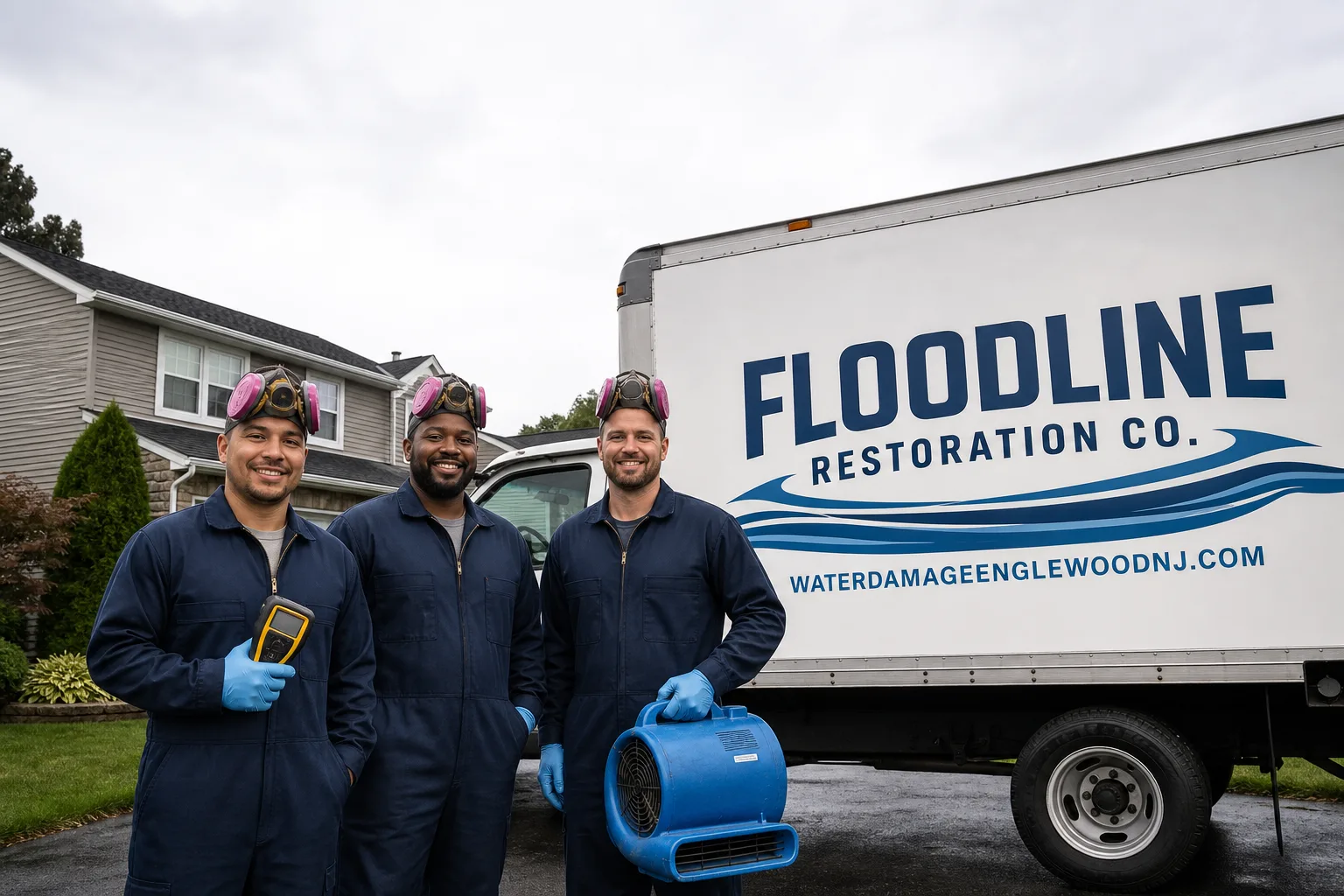
Free visual inspection and a written scope of work before any mitigation begins - photos, moisture readings, and drying logs go in your claim file
The scope we write is the scope we bill. Anything new gets shown to you, in writing, before we touch it.
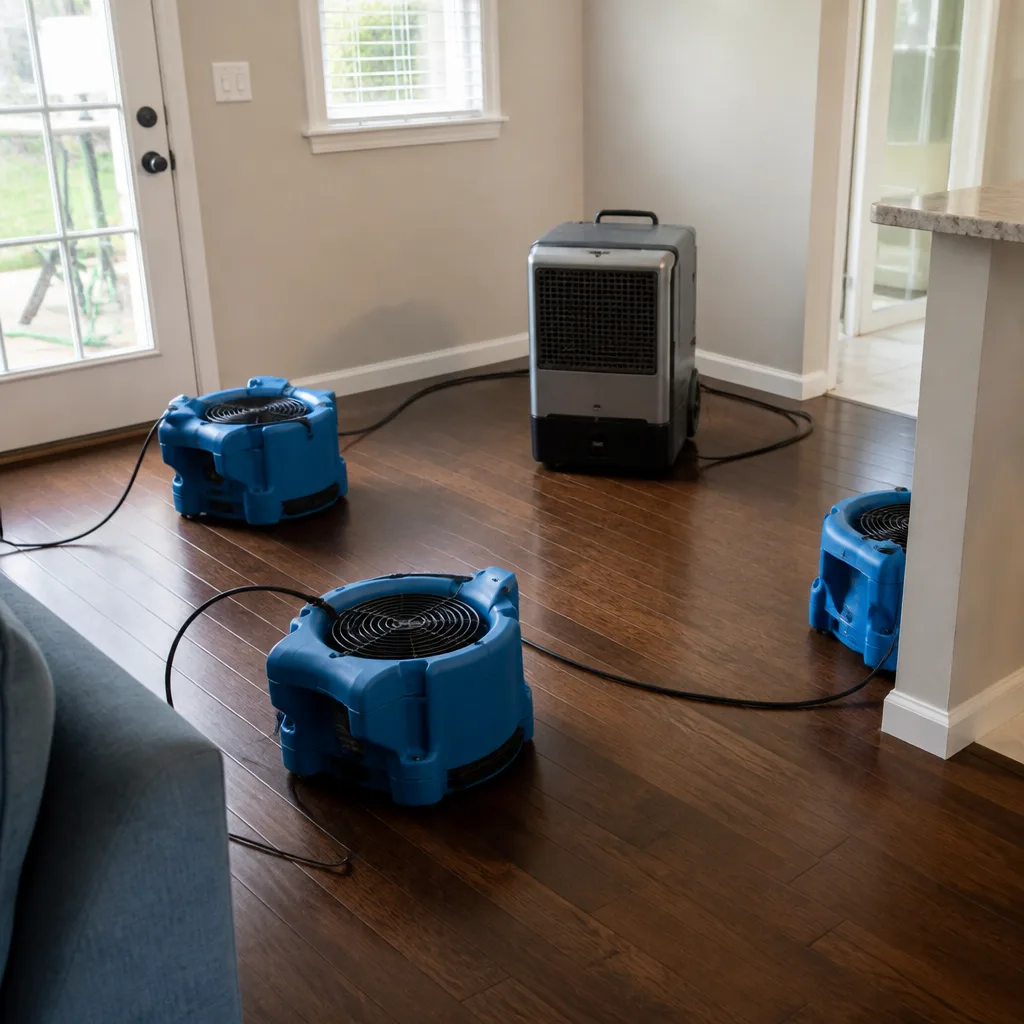
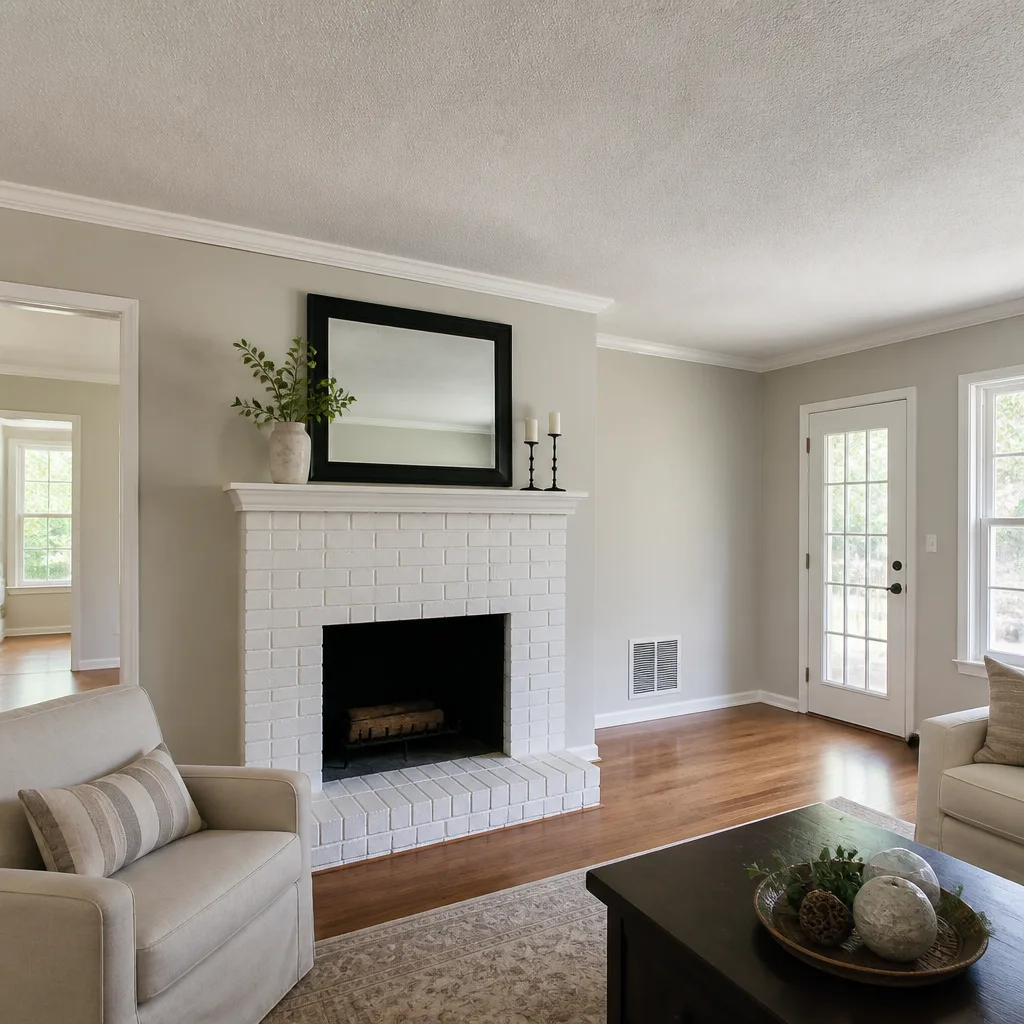
 Before
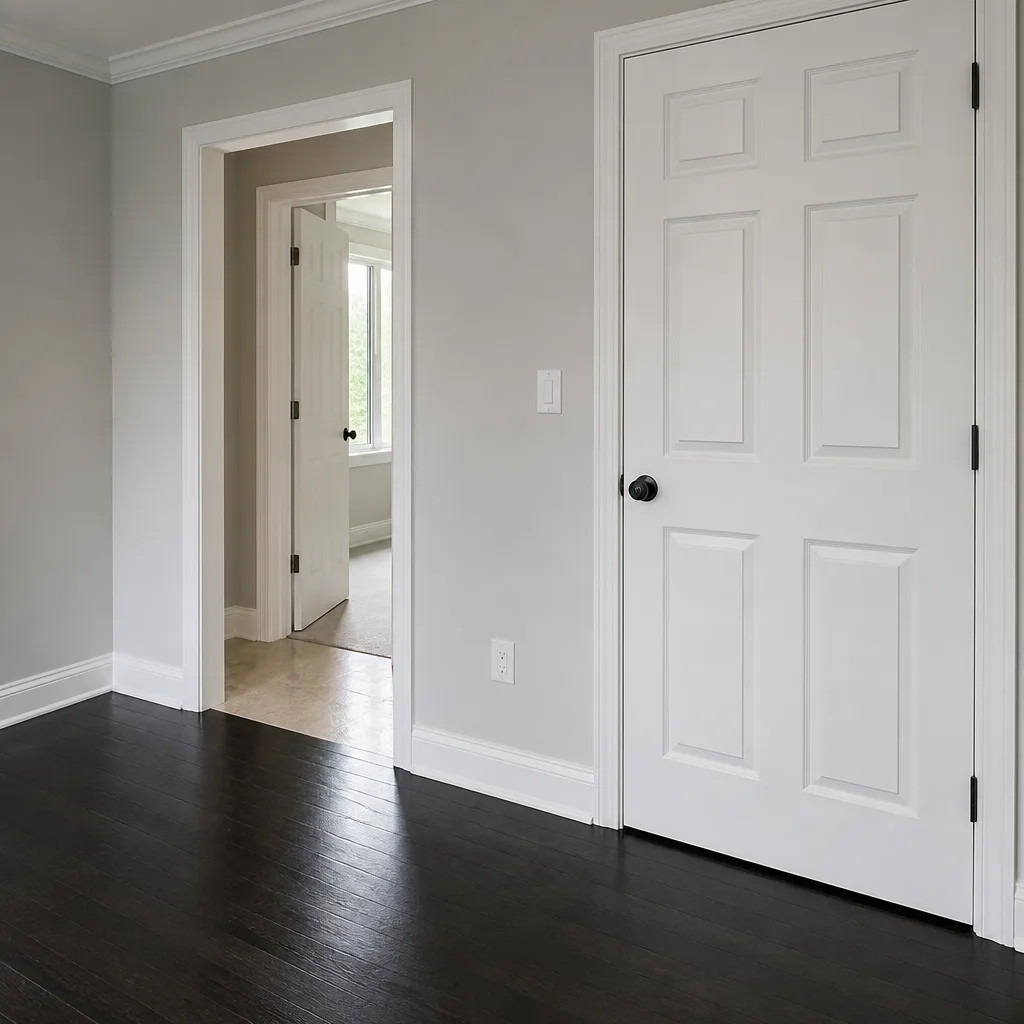 After
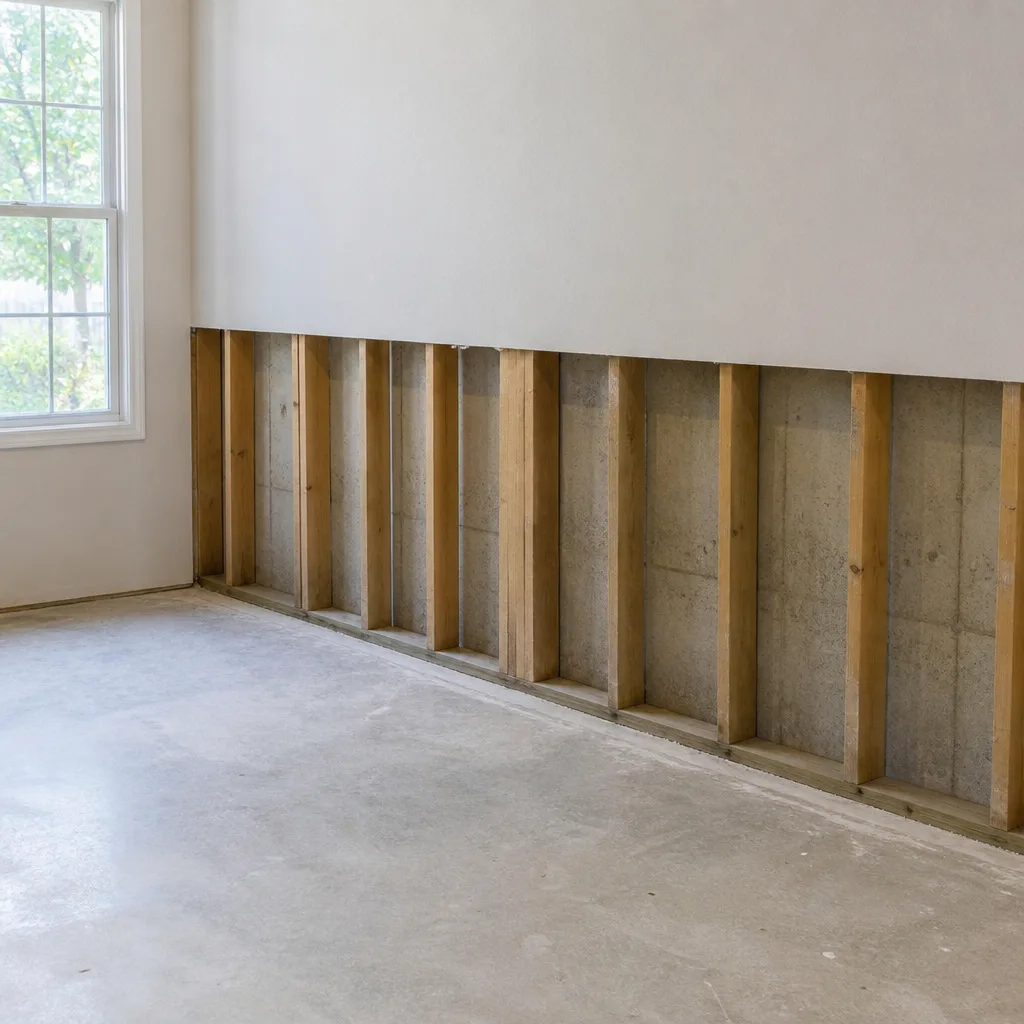
After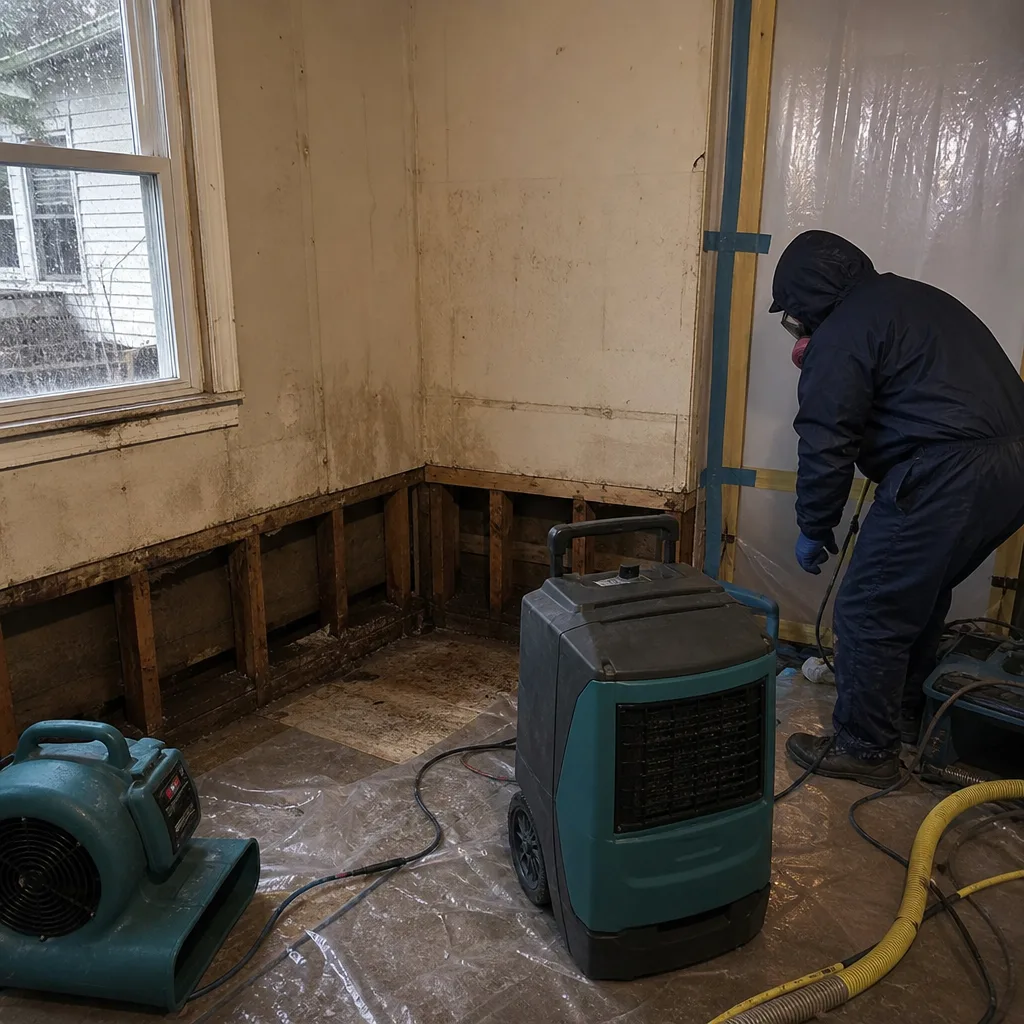 Before
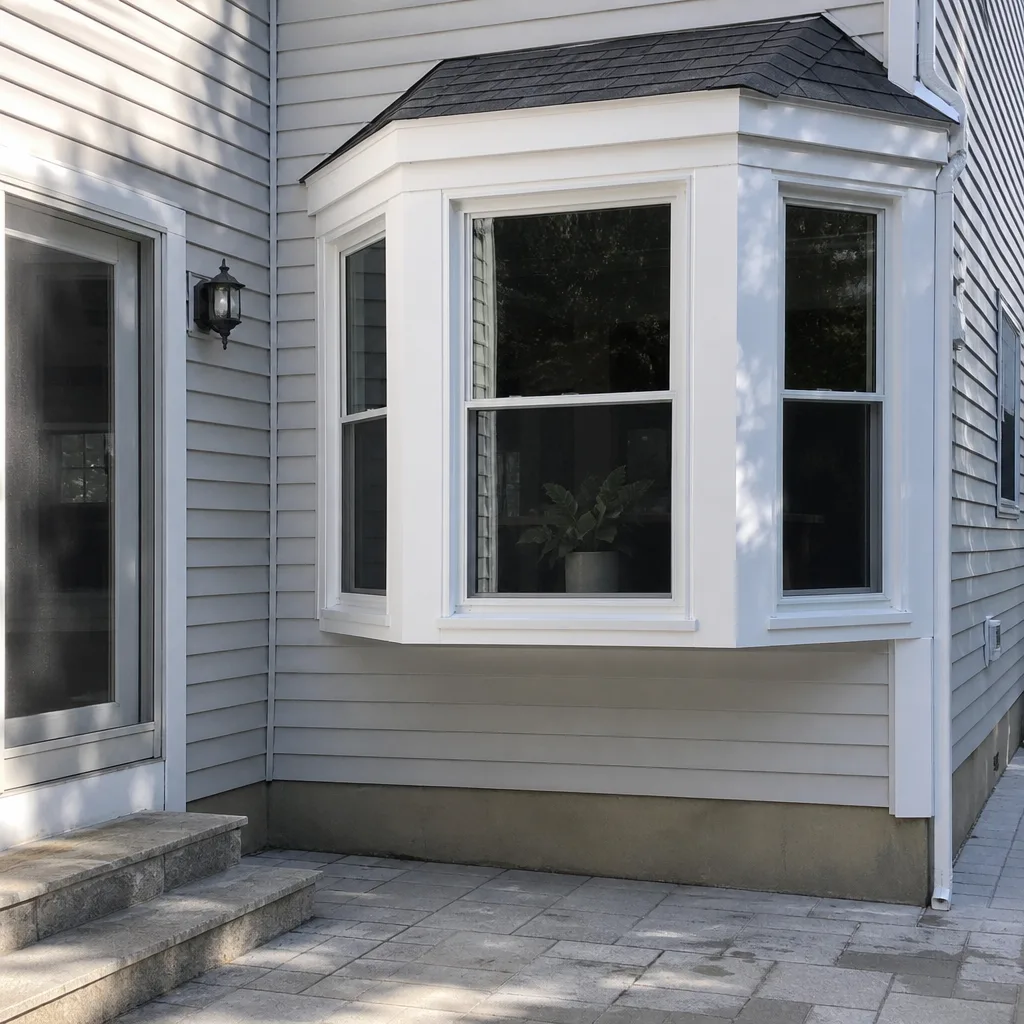 After
After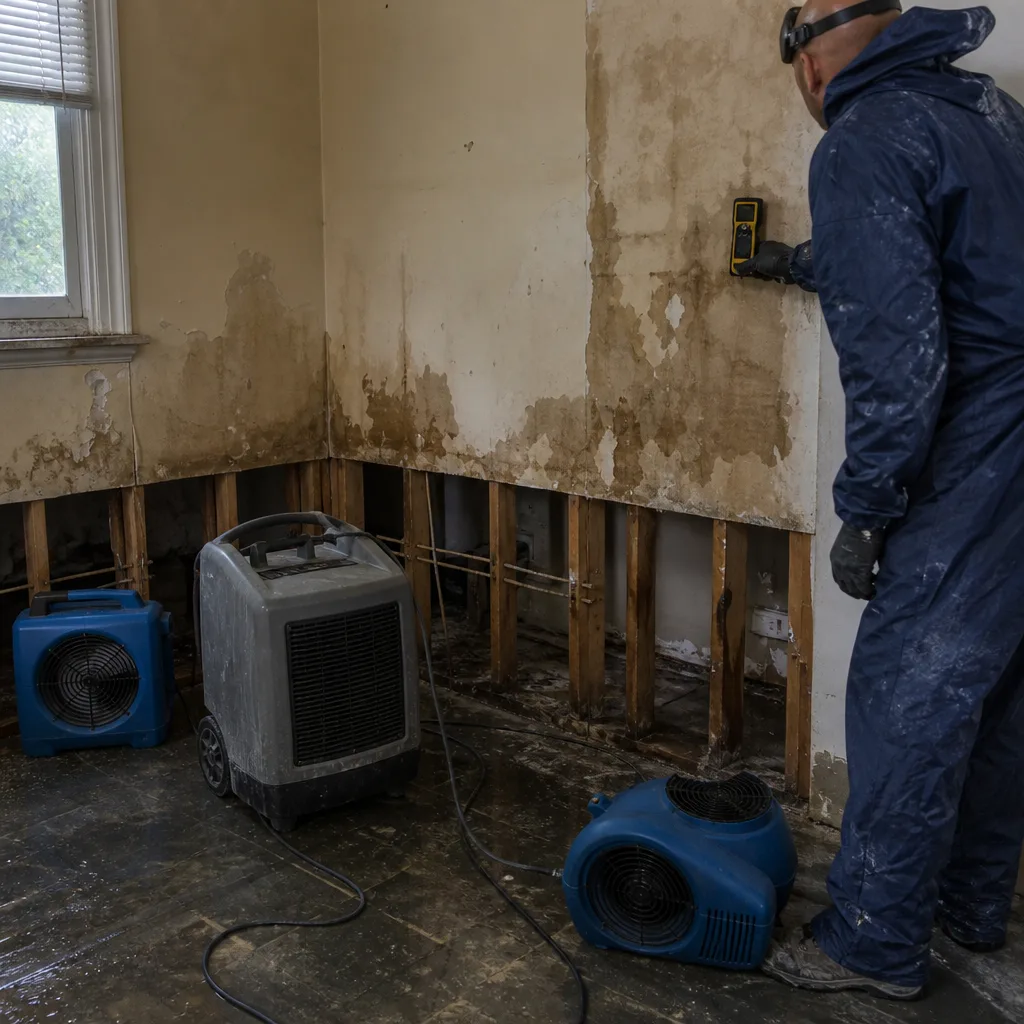 Before
 After
After24/7 Emergency Mold Remediation in Englewood
Mold remediation in Englewood typically runs $1,900-$6,500 depending on how far the colony has spread and whether hidden hazmat layers are involved, and most jobs can be started within 45 minutes of your call. If you see black staining on basement drywall or smell that musty, earthy odor that won’t leave, call (201) 729-3780 right now. We answer live, 24 hours a day, and our crews know Englewood’s pre-war basements well enough to spot what a flatland contractor would miss.
The first hour matters because mold releases spores that ride your HVAC system through the house. In Englewood’s older homes, those spores find plenty of food: plaster keys, old-growth floor joists, and the paper backing on drywall that’s been soaking up Hudson River humidity for decades. One colony behind a finished basement wall can become a whole-house air quality problem in under 72 hours. We don’t make you leave a message at 2 a.m. A dispatcher picks up, a crew gets moving, and extraction starts the same visit.
Understanding Mold Remediation Severity in Englewood Properties
Mold jobs break into three practical tiers. Level 1 is surface contamination, usually under 10 square feet: window sills, a damp closet corner, a bathroom ceiling. Level 2 includes wall cavities and HVAC registers, where you need containment barriers and negative air pressure before any demolition. Level 3 is structural colonization: floor joists, sill plates, and the backside of plaster-and-lath assemblies. Englewood homes built between 1910 and 1945 skew heavily toward Level 2 and Level 3 because the old-growth oak and fir framing absorbs water differently than modern kiln-dried lumber. Those joists hold moisture below the surface where a visual inspection won’t catch it.
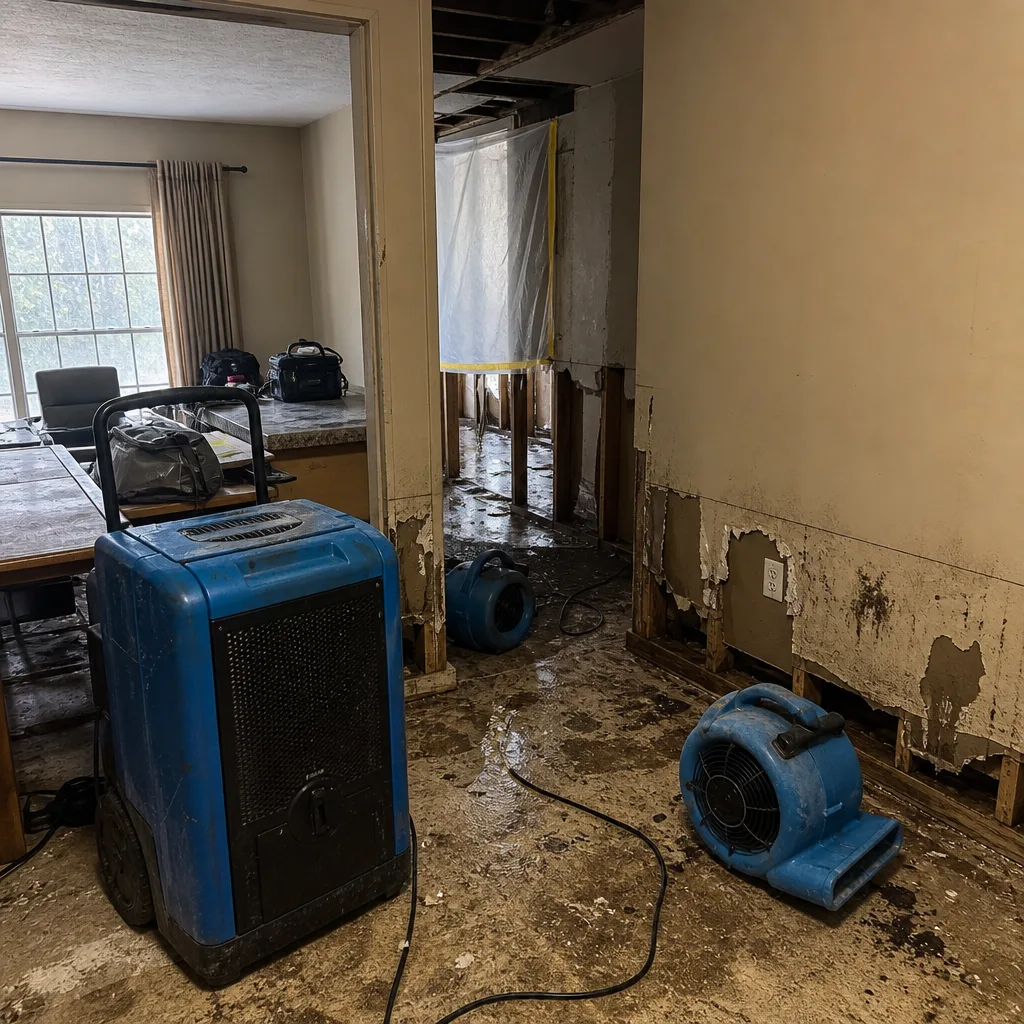
We moisture-map every wall before we open it. On a Tudor off Palisade Avenue, we opened a basement wall after a Category 3 sewer backup and found vermiculite insulation behind 1960s wood paneling. Our containment crew sealed the zone, an abatement contractor cleared the hazmat, then we ran HEPA air scrubbers and structural drying with Dri-Eaz LGR dehumidifiers before applying antimicrobial treatment to the original oak joists. That sequence is normal for Englewood. It’s why we never start cutting until we know what’s behind the wall.
Why Englewood Property Owners Choose Floodline Restoration Co.
- 45-minute response commitment: We dispatch crews from within your area, and we’re honest about when we’ll arrive. When you call, we tell you exactly when a truck rolls.
- Live answer, every hour: No automated phone tree. A real person picks up at 2 a.m., takes your address, and starts the dispatch.
- IICRC-certified crews: Our technicians hold WRT and AMRT certifications and follow the industry’s containment and clearance-testing standards. Background-checked, uniformed, and trained to RIA and IFA standards as well.
- Free visual inspection: We come out, assess the scope, and give you a written estimate before any work begins. No charge for the visit.
- Direct insurance billing: We work with your carrier directly, provide the photos and moisture logs they need, and bill them for covered work. You don’t play messenger.
- One team from start to finish: The crew that contains and remediates is the same crew that rebuilds. No mid-job handoff, no subcontractor surprises.
Our Mold Remediation Process
Inspection & Assessment
We perform a visual inspection, run moisture meters across suspect surfaces, and check for hidden cavities with thermal imaging. On Englewood hillside homes, we look specifically for 1950s-70s finishes that may conceal asbestos tile or vermiculite insulation before anyone swings a hammer.
Extraction / Stabilization
Standing water gets extracted with truck-mounted or portable units. We stabilize the environment immediately: stop the moisture source, isolate the affected zone, and set up physical barriers.
Containment & Air Scrubbing
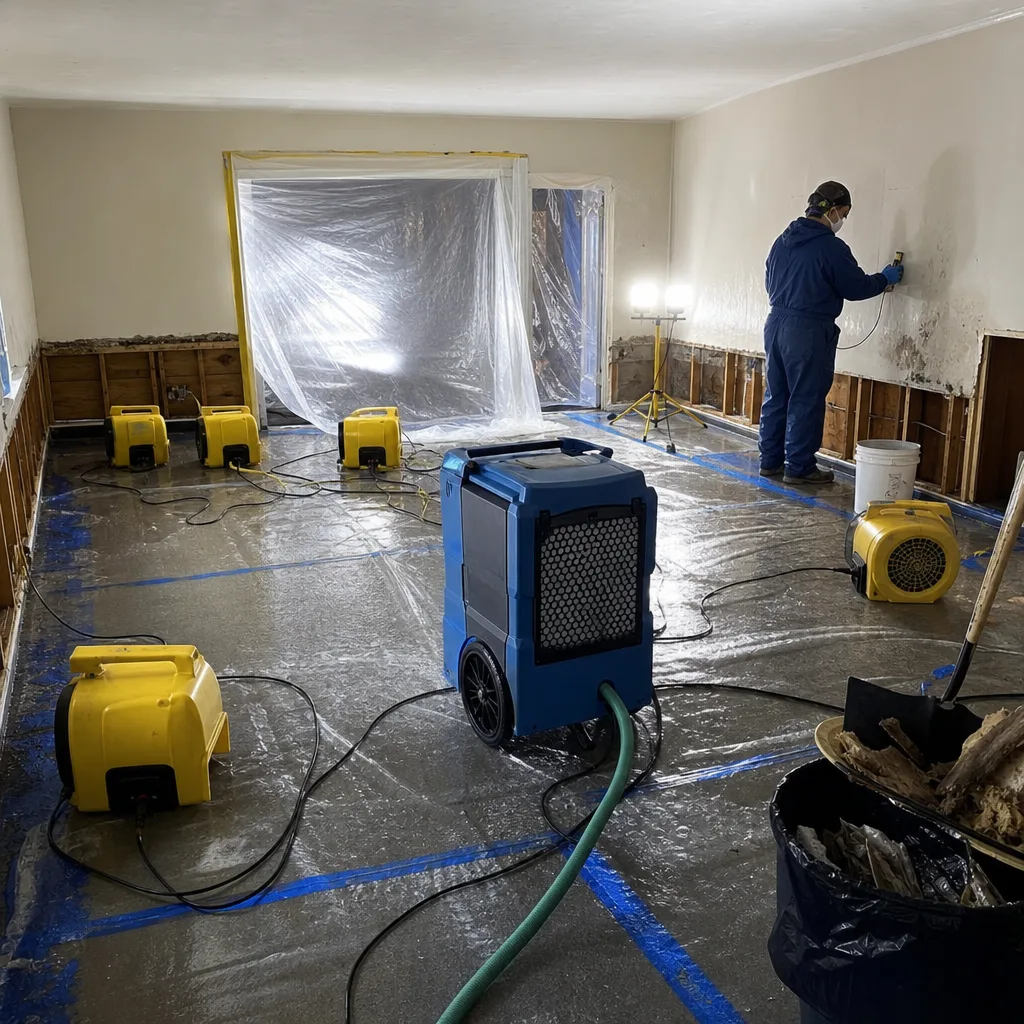
Heavy-gauge poly sheeting creates a negative-pressure containment zone. HEPA air scrubbers run continuously to filter spores from the air so the colony doesn’t spread to the rest of the house during demolition. HEPA filtration is non-negotiable on every Englewood job.
Removal & Cleaning
Colonized drywall, carpet, and insulation are bagged and removed through containment. Remaining structural wood gets wire-brushed, HEPA-vacuumed, and treated with an EPA-registered antimicrobial. Plaster-on-lath gets evaluated for salvage before removal.
Drying & Humidity Control
Dri-Eaz LGR dehumidifiers and Phoenix air movers run on a moisture-mapped schedule. In Englewood’s Hudson River humidity belt, drying takes longer than inland. We take daily readings until plaster and old-growth framing hit their dry standard, typically below 15% moisture content.
Repairs & Restoration
The same Floodline crew that tore out the damage puts it back: new drywall, trim, paint, and flooring. If original plaster, slate, or old-growth hardwood needs matching, we handle it in-house. Done right, and backed in writing.
Need Emergency Mold Remediation in Englewood Now?
Crews minutes away, answering live 24 hours a day. The sooner we start, the less it costs.
Working With Your Insurance Company
We know how Englewood mold claims get paid, and we know what adjusters look for. Coverage depends on the cause: mold from a sudden pipe burst is usually covered; mold from years of slow seepage usually isn’t. We document everything from the first hour so your position is strong either way. Photos, moisture readings, a line-item scope. We send it all to your carrier and talk to your adjuster directly. You get copied on everything. No surprises on the bill, and no lawyer-style wrangling. That’s the square deal.
What We Provide Your Insurer
- Thorough documentation of the loss
- Photos of all damage, room by room
- Moisture readings and drying logs
- A detailed, line-item scope of work
- Direct coordination with your carrier
Built for Englewood’s Loss Calendar
Englewood’s mold season doesn’t follow one calendar. January deep freezes burst supply lines in unheated basements on the East Hill; March thaw pushes groundwater down the Palisades slope into west-side foundations; summer thunderstorms dump water on flatlands near Overpeck Creek; fall nor’easters drive rain hard against west-facing facades and test the flashing on slate and copper details. The constant through all of it is moisture, and where moisture sits, mold follows.
But Englewood adds a layer most Bergen County towns don’t have. Those hillside pre-war homes run high indoor humidity year-round because the Hudson River corridor keeps ambient moisture elevated. Finished basements that flood once in March can harbor active mold by May if the studs never hit their dry standard. We see it every spring. The fix isn’t more bleach. It’s aggressive dehumidification matched to the structure’s actual materials, not a generic dryout chart.
Mold Remediation Across Englewood’s Neighborhoods
The homes along Knickerbocker Road and the East Hill hold some of Englewood’s largest pre-war estates, and their basements are stone, rubble, or brick foundations where water enters through mortar joints rather than floor cracks. Remediation there means managing basement humidity as much as removing visible mold. Over near Dwight Morrow High School and the avenue corridor along Palisade Avenue, the Tudors and Georgians have finished basement spaces that conceal the mid-century hazmat layer: asbestos tile under carpet, vermiculite above ceiling panels. We always check before we cut.
South of Route 4, the mid-century housing stock is younger but no less vulnerable. Homes near the Flat Rock Brook area sit close to the water table, and their basements read wetter year-round. The 07631 ZIP also includes a stretch of garden apartments where mold moves unit-to-unit through shared walls. Cross-unit containment has to be tight, and we’ve done enough of those jobs to know what a property manager needs from the paperwork side. Response routes matter here: we run from the avenues east-west, so we can have a crew at your door inside an hour from first call.
Specialized Mold Remediation Services We Offer in Englewood
Mold Inspection & Testing
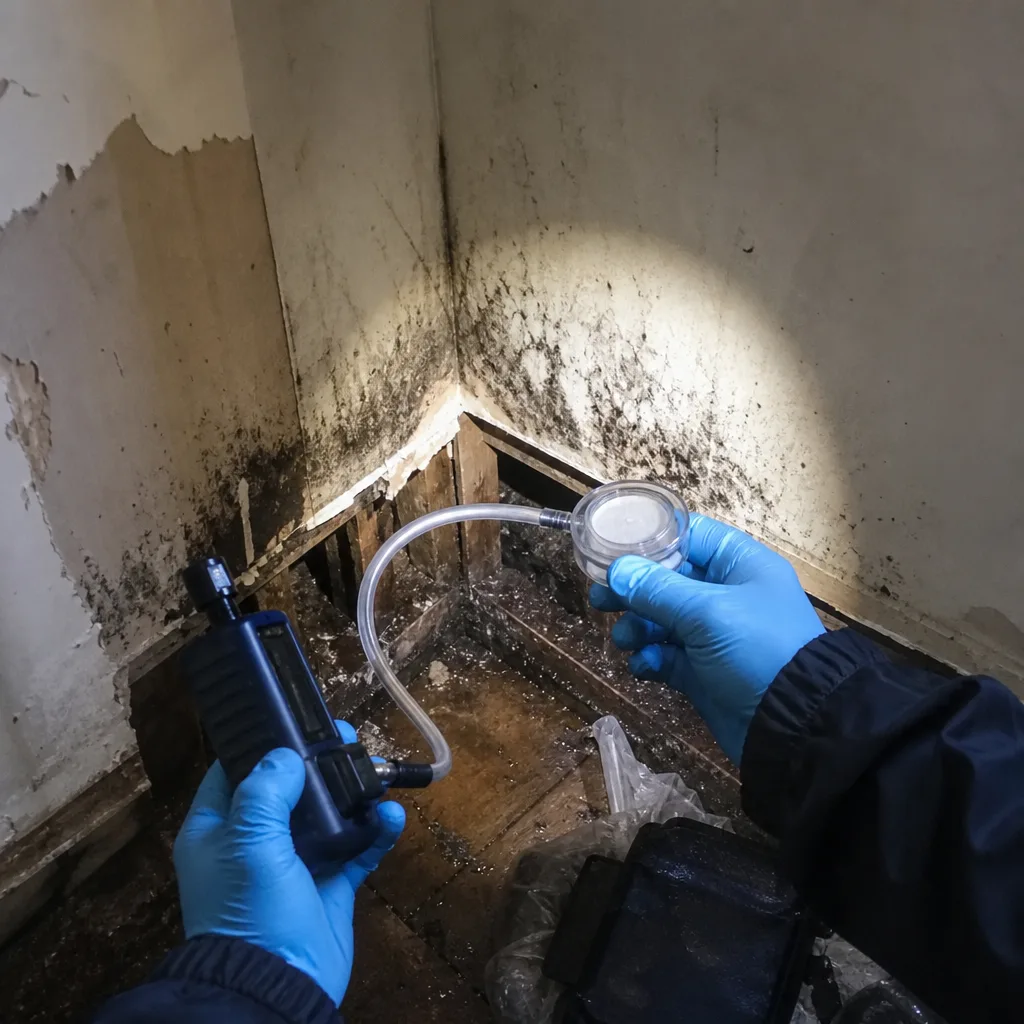
We start every Englewood job with a moisture map, not a sales pitch. Thermal imaging shows cold spots where water is hiding inside walls. Air sampling and surface swabs tell us what species we’re dealing with and whether spores have spread beyond the visible colony. If there’s any chance of vermiculite or asbestos tile, we flag it before disturbing a single square foot.
Mold Removal
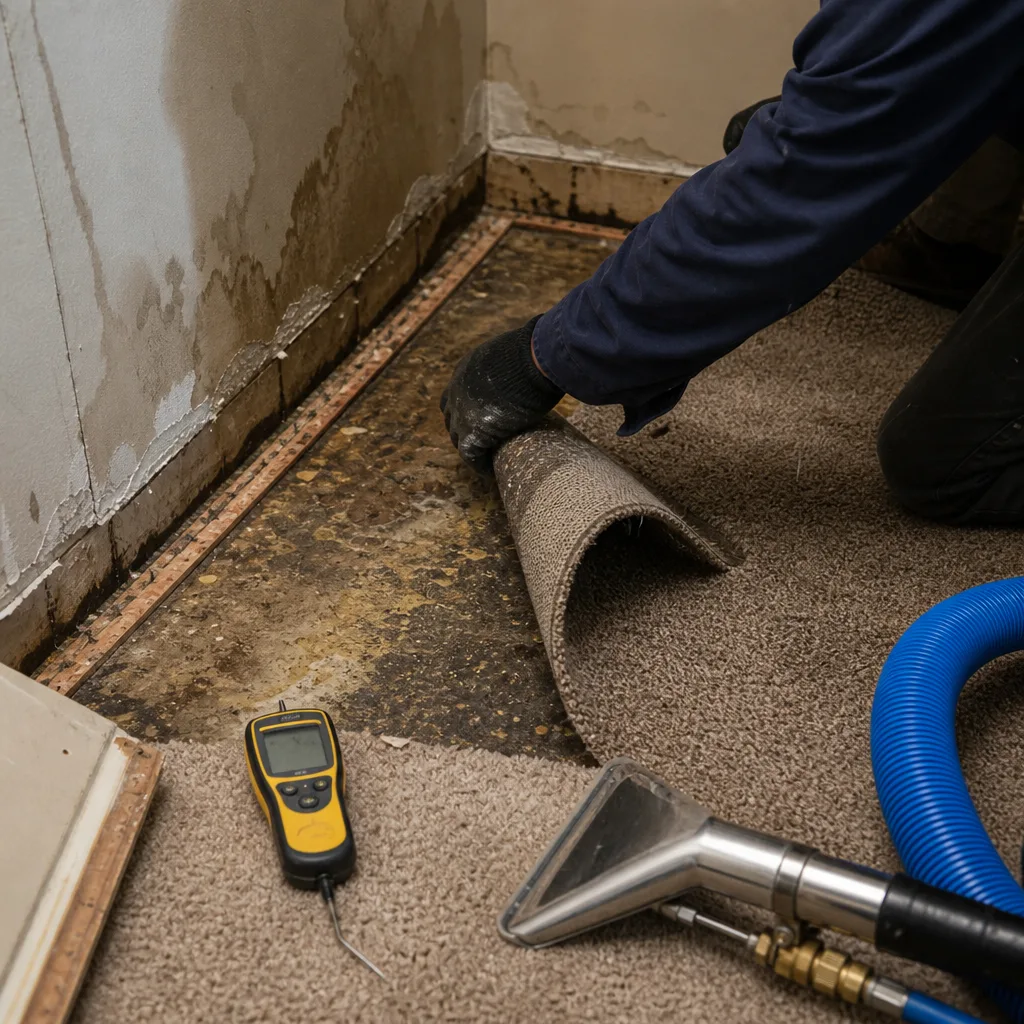
Removal means physical extraction: cutting out colonized drywall, bagging contaminated insulation, and HEPA-vacuuming every surface inside containment. We’ll know by the time this is done whether the framing is salvageable, which it usually is in Englewood’s old-growth timber if we get there before rot sets in.
Black Mold Remediation
Stachybotrys gets the headlines, but it’s really a moisture problem with a black finish. Black mold in an Englewood basement usually starts as a slow leak behind a finished wall. Our sequence is the same, but the containment is tighter, and we hold your house under negative pressure while the HEPA scrubbers run. Clearance testing confirms the air is clean before we hand the keys back.
Air Quality Restoration
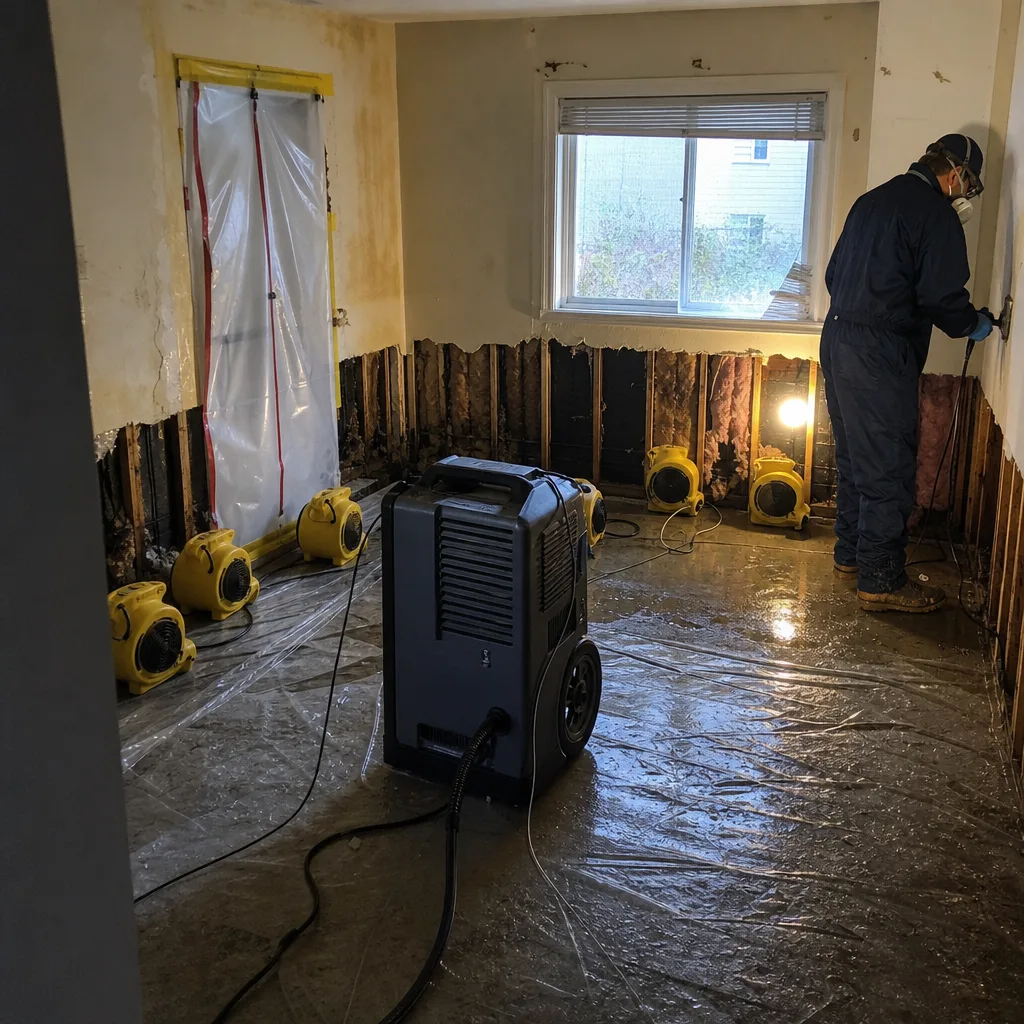
After any mold job, the air needs cleaning as much as the walls. We run HEPA scrubbers, replace HVAC filters, and can install whole-house dehumidifiers tied to your existing system. For Englewood homes that sit at the base of the Palisades, a permanent dehumidifier is often the difference between a one-time fix and a recurring problem.
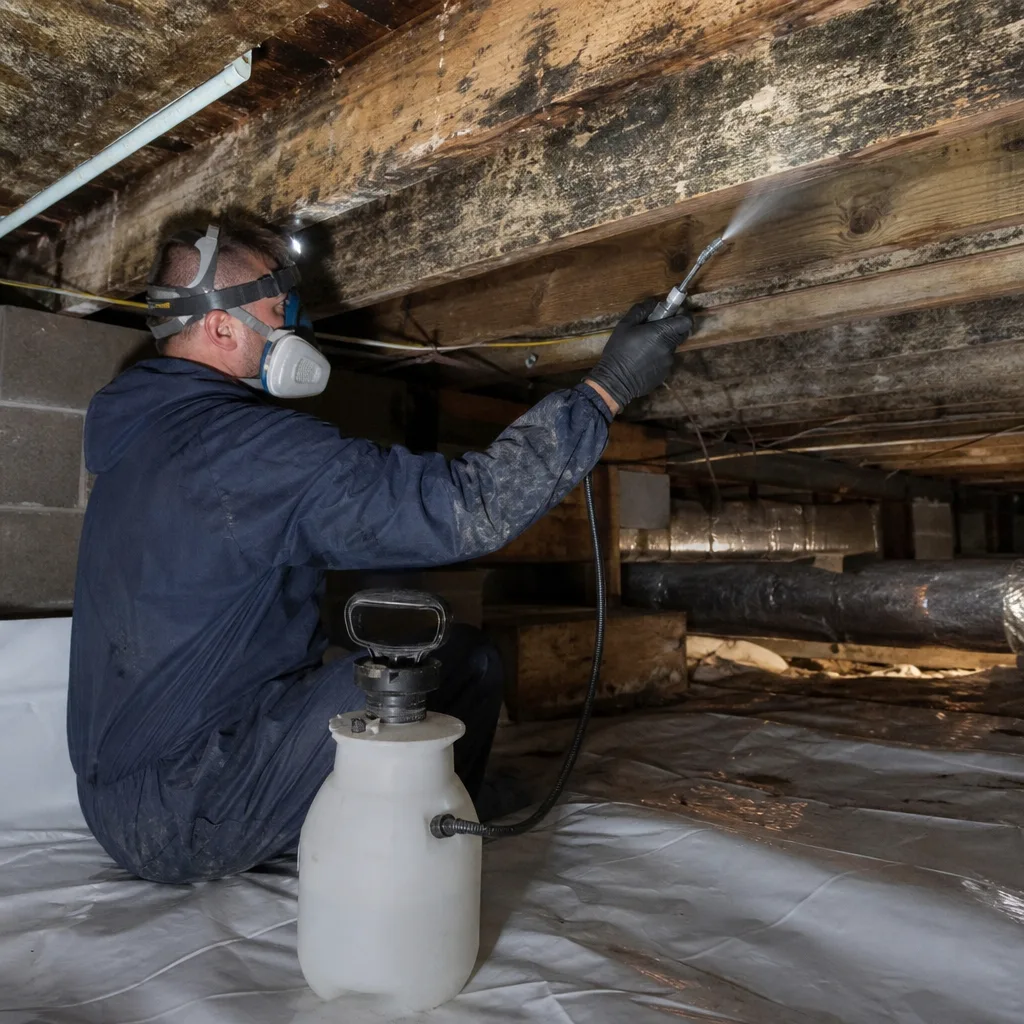
Crawl Space Treatment
Englewood crawl spaces collect the same hillside moisture as basements but without the airflow. We install vapor barriers, seal foundation vents where appropriate, and run drying equipment sized to the space. The goal is to get the relative humidity under 50% so mold can’t regrow in the framing above.
What happens when you call
- 1
A real person answersNo phone trees - you reach a local pro.
- 2
You get an upfront price rangeHonest numbers before anyone is dispatched.
- 3
A background-checked tech heads outLicensed & insured, dispatched right away.
- 4
You approve before work beginsNothing starts until you say go.
Mold Remediation Costs in Englewood, NJ
A typical mold removal job in Englewood runs $1,900 to $6,500. That covers containment, removal of colonized materials, air scrubbing, drying, antimicrobial treatment, and restoration of the affected surfaces. Small jobs start lower: a bathroom mold issue might cost $800-$1,400. A heavily colonized finished basement in a pre-war home with hazmat removal involved can hit $12,000-$18,000 when the abatement, structural drying, and full rebuild are counted.
What moves the price in Englewood specifically: whether the basement was finished in the 1950s-70s with hidden asbestos or vermiculite, how long the water sat before we were called, and whether the original plaster can be saved or must be replaced to match. Insurance covers mold when the cause is sudden and covered, like a burst pipe; it rarely covers slow seepage or neglect. We’ll walk you through it on a free visual inspection and give you a written scope before any work begins. Call (201) 729-3780 and we’ll send a technician out.
We Also Serve Cities Near Englewood
Our Englewood crews routinely respond to calls in Englewood Cliffs, Teaneck, Tenafly, and Leonia. Same 45-minute response commitment, same live dispatch, same written scope before work begins.
Serving Englewood, NJ - Our Local Coverage Area
We’re based in the Englewood area and know this community well. Use the map below to see our service coverage - if you’re nearby, we can almost certainly help.
Englewood Mold Remediation Questions, Answered
Does mold remediation in Englewood trigger asbestos abatement if my basement was finished in the 1950s-70s?
It often does. Many Englewood hillside homes had basements finished or re-paneled during that era using asbestos floor tile and vermiculite or zonolite insulation behind drywall. If we find those materials during our inspection, state law requires abatement before we can disturb the area, which adds days and cost to the job. We check before any demolition starts so there are no mid-job surprises.
How does the Palisades ridge affect mold growth in my Englewood basement?
The ridge channels groundwater downhill into western Englewood foundations, keeping basement walls damp even without rain. It also sits close enough to the Hudson River that ambient humidity stays elevated year-round. Those two forces together mean mold can colonize faster and survive longer in Englewood basements than in drier inland towns.
Can you dry out plaster walls in a pre-war Englewood home, or do they always need to be removed?
Plaster walls can often be saved if the water damage is caught early. Plaster and lath hold water differently than drywall and release it more slowly, so they need longer drying times and careful monitoring. If the plaster is crumbling, delaminated, or already supporting mold growth behind the surface, removal is the safer call. We’ll tell you honestly which path applies to your walls after we take moisture readings.
Why do mold jobs in Englewood take longer than in nearby flat towns?
Several reasons. Plaster takes longer to dry than drywall. Slate and clay-tile roofs hold water and leak differently than asphalt shingles, so moisture can enter wall cavities gradually over months. And the hidden hazmat layer in many mid-century basement finishes requires abatement before we can even begin remediation. A flatland job that takes three days can take a week or more in Englewood when all of that is in play.
Are there specific mold concerns for Englewood homes with slate or clay-tile roofs?
Yes. Slate and clay tile are excellent roofing materials when maintained, but when flashing fails or a tile slips, water can enter the wall cavity behind the roof line and run down interior framing for months before anyone sees a stain. By the time you notice it, mold has usually colonized inside the wall. We check roof penetrations as part of any mold inspection on a pre-war Englewood home, especially the west-facing facades that take the brunt of ridge-driven wind and rain.
How fast can you actually get to my Englewood home?
Within 45 minutes in almost all cases. We dispatch local crews who know Englewood’s streets and traffic patterns. Call (201) 729-3780 and a live person will give you a straight answer on arrival time, not a recording.
Will my insurance cover mold remediation?
When mold results from a sudden, covered event like a burst pipe, your carrier usually covers the remediation. When it comes from years of slow seepage or high humidity, they typically deny it. We document everything either way, and we talk directly with your adjuster to argue your position. Call us with your policy details and we’ll help you understand where you stand before you file.
What should I do in the first 30 minutes if I find mold?
Stop running your HVAC system, because it’s spreading spores through the house. Don’t disturb the mold or try to scrub it, which releases more spores. Close the door to the affected room if you can. Then call us at (201) 729-3780. We’ll walk you through the next steps on the phone and get a crew on the road.
Written by Curt Bowman, Owner at Floodline Restoration Co., serving Englewood. Every job backed by the 90-Day Done Right Promise in writing.