
RIA Water Damage Restoration in Englewood: A Homeowner’s Guide
Water damage restoration in Englewood follows a standard most homeowners never see: the IICRC S500, which sets a specific equilibrium moisture content that structural wood must reach before a job is truly dry. Fewer than half of the homeowners we meet have ever held a moisture log proving that number was hit. This guide puts those benchmarks in plain language so you can hold any crew accountable, including ours. If you’d rather skip the reading and just talk to someone, call (201) 729-3780 and a live dispatcher picks up, day or night.
What the IICRC Actually Requires, and Why It Matters in Englewood
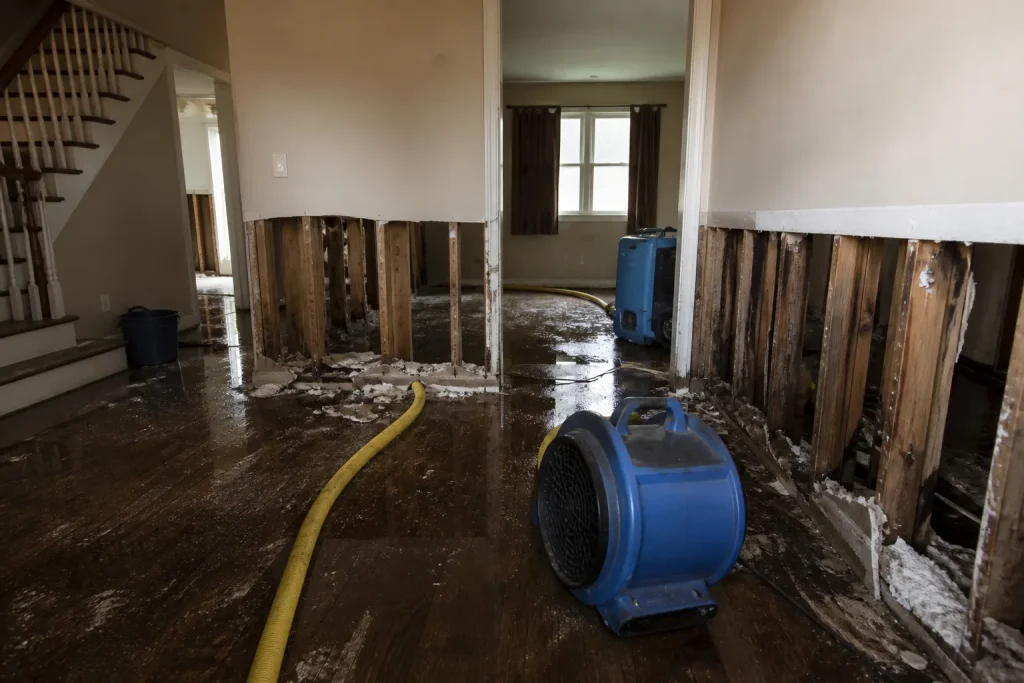
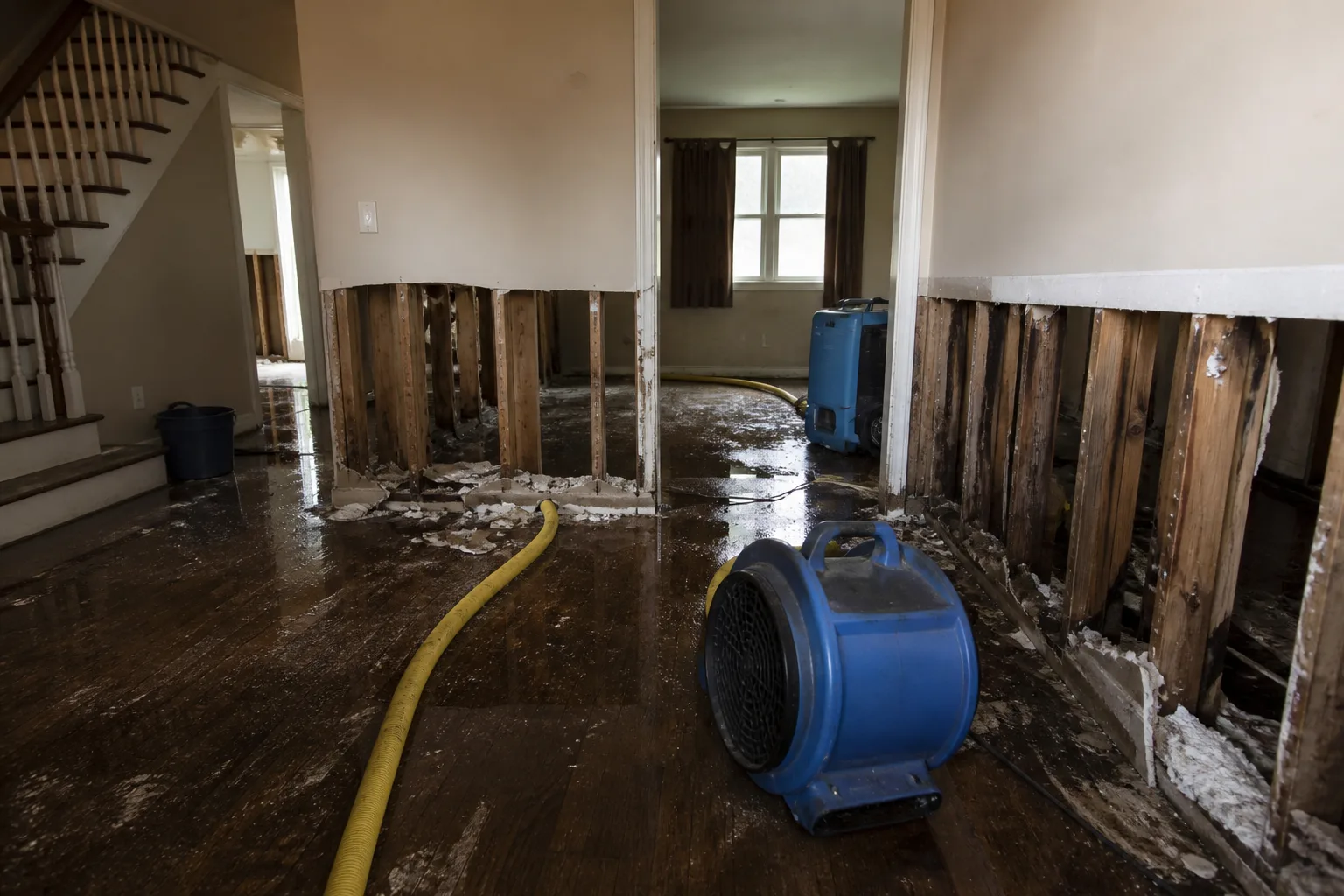
The IICRC S500 is the restoration industry’s rulebook for water damage. It divides every water loss into classes and categories, and getting those designations wrong changes everything downstream. A Class 1 loss means water touched less than 5% of a room’s surfaces: a corner of a hallway, say. Class 4 means deep saturation in materials that don’t dry easily, like hardwood flooring or plaster walls over brick. Misclassify a Class 4 as a Class 2, and a crew sets up too little drying equipment, packs up too soon, and leaves moisture trapped where it will feed mold for months.
Englewood’s housing stock makes this especially important. Many homes here predate 1980, and a good number sit on slab-on-grade foundations with cast iron drain stacks. That combination means water doesn’t just sit on the surface; it migrates through concrete and wicks up into wall cavities that were built before modern vapor barriers. A restorer who doesn’t account for that will dry the visible surfaces and miss the moisture hiding behind baseboards or under vinyl flooring. The S500 standard is not optional, and the classifications are not paperwork. They are the difference between a dry house and a house that smells musty every August.
The Three Moisture Readings a Legitimate Restorer Must Document
A real moisture log contains three sets of data, taken daily until the job is done. The first is ambient readings: temperature and relative humidity in the affected space. The second is structural material readings: the actual moisture content of wood studs, drywall, and subflooring, measured with a pin-type moisture meter. The third is psychrometric data: dew point, grains per pound of moisture in the air, and vapor pressure, which tell a technician whether the air is pulling moisture out of the structure or pushing it back in.
Here is what that looks like on a genuine moisture log from an Englewood basement job:
- Day 1: Ambient 71°F, 64% RH. Subfloor reading 28% moisture content. Drywall base 24%. Target dry standard: 12% or below.
- Day 3: Ambient 72°F, 48% RH. Subfloor 19%. Drywall base 16%. Dehumidifier running continuously.
- Day 5: Ambient 73°F, 42% RH. Subfloor 13%. Drywall base 12%. One more day of drying indicated.
- Day 6: Subfloor 10%. Drywall base 9%. Below the dry standard. Job complete. Log signed and handed to homeowner.
If you have never seen a document like that, you have no evidence that the drying was actually finished. We hand our moisture logs to the homeowner and the insurance carrier on every water job in Englewood. There is no version of this work where the numbers should stay in the technician’s truck.
What Englewood’s Older Homes Do to the Drying Process
Englewood is full of well-built older houses, and those houses dry differently than new construction. Pre-1980 framing lumber is often denser, which means it holds water longer and releases it more slowly. Plaster walls over wood lath, common in Englewood’s colonial and Tudor homes, trap moisture differently than modern drywall. Slab-on-grade basements, which you see all over the city, let groundwater pressure push moisture up through the concrete, so a “dry” basement floor can read above the dry standard on a meter even after the standing water is gone.
Cast iron drain stacks are another Englewood constant. When one cracks or corrodes, sewage or gray water can seep into wall cavities slowly, over weeks, and the first sign is often an odor, not a puddle. By that point the damage behind the wall is already Class 3: water absorbed into the insulation and framing. Drying that properly means removing the affected drywall, not just pointing fans at it. It is tedious work, and it is exactly the kind of work that gets skipped when a crew wants to finish before dinner. You can spot the difference by asking one question: what did the moisture readings say before you closed the wall up? If the answer isn’t a specific number, the wall should not be closed.
Mitigation vs. Restoration: Why Splitting Them Creates Paperwork Gaps
Mitigation is the emergency phase: extract the water, set up drying equipment, stop the bleeding. Restoration is rebuilding what was removed: drywall, insulation, flooring, paint. The two phases are different skilled trades, but they share one critical thing: documentation. When a mitigation company hands the job to a separate restoration contractor, the moisture log, the photos, the daily readings, and the dry standard all have to transfer cleanly from one outfit to the other. In Englewood, we have watched that handoff go badly more times than we can count. The mitigation crew finishes and leaves town, the rebuild crew arrives with no log, and the insurance adjuster has nobody to call for proof that the structure was dry before it was closed up.
The claim stalls. The homeowner plays messenger. The rebuild gets delayed while an adjuster asks for a document nobody can produce. When one company handles Water Damage Restoration in Englewood from first extraction through finished rebuild, the documentation stays in one file, and the person who signed off on the drying is the same person who hands you the finished room. That continuity is not a convenience; it is an underwriting requirement for a clean insurance outcome. Before you sign with any restoration company in Englewood, ask who owns the moisture log from start to finish, and who signs it.
The 90-Day Done Right Promise in Practice
Our company has operated in Englewood under a guarantee we call the Keystone Standard, and it is written into the agreement before any work starts. The promise is simple: if the work is not done right, within 90 days, we make it right. No argument, no paperwork battle, no “that was the mitigation crew, not us.” The guarantee covers the drying and the rebuild: warped flooring that shows up after the HVAC dries things out, a lingering musty smell that indicates a missed pocket, drywall seams that crack as the house settles back. You call, we come back, we fix it, and we hand you another written record of what we did.
Here is how to invoke it if you ever need to: call the number on your job file, ask for the Keystone Standard review, and tell us what you are seeing. We send a tech with a moisture meter and a camera. If the issue falls within the guarantee, it is scheduled and fixed. We built the company around a dispatch board, not a sales desk, and that means the person who answers your call is the person who can put a crew on your street in Englewood the same day. A guarantee is only as good as the phone number behind it, and ours is answered by a live person around the clock.
One of our techs pulled a drying job out of a garage over in the Fourth Ward last spring where a previous contractor had declared the structure dry using nothing but an infrared camera. No pin meter, no moisture log, no psychrometric data. The wall cavity was reading 28% when we opened it. That homeowner had a written invoice saying “dry” and a wall full of water. Ask for the log. A real restorer will hand it to you without being asked twice.
When to Call a Pro
You can mop up a small spill in the kitchen. You cannot dry out a saturated wall cavity with a box fan from the hardware store, and you cannot see moisture behind a baseboard without the right meter. If the water came from a sewage line, a dishwasher that flooded the whole lower level, or a supply line that ran while nobody was home, call a pro the same day. Water damage compounds quickly, and the first 48 hours are when the difference between restoration and replacement gets decided. In Englewood, with older framing and slab-on-grade basements, the clock is not forgiving. If you have water where it should not be, call (201) 729-3780. We answer in person, and we’ll be there when we say.
Related services in Englewood: Mold Remediation in Englewood and Fire & Smoke Damage Restoration in Englewood. Every job starts at the floodline and ends with the rebuild, done by the same certified crew.
The Bottom Line
A water damage job in Englewood is only finished when a moisture log proves the structure hit the dry standard, and that standard is set by the IICRC S500. Classify the damage correctly, document the three moisture readings daily, account for Englewood’s older construction, and keep mitigation and restoration under one roof. If you hear a contractor say the structure “feels dry,” ask for the numbers instead. If you’re in Englewood and need help, Floodline Restoration Co. home offers free estimates, direct insurance billing, and a written 90-Day Done Right Promise on every job. Call (201) 729-3780 and talk to a person, any hour, any day.
Frequently Asked Questions
Most residential water damage jobs in Englewood dry within 3 to 5 days, with rebuild work scheduled after the drying is verified by a moisture log. Older homes with plaster walls or slab-on-grade basements can add a day or two. The timer starts when the drying equipment is running, not when the crew arrives, so ask for the log dates and the target dry standard in writing.
The IICRC S500 is the industry standard that defines how water damage is classified, how drying equipment is sized, and what moisture levels structural materials must reach before a job is considered complete. For most structural wood in Englewood homes, that dry standard is 12% moisture content or below, verified with a pin-type meter and documented daily.
Most homeowner policies cover sudden and accidental water damage, such as a burst supply line or an appliance failure. They generally do not cover slow leaks, neglect, or flood damage from outside water without a separate flood policy. The strongest claims include a moisture log and photo documentation from the day the crew arrived, which is why every Floodline job in Englewood includes that file and direct billing to your carrier.
In Englewood, a Floodline Restoration Co. dispatcher answers the phone 24/7 and a certified crew reaches the job the same visit, not days later. The first extraction pass and drying setup can often be running within hours of your call. For an exact arrival time today, call (201) 729-3780 and talk to a live person, not a recording.
Written by Curt Bowman, Owner at Floodline Restoration Co., serving Englewood since 2010.
Need Damage Restoration Help?
Call Floodline Restoration Co. - licensed & insured, here with fast after-hours help in Englewood.
(201) 729-3780