
Quick Summary
Raw sewage backups introduce dangerous Category 3 biohazards and airborne pathogens that require immediate containment to protect structural framing and indoor air quality. Floodline Restoration Co. provides 24/7 emergency sewage removal with a guaranteed 45-minute response time, deploying hospital-grade sanitization, negative-pressure air scrubbers, and direct insurance claim management. Readers will learn essential property containment steps and how to contact Floodline's 24/7 emergency dispatch for rapid sewage extraction and a free on-site visual inspection.
Emergency Sewage Removal – Fast 45-Minute Safe Cleanup
When raw sewage backs up into your property, every minute counts. Floodline Restoration Co. provides immediate emergency sewage removal with a guaranteed 45-minute on-site response across Englewood and surrounding Bergen County communities. Category 3 black water is loaded with dangerous bacteria, viruses, and parasites that quickly soak into subfloors, framing, and drywall. Our certified technicians stop the spread of hazardous waste, sanitize structural materials, and coordinate your claim directly with your insurance adjuster.
Working on properties throughout North Jersey, we see how fast an unaddressed drain backup can lead to severe structural damage and contaminated indoor air. Unlike national franchises that route your call to an answering service or push for unnecessary demolition of historic woodwork, Floodline handles the entire recovery from midnight extraction to final repairs. We follow strict IICRC biohazard standards, isolate airborne pathogens, and provide clear documentation through our Straight Claim Program. Call our 24/7 live dispatch team right now for rapid extraction and an immediate on-site assessment.
Emergency Sewage Removal: 24/7 Rapid Biohazard Response
A sewer main overflow or backed-up drain line introduces Category 3 black water directly into your living or working space. This water carries active biological hazards that demand professional containment rather than standard household cleanup methods. If you are looking for an emergency sewage backup cleanup service near you, you need experienced technicians on-site immediately to prevent hazardous contaminants from spreading throughout the building.
Immediate Response Protocol
Category 3 wastewater poses real health hazards through both direct contact and airborne contamination. Floodline Restoration Co. operates a 24/7 live dispatch desk so you speak with an experienced specialist immediately. Our crews arrive in fully equipped mobile units within 45 minutes, bringing industrial extractors, commercial HEPA air filtration systems, and hospital-grade antimicrobials to stabilize your property right away.
Key Priorities During a Sewage Emergency
- Rapid zone isolation: Setting up immediate containment stops airborne bacteria and foul odors from traveling into clean living areas.
- Safe biohazard extraction: Certified technicians remove standing black water, dispose of non-salvageable porous items, and complete basement sewage cleanup in Englewood following strict environmental health standards.
- Direct insurance handling: Our team coordinates water damage insurance restoration in Englewood by documenting moisture readings, photographing damage, and billing your carrier directly.
What Immediate Steps Should You Take While Waiting for Cleanup Crews?
Need emergency sewage removal?
We’re available now - call for a fast, free estimate.
While our emergency crew is on the way, your main objective is keeping everyone safe and preventing the waste from spreading to other parts of the home.
Critical Safety Steps
- Shut down main utilities: Turn off the main water shutoff valve to stop incoming flow. If your electrical panel is located in a dry, safe area away from standing water, switch off the circuit breakers for the flooded rooms. If the panel is in or near the wet zone, leave it alone and wait for our crew.
- Evacuate the area: Keep children, older adults, and pets completely away from the contaminated rooms. Black water contains airborne microbes and dangerous toxins that should not be inhaled or touched.
- Do not flush or run water: Any water sent down sinks, tubs, or toilets anywhere in the house can add pressure to the blocked line and worsen the backup.
What Never to Do During a Sewage Overflow
Never use standard household box fans, ceiling fans, or shop vacuums in a sewage-flooded basement. In historic and pre-war homes, running regular fans stirs up settled pathogens and forces bio-aerosols straight up through floorboards and wall framing into upper living areas. Shop vacuums also lack sealed HEPA exhaust filters, meaning they exhaust contaminated aerosols directly into the air you breathe. Keep doors to the affected area closed and let our industrial negative-air equipment manage the airflow safely.
The Hidden Threat: Bio-Aerosol Migration in Historic and Pre-War Homes
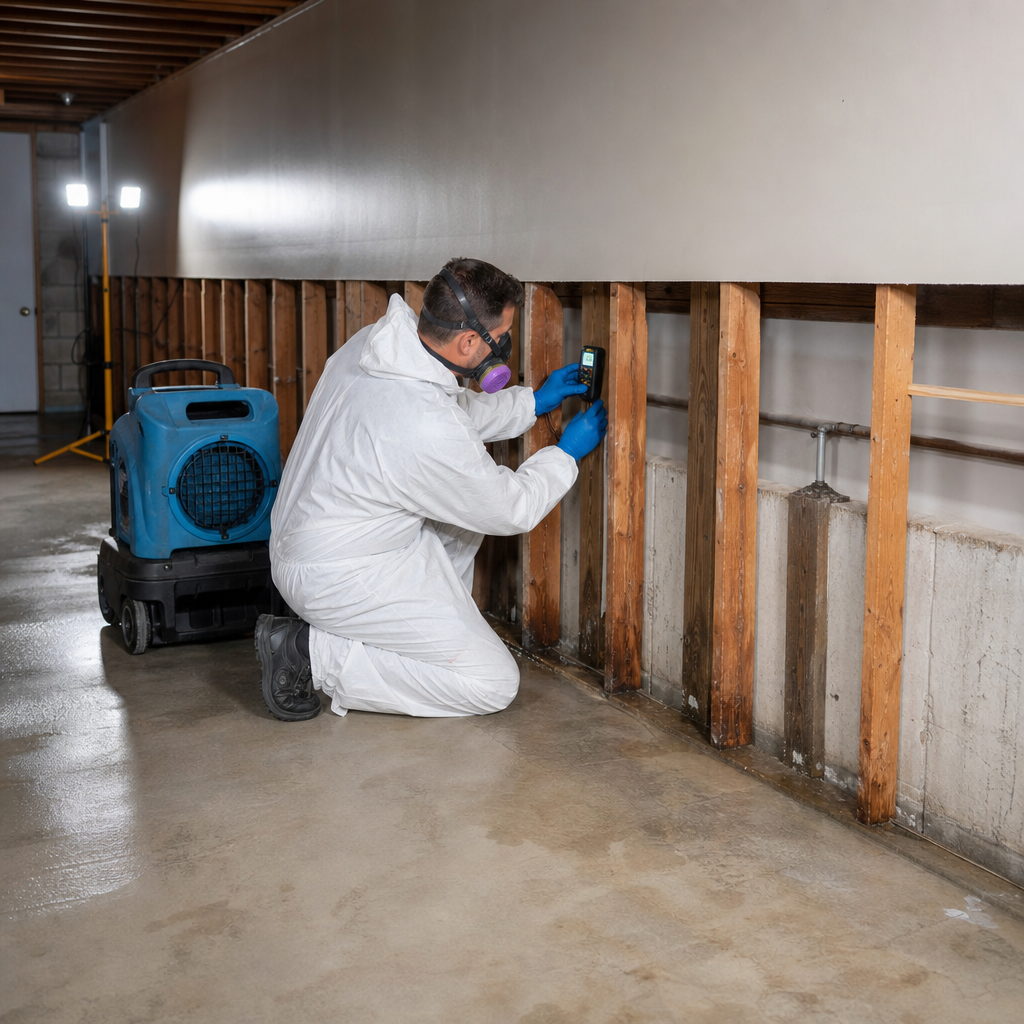
Pre-war and historic homes require specialized containment during a sewage backup. Older framing styles can turn a localized basement problem into a whole-house air quality emergency if handled incorrectly.
How Balloon Framing Spreads Airborne Pathogens
Many pre-war properties built between 1910 and 1945 along the western hillsides of Englewood feature balloon framing. In these buildings, exterior wall studs run continuously from the foundation sill plate all the way up to the attic rafters without internal firestops. When standing sewage sits in a basement, the natural stack effect of the home draws air upward through these open wall cavities. Standard evaporation pushes aerosolized bacteria, endotoxins, and viruses straight up into first- and second-floor bedrooms and offices.
Why Standard Air Movers Create Severe Cross-Contamination
When an untrained contractor places standard high-velocity air blowers in a sewage-contaminated basement without establishing negative air pressure, they weaponize those airborne pathogens. The high-speed airflow blasts bacteria off the wet concrete and shoots it straight up the open framing cavities. Protecting historic structures, plaster walls, and original floor joists requires a controlled engineering approach:
- Negative-Pressure Containment: Floodline seals the contaminated area with heavy-duty poly barriers and sets up industrial HEPA air scrubbers. By venting air to the outdoors, we create negative pressure that prevents pathogens from escaping into clean living areas.
- Targeted Antimicrobial Sanitization: Our technicians apply EPA-registered, hospital-grade biocides directly to salvageable structural timbers, killing bacteria and fungi while protecting original old-growth wood.
- Monitored Structural Drying: We deploy commercial desiccant and LGR dehumidifiers to pull trapped moisture out of historic framing, tracking daily drying logs to satisfy insurance standards without unnecessary demolition.
Affected Building Materials: Repair vs. Replace Assessment
Need emergency sewage removal?
We’re available now - call for a fast, free estimate.
According to Floodline Restoration Co., deciding whether materials can be decontaminated or must be removed depends primarily on their porosity and the duration of exposure to black water.
Drywall, Insulation, and Baseboards
Porous building materials exposed to Category 3 sewage cannot be safely sanitized. Drywall, baseboards, fiberglass insulation, and carpet padding act like sponges for contaminated water. During professional basement sewage cleanup in Englewood, our technicians perform a clean flood cut 12 to 24 inches above the visible water mark to remove all contaminated drywall and expose framing cavities for thorough treatment.
Subfloors, Framing Joists, and Historic Hardwoods
Heavy structural timbers, floor joists, and historic old-growth hardwood floors are semi-porous and can often be saved if extraction begins quickly. Floodline uses high-powered extraction, injected drying systems, and repeated antimicrobial washdowns to restore wood without warping. If you are dealing with a sudden plumbing failure, acting fast on what to do first when a pipe bursts gives us the best chance to salvage valuable architectural elements under your insurance claim.
Concrete Slabs and Masonry Foundations
Poured concrete floors and stone foundations tolerate pressurized hot-water extraction and commercial disinfectants well. Our multi-stage cleaning process penetrates masonry pores, eliminating deep-seated bacteria and lingering odors without damaging your foundation walls.
What Does Emergency Sewage Removal Cost?
The cost of emergency sewage removal depends on the volume of black water, the total square footage affected, the extent of structural demolition required, and the level of biohazard containment needed. Simple extractions with minimal material loss cost significantly less than multi-room backups that require extensive drywall removal and multi-day structural drying.
Key Cost Factors
- Extraction Volume: Pumping out several inches of standing black water requires specialized truck-mounted equipment and hazardous waste disposal.
- Containment and Air Scrubbing: Setting up sealed containment barriers and HEPA-filtered negative air machines prevents whole-house contamination.
- Material Removal vs. Restoration: Discarding saturated porous items and applying targeted drying systems to preserve historic woodwork.
- Sanitization and Deodorization: Multi-step hospital-grade antimicrobial treatments and thermal fogging to eliminate bacteria and foul odors.
Insurance Coverage and the Straight Claim Program
Most property owners rely on insurance to cover the costs of sewage remediation. Standard homeowners policies often require a specific sewer and drain backup endorsement, while sudden internal pipe breaks are typically covered under standard dwelling terms. Floodline takes the administrative burden off your shoulders through our Straight Claim Program:
- We bill your insurance carrier directly, eliminating large upfront payments.
- We create itemized scopes using Xactimate, the pricing software standard used by major insurance carriers.
- We provide photographic evidence and daily digital moisture logs so your adjuster has everything needed for immediate claim approval.
Frequently Asked Questions About Emergency Sewage Removal
How much does professional emergency sewage removal cost?
Professional biohazard sewage removal costs vary based on the depth of standing water, the square footage involved, and whether finishes like drywall and flooring require removal. Floodline Restoration Co. provides clear, itemized estimates and performs a free visual inspection to give you an accurate price on-site.
What immediate steps should I take while waiting for sewage cleanup crews?
Keep all family members and pets out of the contaminated area. Shut off your main water supply line to prevent added pressure, and turn off electrical power to the affected zone only if you can safely reach the breaker box without stepping in water. Do not turn on standard fans or attempt to clean up black water with household vacuums.
Does homeowners insurance cover emergency sewage backup removal?
Coverage depends on the source of the water and your specific policy language. Backups originating from municipal sewer lines or external drains generally require a sewer and drain backup rider. Sudden interior pipe breaks are typically covered under standard property policies. Our Straight Claim team works directly with your insurance adjuster to document the cause and process the paperwork for you.
How fast can an emergency sewage extraction team respond?
Floodline Restoration Co. maintains a 24/7 live dispatch team that guarantees an on-site arrival within 45 minutes across Englewood and neighboring communities. Fast response is vital to stop black water from wicking up wall cavities and penetrating deep into structural timbers.
What are the health risks of raw sewage exposure in a home?
Raw sewage contains Category 3 pathogens, including E. coli, Salmonella, Hepatitis A, and various parasites. Exposure can happen through direct skin contact, accidental ingestion, or breathing in airborne bio-aerosols. Professional containment and HEPA air filtration are required to eliminate these risks safely.
How is a property properly decontaminated after a sewage overflow?
Proper decontamination involves removing all standing wastewater, tearing out contaminated porous materials like carpet padding and wet drywall, and treating semi-porous framing with EPA-registered hospital-grade antimicrobials. The area is then dried under HEPA negative air pressure and tested with digital moisture meters before reconstruction begins.
Need emergency sewage removal?
We’re available now - call for a fast, free estimate.
Frequently Asked Questions
How long does the complete emergency sewage cleanup and drying process take?
While Floodline Restoration Co. arrives within 45 minutes to extract standing black water immediately, the complete containment, antimicrobial treatment, and structural drying process typically takes 3 to 5 days. Certified technicians monitor daily moisture levels and negative-air filtration to ensure the building envelope is safe and dry before rebuilding.
Can personal belongings and furniture exposed to sewage backup be salvaged?
Non-porous belongings made of metal, solid wood, or glass can usually be sanitized with hospital-grade biocides, but porous items like upholstered furniture, mattresses, and area rugs must be discarded. Floodline Restoration Co. creates a detailed biohazard inventory of unsalvageable items with photo evidence to ensure your insurance carrier reimburses you properly.
What happens during Floodline's free on-site visual sewage inspection?
Upon arriving via 24/7 live dispatch, our specialists map the biohazard contamination zone, test structural framing for hidden moisture migration, and set up containment barriers. We then present an itemized scope of work using carrier-standard Xactimate software to streamline your claim through our Straight Claim Program.
About the author
 |
Marcus Caldwell Marcus Caldwell is an IICRC-certified Water Damage Restoration Technician with over 12 years of hands-on experience in emergency property recovery across New Jersey. Holding a B.S. in Construction Management from Rutgers University, he specializes in structural drying techniques and navigating complex insurance claims for both residential and commercial properties. Marcus leverages his field expertise to provide Englewood property owners with clear, actionable guidance on mitigating water damage and understanding restoration costs. |
Water damage, flood, or mold emergency?
We’re available now - call for a fast, free estimate.
Call Now - Free Estimate