
Last updated August 25, 2026
Free visual inspection and a written scope of work before any mitigation begins - photos, moisture readings, and drying logs go in your claim file
The scope we write is the scope we bill. Anything new gets shown to you, in writing, before we touch it.

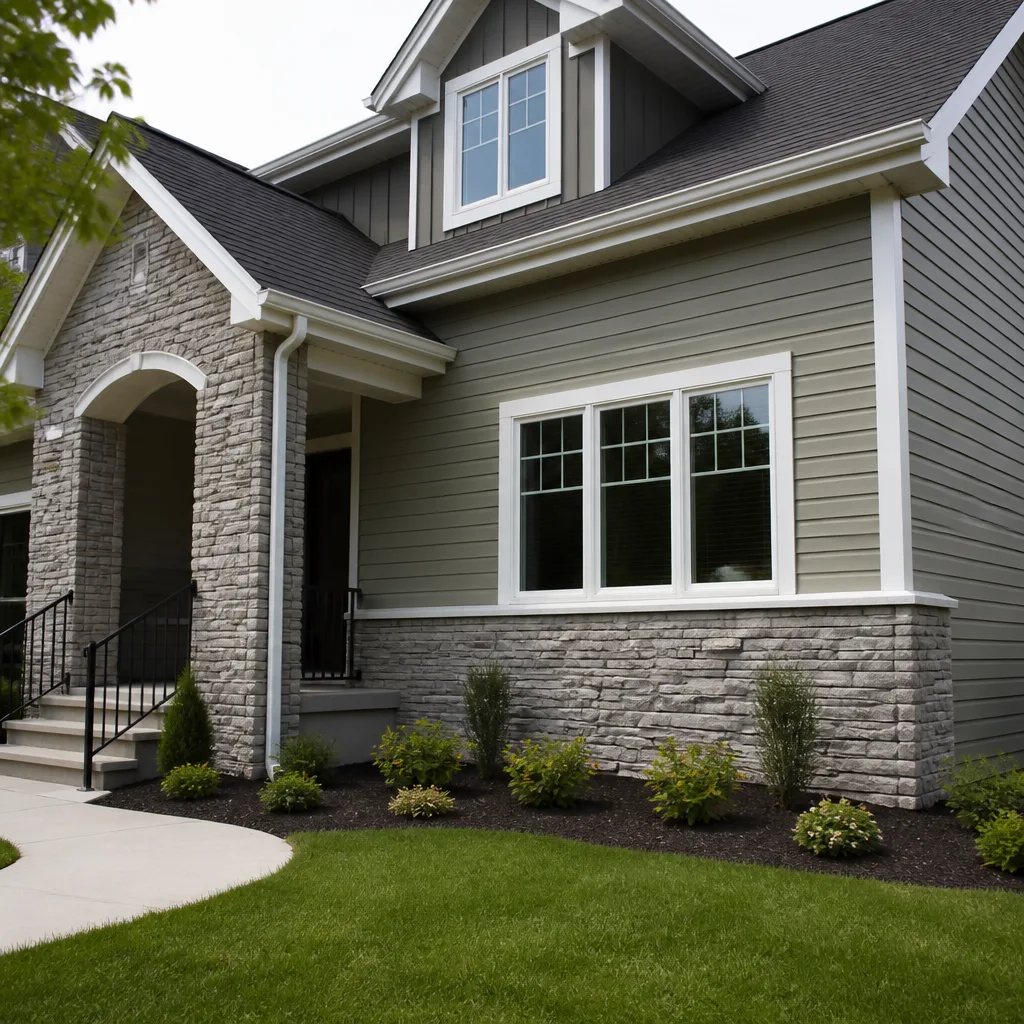
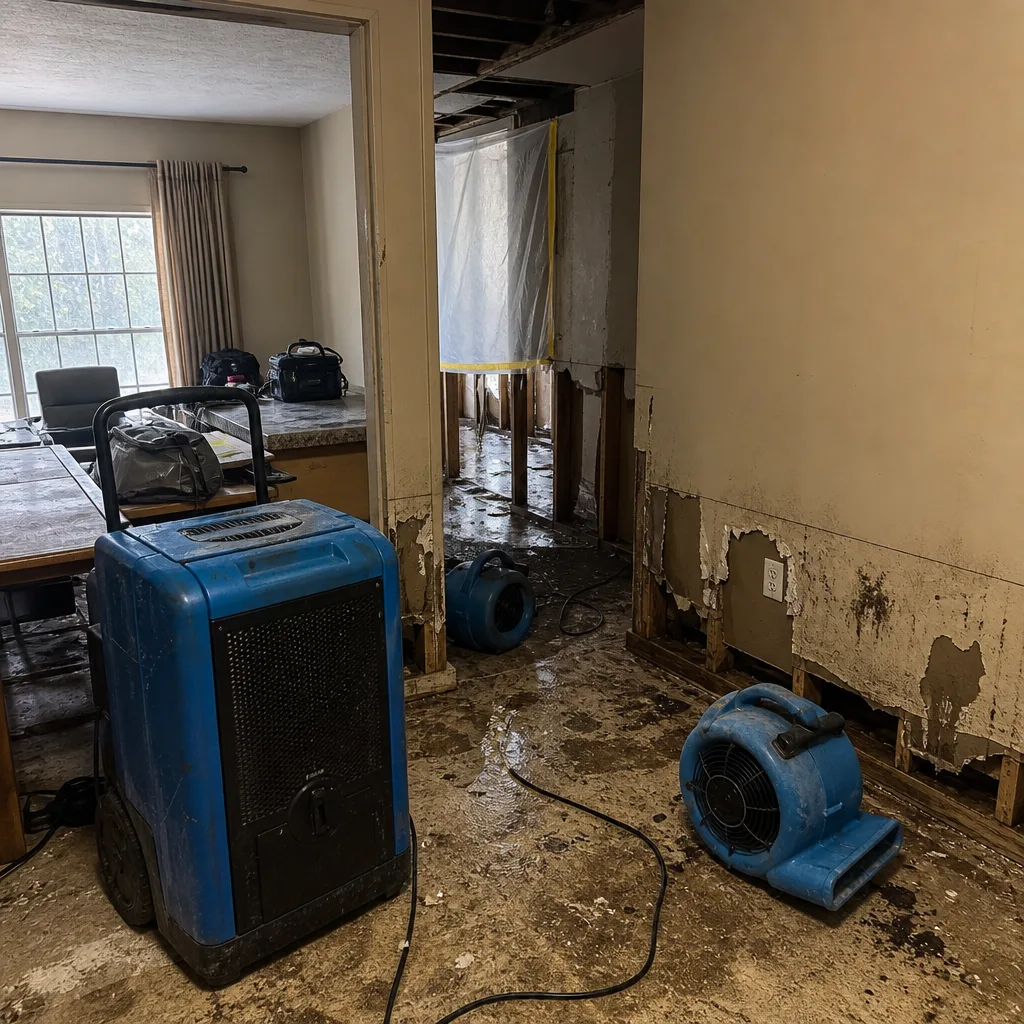 Before
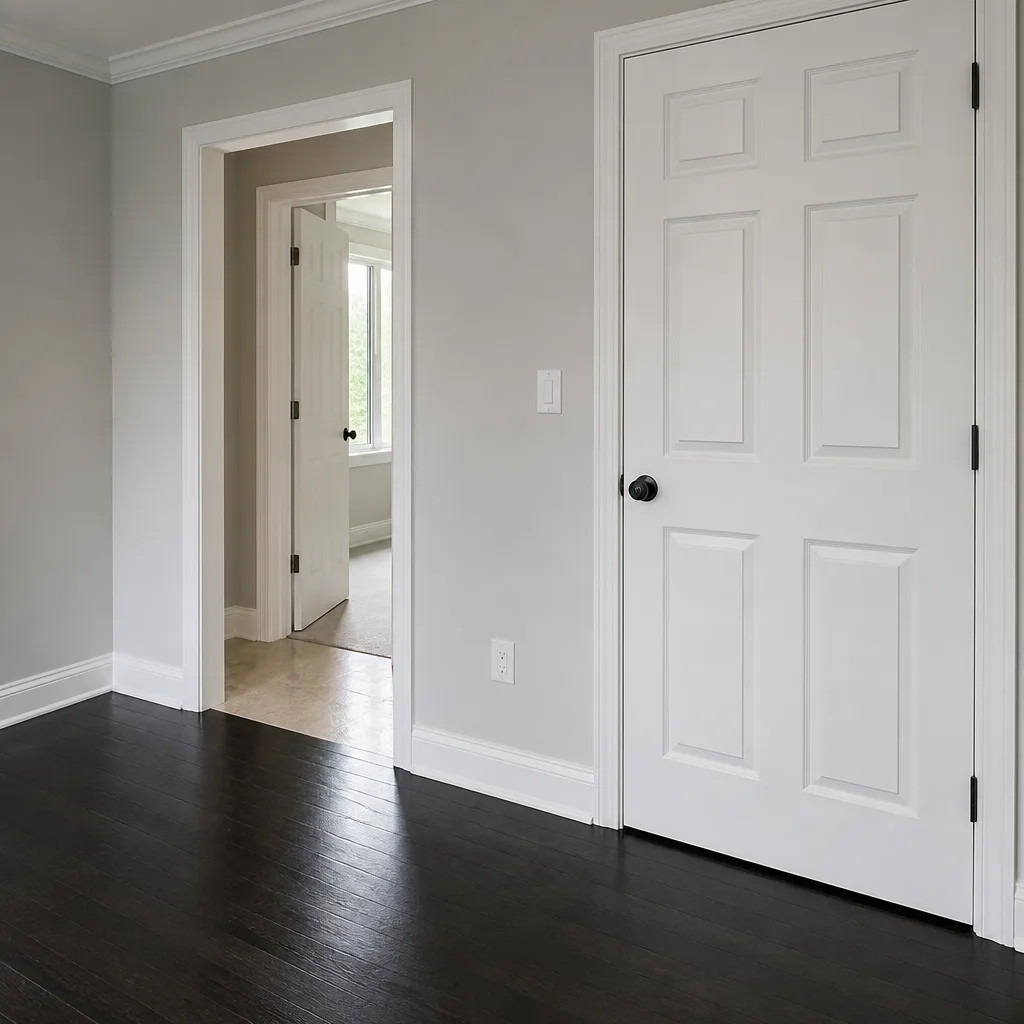 After
After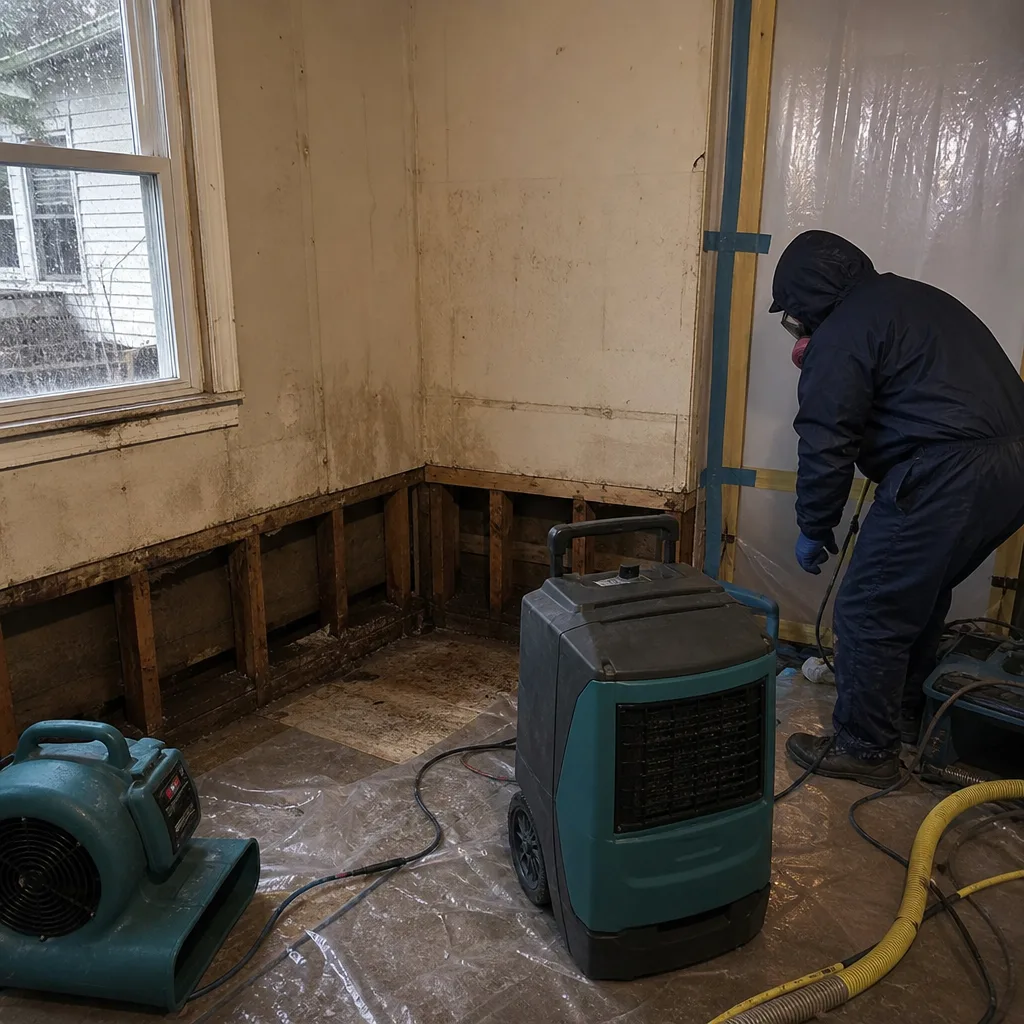 Before
 After
After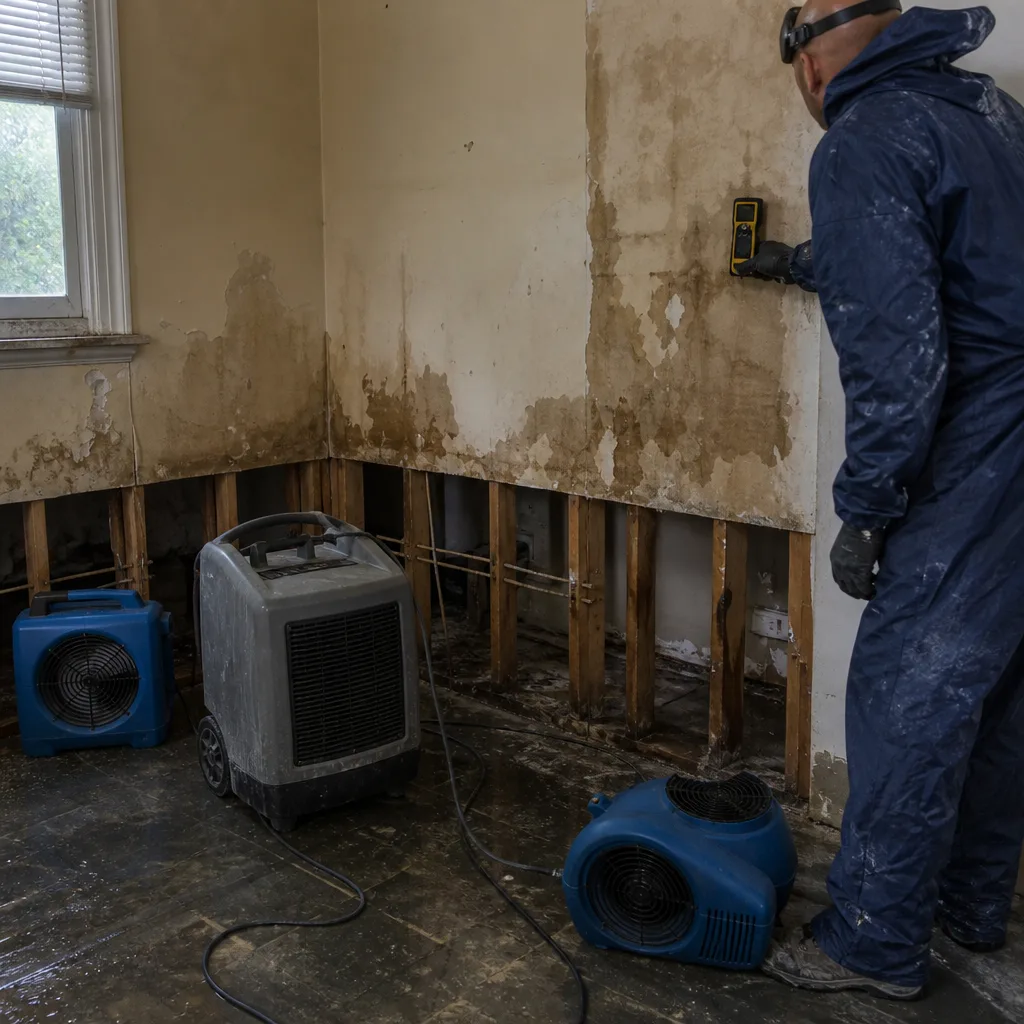 Before
 After
AfterDIY vs Professional Damage Restoration: The Englewood Homeowner’s Decision Guide
Here’s a number most Englewood homeowners never hear until it’s too late: a Category 2 water loss that isn’t dried to standard within 48 hours has a meaningful chance of developing microbial growth inside the wall cavity, even when the surface feels dry to the touch. The restoration industry doesn’t advertise that figure because it makes the work sound urgent, and it is. This guide walks through which damage a capable homeowner can handle with a shop vac and a fan, and which damage calls for commercial drying equipment and a certified crew. We’ve worked in Englewood homes for years, and we’ve written this so you can make that call without pressure and without guesswork.
Quick Answer
For anything beyond a small, contained water spill from a clean source (a supply line, an overflowing sink, a roof leak caught the same day), professional restoration in Englewood is usually the lower-cost decision over the life of the home. That’s because visible surface drying is not structural drying, and moisture trapped behind drywall, under flooring, or inside a ceiling cavity will continue damaging the house for weeks after the visible water is gone. If the water came from a sewer backup, touched insulation, or sat for more than 24 hours, skip the DIY question entirely and call a certified crew.
Table of Contents
- Understand the Damage Before You Touch Anything
- What a Homeowner Can Realistically Handle Alone
- The Hidden Moisture Problem: Walls, Cavities, and Subfloors
- What DIY Really Costs in Englewood: A Fair Comparison
- Equipment: What Professionals Use That You Don’t Own
- How Insurance Changes the DIY Decision
- What a Professional Restoration Actually Looks Like, Step by Step
- Common Mistakes to Avoid
- When to Call a Professional
- Frequently Asked Questions
- The Bottom Line
Understand the Damage Before You Touch Anything
Water damage in an Englewood house never announces itself politely. Sometimes it’s a burst supply line behind the washing machine at 11 p.m. Sometimes it’s the slow roof leak that finally revealed itself with a stain on the kitchen ceiling after the last nor’easter. The first decision isn’t what to buy; it’s what you’re actually dealing with. Restoration professionals classify water into three categories, and the category changes everything.
Category 1 is clean water from a supply line, a faucet, or a rainwater leak that hasn’t passed through building materials. It’s the only category a homeowner should ever consider drying without professional help, and even then, only in small, contained amounts.
Category 2 is gray water: washing machine discharge, dishwasher overflow, or water that has sat long enough to pick up soap, food, or mild biological matter. It can make people sick on contact and requires antimicrobial treatment and proper drying protocols.
Category 3 is black water: sewage backups, floodwater from outside, or any water that has come into contact with fecal matter or hazardous chemicals. This is a biohazard, plain and simple. The Englewood homeowner who tries to dry a Category 3 loss with towels and a dehumidifier is creating a health problem that will outlast the drying cycle.
In our experience working in Englewood homes, the biggest classification errors we see are homeowners calling a sewage backup “dirty water” and treating it like a mop-up job. The water that came up through a floor drain during a heavy storm is not the same thing as the water that spilled from a fresh supply line. If there’s any doubt, the safe call is to treat it as one category worse than your best guess.
You should also know that Englewood’s housing stock includes a lot of pre-1960 homes with plaster walls and hardwood flooring that react to water very differently than drywall and vinyl plank in newer construction. Plaster absorbs water slowly and releases it slowly; a wall that feels dry on the plaster surface can hold moisture in the lath behind it for weeks. That’s why the drying standard in this trade isn’t “feels dry,” but a moisture reading taken with a meter and logged until it hits the dry standard for that material.
What a Homeowner Can Realistically Handle Alone
There’s a narrow but real set of water incidents where a capable Englewood homeowner can do the work without paying a restoration company. The key word is narrow. Here’s what that looks like.
If you spill a pitcher of water on a hardwood floor and wipe it up within minutes, you’re done; no professional needed. If a supply line under a sink sprays for ten minutes before you shut it off and the water stayed in one room, on tile, with no wall penetration and no insulation contact, a mop, a fan, and patience is a defensible DIY position. Same story with a roof leak caught the same day that fits inside a five-gallon bucket, with no drywall saturation beyond a small patch you’re willing to cut out and patch yourself.
Here’s the honest test we use when talking to Englewood homeowners:
- Is the water source clean and known? If yes, continue. If no, stop and call.
- Did the water stay in one visible room for less than 24 hours? If yes, continue. If no, water has moved into places you can’t see.
- Can you see the full extent of the wet area, including under any flooring? If yes, continue. If no, you’re guessing, and guessing wrong is expensive.
- Do you own a moisture meter? A $30 pin-type meter from a hardware store is not the same as the equipment pros use, but it’s better than touch. If you don’t own one, you have no way to verify dryness.
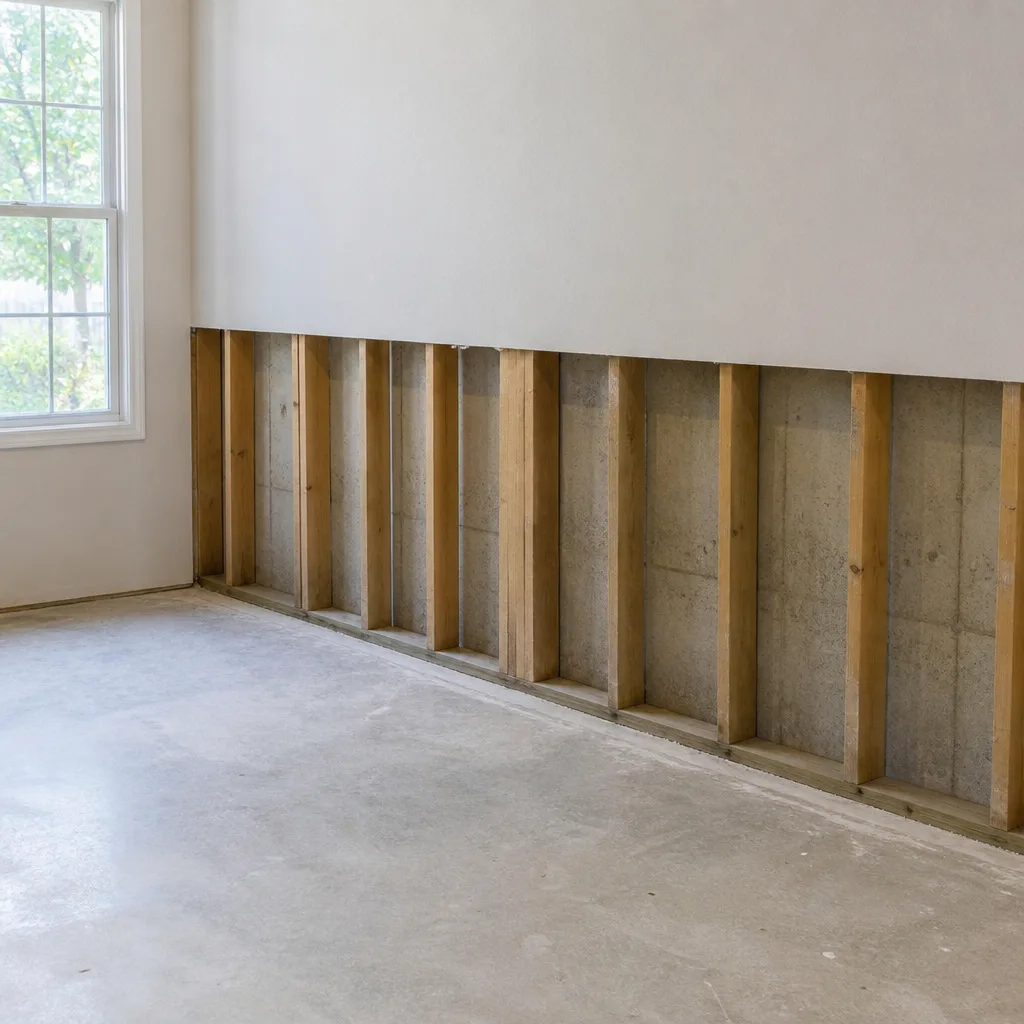
- Are you willing to cut out and replace any drywall that got wet? Because “it dried” is not the same as “it’s clean.” Wet drywall breaks down, holds mold, and should be removed once saturated.
If you answer no to any of those, the DIY route is a bet against the house, and the house usually wins. Englewood basements, especially in the older parts of town near the downtown core, are notorious for wicking moisture up through concrete foundation walls. A basement carpet that got wet from a minor floor drain backup may look dry on top and be growing something underneath within days.
The Hidden Moisture Problem: Walls, Cavities, and Subfloors
The single most expensive sentence in Englewood restoration is “but the floor felt dry.” Water moves by gravity and by capillary action, and it does not respect the boundaries of the room where it entered. A pipe leak behind a second-story bathroom wall in a Colonial on a street off Knickerbocker Road can travel down the stud bay, across the ceiling joist, and pool behind the first-floor crown molding without ever showing up as a puddle.
Here’s the sequence of what happens, and it’s the same in a 1920s center-hall home and a 2015 townhouse.
First, the visible water evaporates. The homeowner sees the floor is no longer wet, assumes the problem is solved, and moves on. Second, the water trapped in the wall cavity or under the flooring continues to raise the relative humidity in that enclosed space to 80 or 90 percent. Third, building materials begin to break down: wood swells and warps, drywall loses structural integrity, adhesives release, and paint or wallpaper starts to bubble. Fourth, if the moisture sits long enough, mold spores that were already present become active and begin colonizing. This can happen in as little as 48 to 72 hours under the right conditions.
Englewood’s climate compounds this. The summer months bring sustained heat and humidity, which slows natural drying and gives microbial growth an extended window. The winter months bring the opposite problem: homes are sealed tight against the cold, and the moisture has nowhere to escape. In both seasons, a fan and an open window are not a drying strategy for anything that has saturated building material.
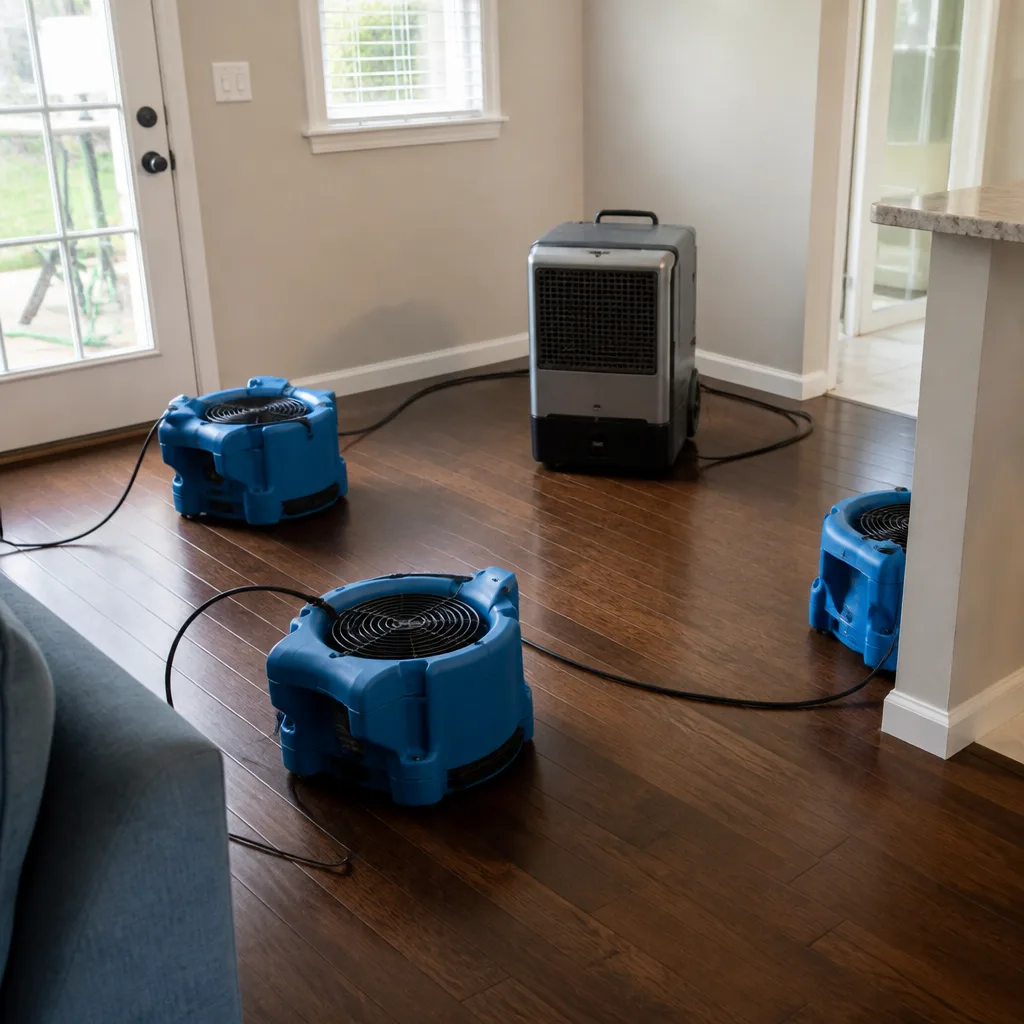
Professionals approach this with a moisture map. Before any drying equipment goes in, a certified technician takes baseline readings across the affected area and the surrounding materials, identifies the boundaries of the damage, and documents everything. That map drives decisions about how many air movers, dehumidifiers, and specialty injection systems are needed. Without it, even professional-grade equipment is just moving air around.
In Englewood specifically, we see material failures in crawl spaces under older homes that were never properly dried from a previous leak. The homeowner never knew the water got under the floor because the crawl space was never inspected. Those are the jobs that turn from a $2,500 drying job into a $18,000 structural repair, and the homeowner says the same thing every time: “I thought it dried on its own.”
What DIY Really Costs in Englewood: A Fair Comparison
Let’s put numbers on the table. We’re going to be straight about what DIY costs and what professional restoration costs in the Englewood market, because the honest comparison is never just the invoice.
A homeowner who wants to do a “proper” DIY drying job on a small Category 1 water loss might spend:
- Rental dehumidifier (commercial grade): $65 to $110 per day, usually a three-day minimum rental, so $195 to $330
- Two air movers: $45 to $80 per day total, so $135 to $240 over three days
- A basic moisture meter (not professional grade): $30 to $80
- Plastic sheeting, tape, and containment: $25 to $50
- Drywall patch and paint (if the homeowner does the work): $75 to $200
- Total DIY cost range: $460 to $900, plus at least a full weekend of labor
Professional restoration on that same small Category 1 loss, handled correctly and documented for insurance, typically runs $900 to $1,800 in the Englewood market. So at face value, the professional route costs more. But the comparison isn’t honest if it stops there.
The hidden costs of DIY show up later. If the homeowner didn’t dry the wall cavity completely, the mold remediation that follows starts around $500 for a small contained area and goes up from there. If flooring warped because the subfloor wasn’t dried, a small section of hardwood replacement in an Englewood home runs $800 to $2,500. If a structural member rotted over the next two years because the water was never addressed, the repair is five figures.
Here’s the real math: DIY saves real money only when the water never touched anything beyond a surface you could wipe with a towel. The moment water entered a wall cavity, a floor system, or insulation, the DIY savings become a gamble with the house’s structure as the stake.
On insurance claims, the math changes again. If a covered loss is involved, the homeowner’s out-of-pocket cost is the deductible, not the invoice. A homeowner who spends $700 on DIY drying and then has a claim denied because the damage was mishandled has paid $700 to lose the coverage they were already paying for. A professional restoration company that works directly with the carrier handles the documentation, the scope, and the billing, and the homeowner never has to be the messenger between two parties who don’t answer the phone.
In Englewood, where real estate values mean a basement mold disclosure can knock $10,000 or more off an eventual sale price, the cost of getting drying wrong is measured in home equity as much as in repair invoices.
Equipment: What Professionals Use That You Don’t Own
Hardware store equipment is not restoration equipment. It may look the same from across the room, but the performance gap is significant, and it’s the reason professional drying works on a timetable that homeowner drying cannot match.
A residential dehumidifier from a big-box store removes about 10 to 25 pints of water per day from the air. A professional-grade unit like a Dri-Eaz or Phoenix low-grain refrigerant dehumidifier removes 70 to 130 pints per day, and it’s designed to run continuously for days without overheating. In a sealed room, that difference determines whether the drying takes two days or two weeks.
The same gap exists with air movement. A box fan moves air in a room. A professional air mover moves air against surfaces at a velocity designed to force moisture out of porous material through evaporation. Without that directed airflow, water in drywall and wood simply won’t leave at the rate required to prevent secondary damage.
Some materials resist standard drying altogether. Hardwood floors, especially the oak flooring common in Englewood’s older homes, cup and crown when moisture gets underneath. A specialist drying system, an Injectidry panel system, pulls water out of the floor cavity through a vacuum manifold. A homeowner simply cannot replicate that with any rental equipment. Neither can a general contractor with a dehumidifier and a will.
Then there’s the verification layer. Professional drying ends with a moisture log: daily readings from a professional-grade meter, compared against a known dry standard for the specific material, and delivered to the homeowner and the insurance carrier. That log is the proof that the job is done. Without it, “dry” is just an opinion.
Floodline Restoration Co. runs Dri-Eaz, Phoenix, XPOWER, B-Air, and Injectidry equipment on jobs across Englewood, and our technicians are trained to IICRC and RIA standards. We say this not to impress you with a brand list, but because we want you to understand what “professional-grade” actually means when you’re comparing estimates. It means the equipment shows up, gets placed according to a moisture map, runs until the reading hits the dry standard, and the numbers are written down.
How Insurance Changes the DIY Decision
If your damage is covered by homeowners insurance, the DIY calculation is not a money question. It’s a documentation question. Here’s the honest situation: an insurance carrier will almost never reimburse a homeowner for DIY restoration work at the same rate a professional restoration company can bill, and a carrier will scrutinize a DIY claim far more closely because the scope and the standard of care are unverified.
Professional restoration companies produce documentation that insurance adjusters know how to read: photo documentation of the damage site, moisture maps, daily drying logs, equipment placement records, and a written scope of work with line-item pricing. That’s the language of claims. A homeowner with photos on a phone and a Home Depot receipt is speaking a different language than the adjuster’s office, and the translation usually costs the homeowner money.
There’s also the matter of coverage after the job. If a homeowner performs a DIY drying and the damage returns in six months as mold, the carrier will often deny the new claim because the original loss was not properly mitigated. The language of most policies essentially requires reasonable mitigation to prevent further damage. A professional drying log is the evidence of reasonable mitigation.
Floodline Restoration Co. bills insurance carriers directly. That means the homeowner doesn’t have to float the cash, chase the reimbursement, or argue about line items. The carrier receives the scope, the documentation, and the invoice in the format they expect, and the homeowner receives a copy of everything. The homeowner never plays messenger. The Floodline Restoration Co. home page spells out how that direct billing process works from first call to final invoice.
In Englewood, where many homeowners have been in their houses for two decades or longer, the insurance policy is often a grandfathered document with terms the homeowner hasn’t read since closing. Professional restoration companies deal with those policies, and those adjusters, every week. That familiarity is part of what you’re buying.
What a Professional Restoration Actually Looks Like, Step by Step
Here’s the process a homeowner can expect from a certified restoration company in Englewood, from the first phone call to the final walkthrough. We’re sharing this because the process itself is part of the answer to “what am I paying for?” It’s not extraction and a fan. It’s a documented sequence.
- First call, live dispatcher, all hours: You call. A person answers. A certified crew is dispatched to Englewood, normally the same visit.
- Site assessment and source control: The technician stops the source of the water if it isn’t already stopped, and assesses the category of water and the boundaries of the damage.
- Moisture map and baseline readings: Before equipment goes in, the technician documents moisture levels across the affected area and in surrounding materials.
- Extraction: Standing water is removed with professional extraction equipment, not a wet vac.
- Containment and equipment placement: Air movers and dehumidifiers are placed according to the moisture map. Containment is set up if the job requires it.
- Daily monitoring: A technician returns daily to log moisture readings and adjust equipment positioning.
- Dry standard verification: The job isn’t done until the readings hit the dry standard for the material. The log is handed to the homeowner and the carrier.
- Reconstruction if required: If drywall, flooring, or trim must be replaced, the same company does the rebuild. No handoff to an unknown subcontractor.
Here’s what that process buys you in Englewood. The house is dried to a documented standard, not a feeling. The insurance carrier receives evidence that the mitigation was performed correctly. The homeowner receives a written log and a written scope. And if something isn’t done right, the job is backed by the 90-Day Done Right Promise: if it’s not done right, we make it right. In writing. No paperwork battles, no arguing. That promise is the reason we call it the Keystone Standard internally, and it’s not the kind of guarantee a homeowner can give themselves.
Common Mistakes to Avoid
- Waiting to see if it dries on its own. Moisture trapped behind drywall or under flooring doesn’t dry in place; it spreads, it breaks down materials, and it feeds microbial growth. The waiting period is the most expensive line item in any Englewood restoration job.
- Using a box fan and a household dehumidifier for a wall cavity leak. Household equipment isn’t designed to dry enclosed cavities. The surface feels dry; the cavity stays wet. That’s a mold problem in the making.
- Treating a sewer or drain backup like a water spill. Category 3 water is a biohazard. The area must be contained, disinfected, and dried by a certified crew with proper PPE. Bleach and a mop are not a Category 3 protocol.
- Cutting open a wall without testing for asbestos or lead. Englewood’s housing stock includes many pre-1970 homes. Cutting into walls or ceilings in those homes can release asbestos or lead dust. A certified restoration company tests or uses safe practices as standard.
- Filing an insurance claim without professional documentation. A claim supported by a homeowner’s cell phone photos and a hardware store receipt is routinely paid at a lower amount or denied outright. Carriers read professional documentation; everything else is an uphill conversation.
- Hiring the lowest bid without checking certifications. Restoration is a trade with certification standards for a reason: the work affects the health of the house and the people in it. A crew without IICRC or IFA training is cheaper for a reason.
When to Call a Professional
Call a professional if the water came from a sewer line, a floor drain backup, or any source that isn’t a clean supply line. Call if the water has been sitting for more than 24 hours, or if you can’t see the full extent of the wet area. Call if the water touched drywall, insulation, flooring, or framing, even if it looks minor. Call if you have any doubt at all about the category of water you’re dealing with. The cost of a professional assessment is always less than the cost of a wrong guess. Floodline Restoration Co. offers free estimates in Englewood, and the call is answered by a live person, not a recording. Call (201) 729-3780 and a certified crew can be on the way the same visit.
Frequently Asked Questions
If the water touched drywall, insulation, flooring, or framing, or if it sat for more than 24 hours, call a professional. The surface drying you can see is not the same as the cavity drying you can’t. A professional moisture assessment takes minutes and tells you whether you have a mop-and-fan job or a real restoration.
Small, contained Category 1 drying jobs in Englewood typically run $900 to $1,800. Larger losses, Category 2 or 3 jobs, and anything requiring rebuild work run higher, and insurance coverage changes the homeowner’s out-of-pocket to the deductible. Floodline Restoration Co. provides free estimates at (201) 729-3780, and we bill the carrier directly when a covered loss is involved.
Most policies cover sudden and accidental water damage from a burst pipe, a supply line failure, or a covered appliance leak, but not gradual damage from a long-standing leak or neglect. A professional restoration company documents the job in the format carriers expect, which is the strongest position a homeowner can take on a claim. Call (201) 729-3780 and we’ll help you sort out coverage before any work begins.
No. Sewer backups are Category 3 water, which is a biohazard, and bleach is not an effective or complete treatment for porous building materials that have absorbed contaminated water. The affected area must be contained, the contaminated materials removed, and the structure disinfected by a certified crew. This is not a DIY job, and it’s one of the most dangerous mistakes we see homeowners make.
Fast. Our dispatch is live, 24/7, so a real person answers the phone at 2 a.m. and a certified crew is dispatched to Englewood the same visit. Extraction starts the same visit in most cases. Call (201) 729-3780 and you won’t get a voicemail.
If the water came from a clean source, was caught immediately, and the wet area is fully contained to drywall only, a homeowner replacement can work. If any framing, insulation, or flooring got wet, or the water sat for any length of time, the scope changes. A professional assessment tells you exactly what needs doing, with a written scope you agree to before work starts. No surprises on the bill, and no work you didn’t approve.
The Bottom Line
The question isn’t whether a homeowner can dry water damage; it’s whether the homeowner can verify the structure is dry. In Englewood, with older housing stock, a climate that fights drying in both winter and summer, and real estate values that punish undocumented mold and rot, the DIY bet is only safe on the smallest, cleanest, most contained spills. For everything else, the professional route costs more up front and less over time, and it comes with documentation, a written guarantee, and a name you can hold accountable. If you’re looking at water in your house right now, call (201) 729-3780. A live person answers. We’ll be there when we say.
Written by Curt Bowman, Owner at Floodline Restoration Co., serving Englewood since 2010.