
Quick Summary
Professional water damage cleanup costs typically range from $3 to $7.50 per square foot, with total project expenses falling between $450 and $16,000 depending on water contamination, saturation depth, and drying speed. Floodline Restoration Co. keeps restoration bills down by deploying non-invasive thermal drying techniques and precision moisture mapping to preserve salvageable building materials rather than defaulting to costly demolition. Readers will learn how specific damage categories dictate pricing and can contact the 24/7 dispatch team at Floodline Restoration Co. for rapid emergency extraction and upfront cost estimates.
Water Damage Cleanup Cost: Pricing and Restoration Overview
If you are dealing with sudden indoor flooding, water damage cleanup costs typically range from $3 to $7.50 per square foot, with total project bills generally falling between $450 and $16,000 depending on the category of water, the depth of saturation, and how quickly drying begins.[3]
A major factor in total project cost is whether materials can be dried in place or require removal and reconstruction. Some published pricing figures include only basic mitigation and drying, while others include repairs and replacements. Using non-destructive drying methods, thermal imaging, and directed airflow from professionals like Floodline Restoration Co. can help preserve structural elements and minimize overall costs when feasible.
Standing water left untreated increases the risk of secondary wood rot and mold development. Prompt evaluation and moisture mapping help establish an accurate scope of work and prevent unnecessary structural damage.
What Is the Average Water Damage Cleanup Cost?
Average Water Damage Cleanup Cost Summary: Professional water damage restoration typically runs between $450 and $16,000, with an average rate of $3 to $7.50 per square foot. Final pricing depends heavily on the water category (clean, grey, or black), total square footage, drying equipment run time, and whether materials can be dried in place or require removal.[1]
Water damage restoration costs vary widely based on the circumstances of the loss. Small, clean-water leaks sit at the lower end of the pricing spectrum, while severe sewage backups or multi-floor floods can exceed $16,000. The cost rises when water sits for extended periods, absorbs into porous building materials, or introduces biological contaminants into the structure.
Price Ranges by Project Scope and Water Category
Clean water incidents (Category 1), such as a broken supply line or an overflowing sink, are generally the most straightforward to dry and carry the lowest mitigation cost. When water contains detergents, chemicals, or urine (Category 2 grey water), or raw sewage and outdoor floodwater (Category 3 black water), specialized sanitation, disposal fees, and safety equipment increase the price. Some published figures reflect only initial mitigation, while others include long-term reconstruction and contents replacement.
How a Fast Emergency Response Keeps Bills Down
Timing directly influences how much cleanup will cost. Rapid extraction and drying stop moisture from migrating deeper into structural assemblies, protect flooring materials, and reduce the risk of mold growth, containing expenses before extensive reconstruction becomes necessary.
Emergency Water Damage Restoration
Emergency restoration focuses on immediate physical water removal and high-capacity dehumidification. The goal is to stabilize the indoor environment and stop active moisture transfer before framing and finishes absorb excess water.
Rapid Extraction and Stabilization
The longer water sits, the deeper it wicks into structural assemblies. Technicians use commercial extractors to pull water out of carpets and subfloors. Once standing water is gone, dehumidifiers and air movers pull trapped vapor out of the air, bringing relative humidity down to safe levels.
Preserving Architectural Materials
Older properties and vintage assemblies, such as plaster walls and hardwood floors, require careful handling. Controlled, high-volume drying setups can often pull bound water out of dense materials without requiring aggressive structural demolition.
Flood Damage Restoration
Flood damage typically involves Category 3 water intrusions from heavy rainstorms, surface runoff, or rising water. Outdoor floodwater carries mud, bacteria, and agricultural or road runoff that requires thorough decontamination alongside standard drying.
Storm Runoff and Groundwater Infiltration
When ground water breaches a foundation, it can deposit heavy silt and contaminants. Moisture meters and thermal imaging help identify affected zones, allowing technicians to isolate wet areas and apply appropriate antimicrobial treatments.
Category 3 Water Neutralization and Sanitization
Restoring a property after contaminated floodwater requires a methodical approach:
- Containment barriers: Setting up plastic isolation zones under negative air pressure prevents contaminants from drifting into dry, clean areas of the building.
- Washdown and sanitization: Saturated porous items like carpet padding must be removed, followed by cleaning and antimicrobial treatments on salvageable structural components.
- Targeted structural drying: Dehumidification systems draw residual moisture out of concrete foundations and wood framing.
Mold Remediation
Need water damage cleanup cost?
We’re available now - call for a fast, free estimate.
As specialists at Floodline Restoration Co. note, when moisture remains untreated in enclosed spaces or humid basements, the risk of mold growth increases. Professional remediation isolates these fungal colonies and eliminates them using precise physical containment rather than unnecessary demolition.
Targeted Containment vs. Structural Demolition
Defaulting to gutting entire rooms drives up the total cleanup cost by creating substantial rebuilding bills. Localized containment chambers, direct surface treatments, and targeted cavity drying help resolve moisture and microbial issues while preserving sound building materials.
HEPA Air Scrubbing and Cleaning
Safe mold removal follows standard core steps:
- Negative Air Pressure: Commercial air scrubbers direct airflow out of the workspace to keep spores from escaping into living quarters.
- HEPA Micro-Vacuuming and Damp Wiping: Technicians vacuum surfaces using HEPA filtration, then clean framing with professional antimicrobial agents.
- Post-Remediation Verification: Technicians verify that indoor moisture levels and conditions have returned to normal baseline standards.
Sewage Cleanup
A sewage backup is a severe Category 3 biohazard that brings dangerous bacteria, viruses, and parasites into a home or commercial building. Fast, professional extraction and sanitization are required to protect occupant health.
Biohazard Extraction and Containment
Raw sewage cannot simply be vacuumed and left to dry. Saturated porous surfaces like carpet, pad, and low-grade baseboards must be bagged and disposed of according to biohazard protocols. Technicians wear personal protective equipment, set up negative air machines, and extract standing waste using sealed containment tools.
Odor Elimination and Sanitization
Once solids and contaminated liquids are removed, technicians scrub the area with EPA-registered disinfectants. Hydroxyl generators or thermal foggers may be used to neutralize airborne odor molecules and return the property to a safe state.
Fire and Smoke Damage Restoration
When water is used to extinguish a structure fire, it mixes with acidic soot. Water must be removed promptly because humid indoor conditions cause soot to stain porous materials and corrode metal fixtures.
Combining Water Extraction with Soot Removal
Stabilizing a property after fire and water damage involves a synchronized process:[2]
- Emergency board-up and extraction to remove standing suppression water.
- Thermal imaging and dehumidification to dry structural studs and assemblies.
- Specialized surface cleaning to lift soot residues off delicate finishes and ductwork.
Structural Cleaning and Odor Neutralization
Coordinating extraction, soot cleanup, and structural repairs helps prevent communication gaps and avoid unnecessary delays during restoration.
Burst and Frozen Pipe Water Damage Cleanup
During freezing weather, plumbing lines located in exterior walls, unheated crawlspaces, or uninsulated spaces can freeze, expand, and rupture. When the line thaws, pressurized water pours through ceilings and walls.
Hidden In-Wall Leaks and Cavity Drying
Instead of tearing down complete walls to find moisture, technicians at Floodline Restoration Co. map wet areas using thermal imaging and moisture meters. Cavity drying systems can then pump dry air into wall cavities through small openings behind baseboards, saving significant repair costs.
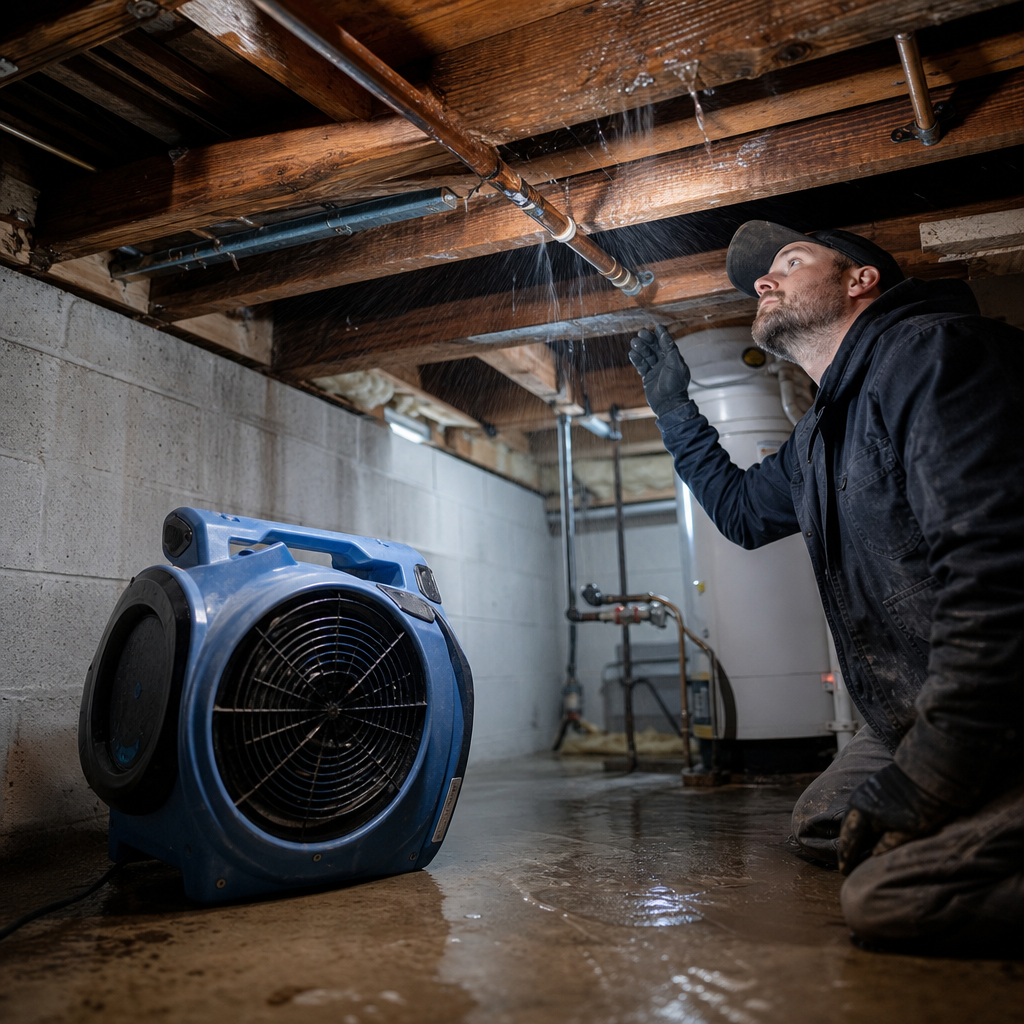
Flooded Basement Cleanup and Water Extraction
Need water damage cleanup cost?
We’re available now - call for a fast, free estimate.
Basement floods are commonly caused by sump pump failures, municipal stormwater backups, or hydrostatic pressure forcing groundwater through foundation walls. The cost to clean a flooded basement depends heavily on water volume, contamination level, and whether the space is finished or unfinished.
For roughly one inch of clean water in a flooded basement, cleanup and extraction typically cost between $500 and $1,500. More extensive flooding, Category 2 or 3 water, or finished basements requiring drywall and flooring replacement represent higher, variable costs depending on the exact scope of work.
Sump Pump Failures and Ground Seepage
When heavy rains overpower a sump pump, water can cover the floor quickly. In an unfinished basement with a concrete slab, cleanup focuses on extraction, slab disinfection, and dehumidification. Finished basements require additional drying and potential removal of saturated carpeting and drywall.
Foundation Dehumidification and Masonry Protection
Concrete block and stone foundations absorb moisture readily. Trapped dampness can cause efflorescence, peeling paint, and persistent odors. Industrial dehumidifiers are run until moisture meters confirm the masonry has returned to dry standard levels.
Roof Leaks and Storm Damage Mitigation
Fierce windstorms and heavy snow loads can dislodge roofing materials or damage flashing, allowing water to enter attics and soak ceilings below.
Emergency Tarping and Stabilization
Securing durable tarps across damaged roof sections halts water intrusion immediately, preventing rain from cascading down interior wall cavities.
Attic Cavity Drying and Insulation Replacement
Wet insulation loses its thermal resistance and holds water against ceiling drywall. Removing sodden insulation and directing dry airflow across attic framing stabilizes the space and reduces the risk of mold growth.
Parts and Components Repaired and Restored
Modern restoration techniques used by Floodline Restoration Co. make it possible to save building materials through in-place preservation drying, which reduces total project expenses and saves time.
Structural Framing, Plaster, and Drywall
Moisture testing at multiple depths determines salvageability. Drywall that has lost its structural integrity or absorbed sewage is cut and removed, while framing and dense plaster assemblies can often be dried in place using controlled heat and dehumidification.
Flooring, Millwork, Cabinetry, and HVAC Systems
Hardwood flooring that has started to cup can often be flattened and saved using specialized vacuum floor mat systems. Toe-kick drying tubes circulate dry air under cabinets to save custom millwork, while HVAC systems are inspected, sanitized, and cleaned to ensure clean airflow.
Understanding Water Damage Cleanup Costs
Costs vary based on the water category (clean, grey, or black) and the specific scope of work required. Standard clean water extraction and drying represent the lower end of the price spectrum ($3.00 to $4.50 per square foot), while contaminated biohazard cleanup or fire suppression mitigation falls into higher ranges ($5.00 to $7.50+ per square foot) due to containment, personal protective equipment, and disposal protocols.
Published pricing figures differ because some include only basic mitigation, while others reflect comprehensive restoration, including repairs, replacements, and structural rebuilding.
The Cost Difference: Targeted Drying vs. Demolition
Unnecessary demolition creates significant rebuild bills for new drywall, baseboards, paint, and flooring. Prioritizing targeted structural drying helps control total restoration costs, shortens project timelines, and minimizes living disruption.
Frequently Asked Questions About Water Damage Cleanup Costs
How much does water damage cleanup typically cost per square foot?
Standard clean water mitigation generally runs between $3.00 and $4.50 per square foot. Contaminated grey or black water cleanup that requires hazard disposal, chemical treatments, and extensive safety equipment typically ranges from $5.00 to $7.50 or more per square foot.
Does homeowners insurance cover professional water damage restoration?
Most standard homeowners policies cover sudden and accidental water damage, such as a burst supply line or an appliance overflow. They generally do not cover gradual leaks that went unaddressed, and outdoor flood damage typically requires a separate flood insurance policy.
What factors determine the total cost of water mitigation?
According to Floodline Restoration Co., the primary cost drivers are the water category (clean, grey, or black), the total square footage affected, the duration of moisture exposure, and whether materials can be dried in place rather than replaced.
How much does it cost to extract water from a flooded basement?
Basic water extraction and cleanup for roughly one inch of clean water in a flooded basement typically costs between $500 and $1,500. Deeper water, contaminated water, or finished basements requiring drywall and flooring replacement represent higher estimates that vary based on the scope of work.
Is water damage cleanup more expensive if mold is present?
Yes. If water sits untreated and mold develops, technicians must set up containment chambers, run HEPA air scrubbers, and follow remediation protocols, which increases the labor and equipment costs.
What is the cost difference between clean water, grey water, and black water?
Clean water (Category 1) costs the least because materials can usually be dried in place without health risks. Grey water (Category 2) involves moderate costs for sanitizing chemical or biological residues. Black water (Category 3) is the most expensive because it involves hazardous bio-contaminants requiring protective suits, disposal of saturated porous goods, and rigorous multi-stage disinfection.
Need water damage cleanup cost?
We’re available now - call for a fast, free estimate.
Sources
- Water Damage Restoration Cost: 2026 Pricing Guide – pushleads.com (2026)
- Water Damage Insurance Claims Statistics (2026 Data) – consumeraffairs.com (2026)
- Water damage by the numbers | The Hanover Insurance Group – hanover.com (2018)
Frequently Asked Questions
How does non-invasive thermal drying help reduce overall water damage cleanup costs?
Non-invasive thermal drying extracts bound moisture from within wall cavities, subfloors, and hardwoods without requiring aggressive structural tear-outs. By saving salvageable materials in place, Floodline Restoration Co. prevents expensive reconstruction bills and shortens total restoration timelines.
How quickly must water extraction begin to prevent expensive secondary damage?
Emergency extraction should begin within 24 to 48 hours to prevent water from wicking deep into framing and triggering active mold growth. The 24/7 emergency dispatch team at Floodline Restoration Co. deploys rapid extraction to stabilize the structure before costly biohazard or microbial remediation becomes necessary.
Can I receive an upfront cost estimate that aligns with my insurance carrier?
Yes, professional restorers use precision moisture mapping to establish carrier-standard, line-item estimates prior to starting extensive work. Floodline Restoration Co. provides transparent assessments so property owners understand the exact scope and mitigation costs upfront.
About the author
 |
Marcus Caldwell Marcus Caldwell is an IICRC-certified Water Damage Restoration Technician with over 12 years of hands-on experience in emergency property recovery across New Jersey. Holding a B.S. in Construction Management from Rutgers University, he specializes in structural drying techniques and navigating complex insurance claims for both residential and commercial properties. Marcus leverages his field expertise to provide Englewood property owners with clear, actionable guidance on mitigating water damage and understanding restoration costs. |
Water damage, flood, or mold emergency?
We’re available now - call for a fast, free estimate.
Call Now - Free Estimate