
Last updated August 25, 2026
Free visual inspection and a written scope of work before any mitigation begins - photos, moisture readings, and drying logs go in your claim file
The scope we write is the scope we bill. Anything new gets shown to you, in writing, before we touch it.
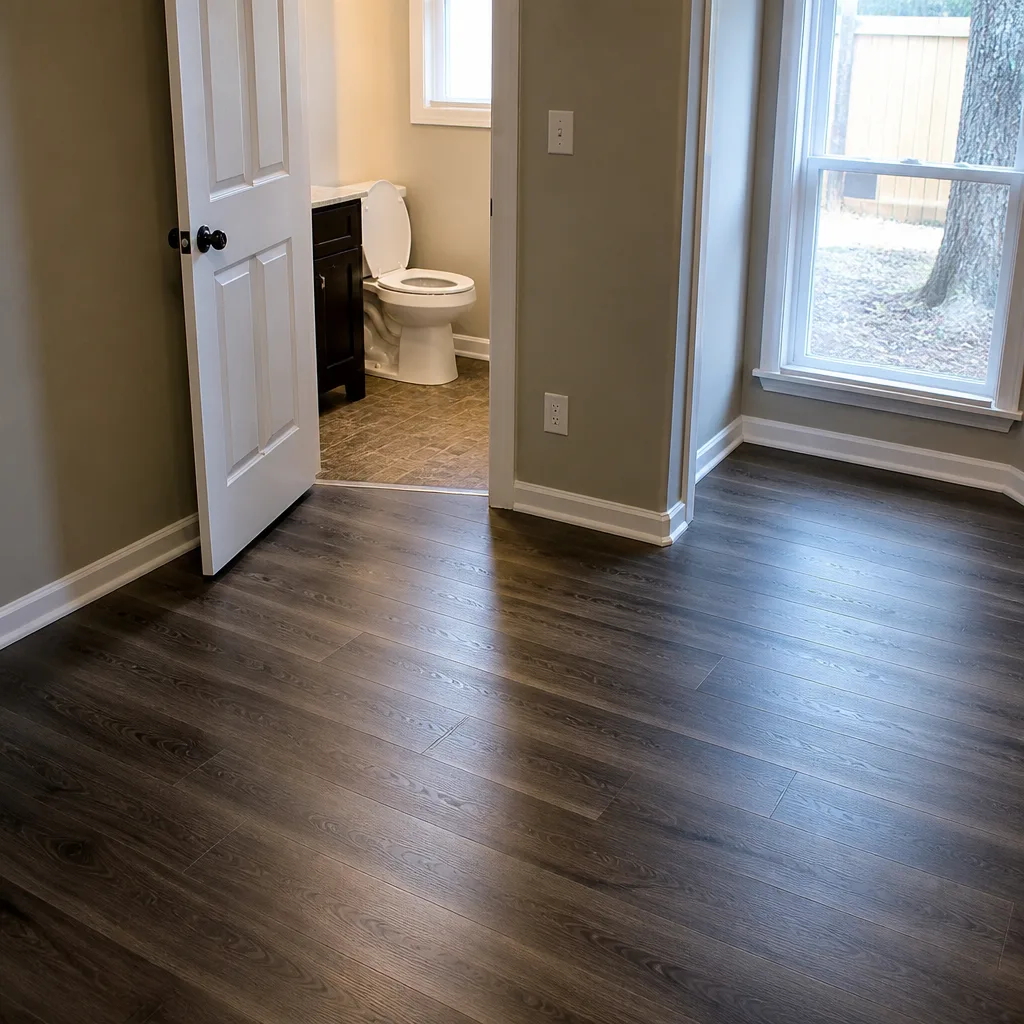
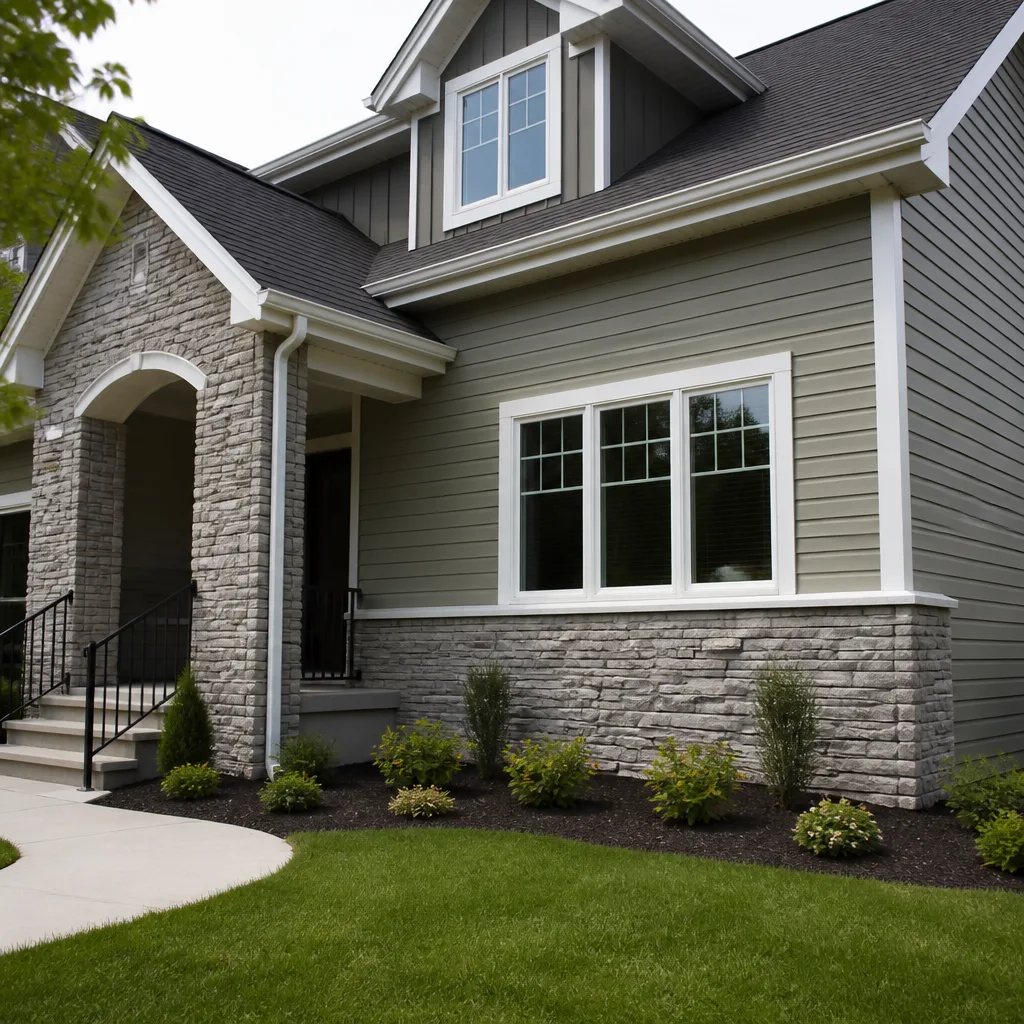
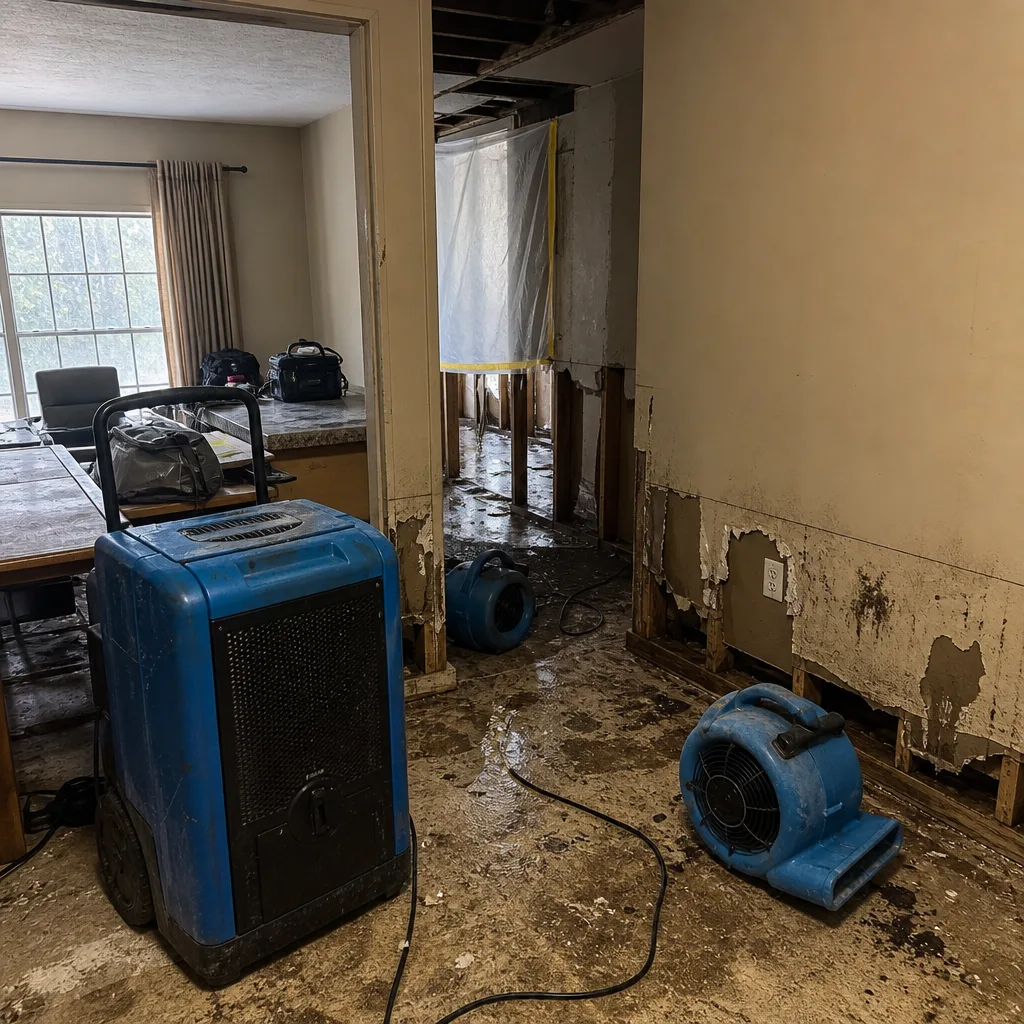 Before
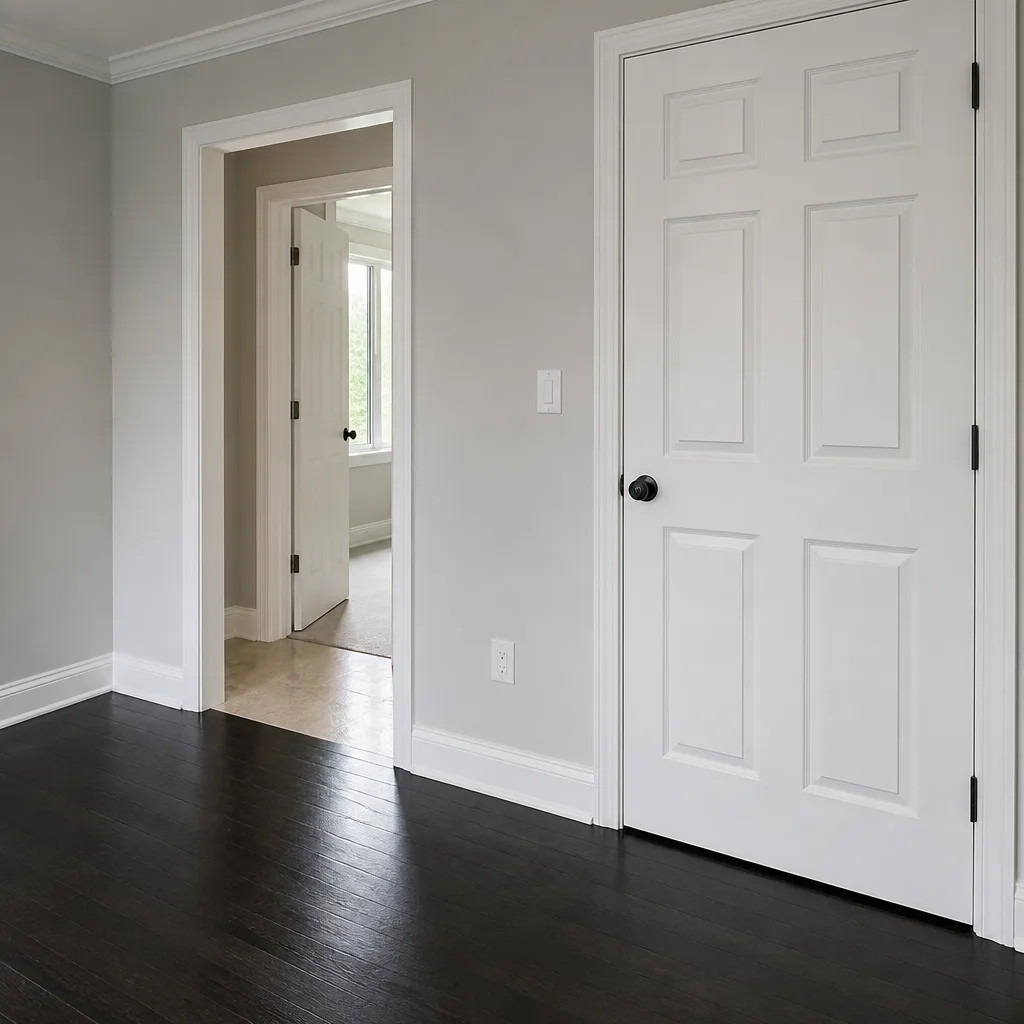 After
After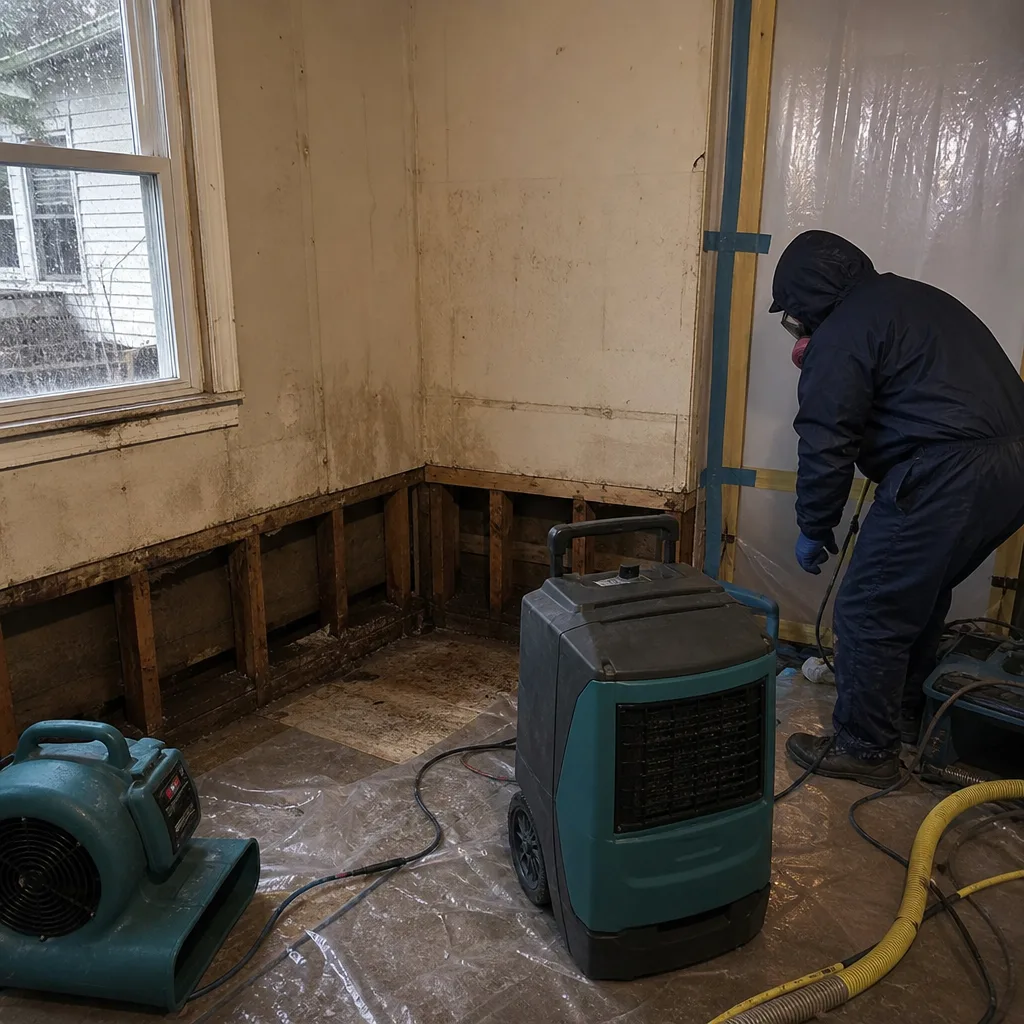 Before
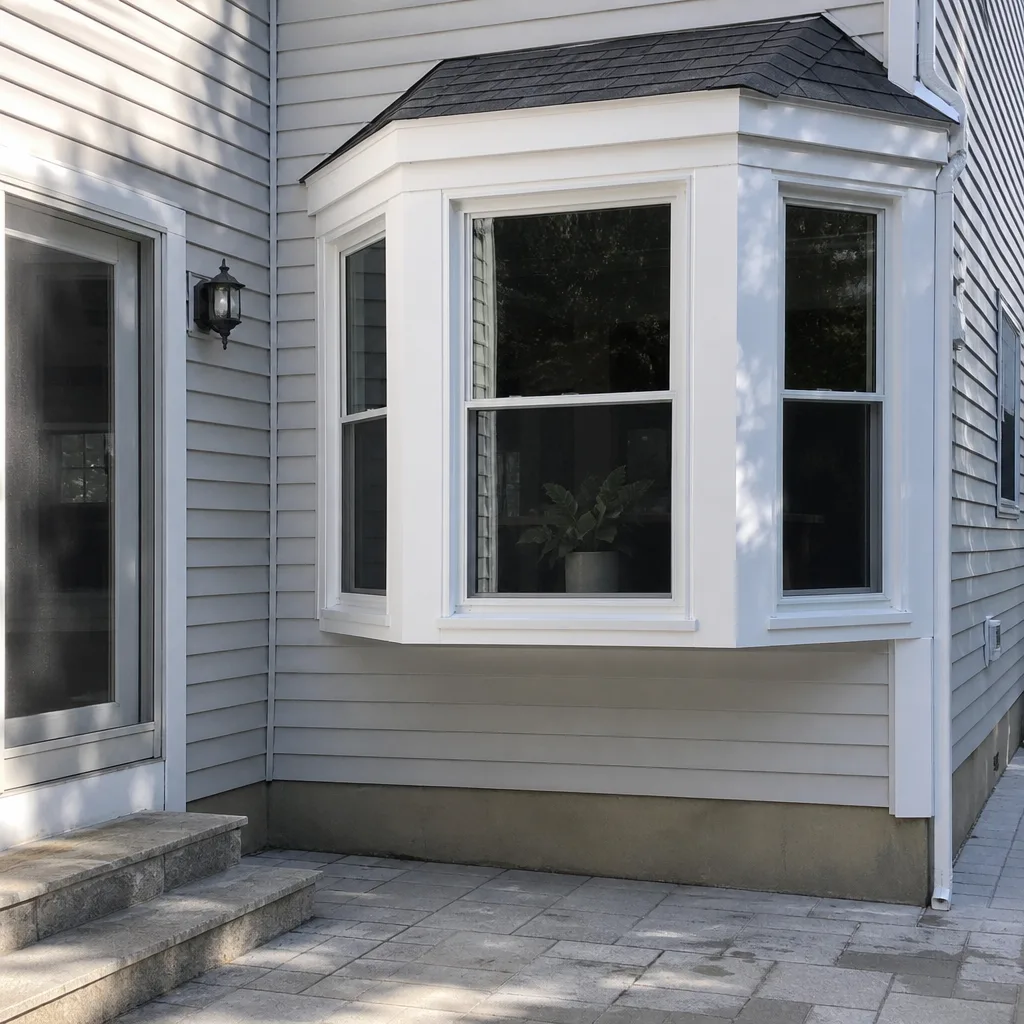 After
After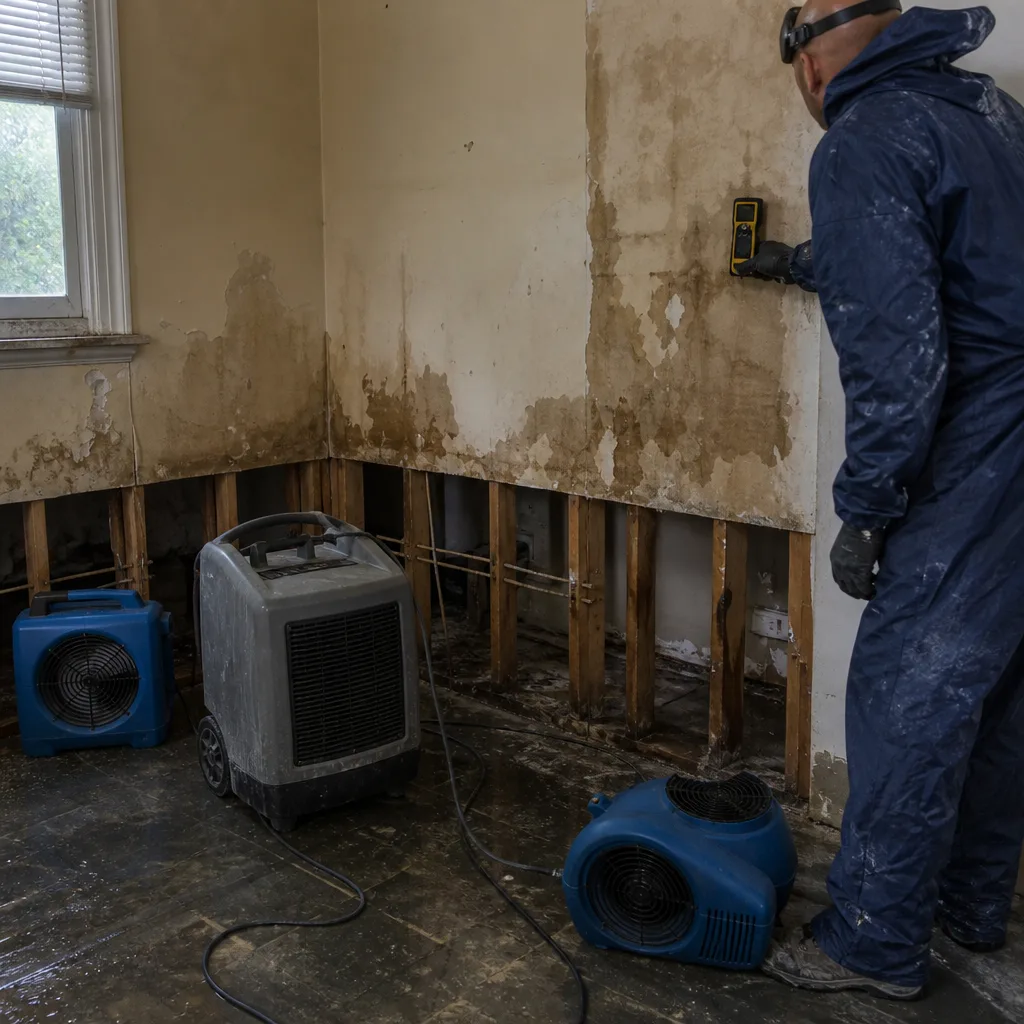 Before
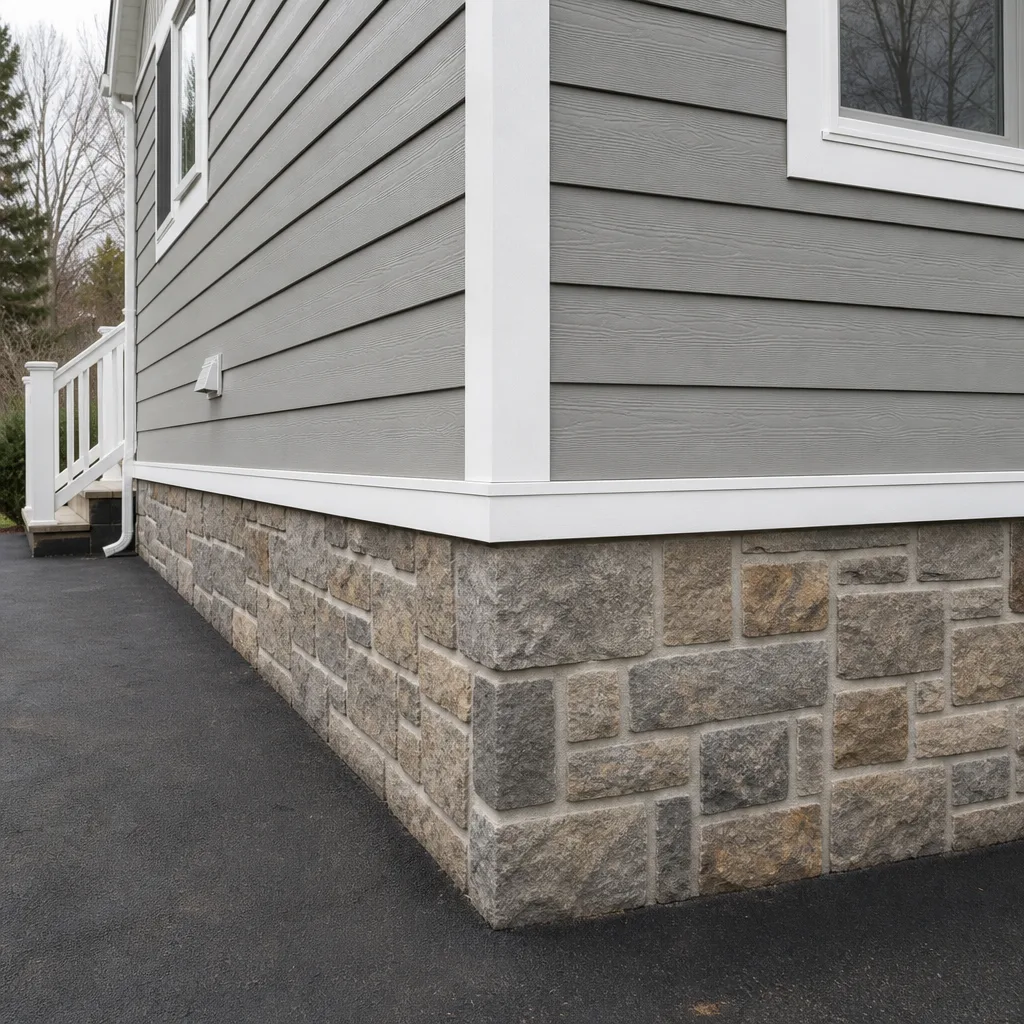 After
AfterDamage Restoration Cost Breakdown: The Englewood Homeowner’s Reference for 2026
Most Englewood homeowners discover the true cost of water damage not when the first check is written, but six months later, when a musty smell returns or a floor buckles. The bill they thought they’d settled was actually just the down payment. In our 42 years of working in Bergen County homes, we’ve learned that restoration costs are rarely about the emergency itself. They’re about what happens in the weeks after. This guide lays out real numbers for Englewood in 2026, what drives them up, what keeps them honest, and how to avoid paying twice for the same job. We’ll walk through every phase, from the first extraction to the final coat of paint, with the same plain language we use when we’re standing in your basement at 2 a.m. holding a moisture meter.
Quick Answer
Most Englewood homeowners spend between $2,800 and $11,500 on a complete water damage restoration in 2026, depending on the water source, the square footage affected, and whether the job stays in mitigation or extends into reconstruction. A simple category 1 clean-water leak in a single room typically runs $2,800 to $4,500, while a finished basement flood with sewage contamination can reach $18,000 or more. Fire damage restoration averages higher, often $15,000 to $40,000, and is priced per square foot plus contents cleaning.
Table of Contents
- Water Damage Restoration Costs in Englewood
- Mold Remediation: What It Really Costs
- Fire and Smoke Damage: The Numbers
- Sewage Cleanup: Paying for What You Can’t See
- How Insurance Changes the Math
- Line-Item Cost Breakdown: Where the Money Goes
- Englewood Seasonal Factors and Local Codes
- Hidden Costs and Common Mistakes to Avoid
Water Damage Restoration Costs in Englewood
Water damage is the most common restoration call we get in Englewood, and the price range is wide for a reason. The water source dictates the starting point. Category 1 water, which comes from a supply line or a failed appliance hose, is clean. Category 2 carries some contamination, like washing machine overflow or sump pump failure. Category 3 is sewage or floodwater. Each step up in category means more demolition, more antimicrobial treatment, and more cost.
Here’s what we see in Englewood homes in 2026:
- Single room, clean water, caught same day: $2,300 to $4,200
- Unfinished basement, several inches of clean groundwater: $3,500 to $7,000
- Finished basement, category 2 water, carpet and drywall affected: $6,000 to $11,500
- Whole-floor event requiring structural drying and rebuild: $12,000 to $25,000
The single biggest variable is time. Water that sits for 24 hours starts wicking up drywall. At 48 hours, mold spores that were dormant in the wall cavity begin to activate. What could have been a $3,000 extraction and dry job becomes a $9,000 tear-out and rebuild because a homeowner waited through the weekend to call. Englewood’s older housing stock makes this worse. Many of the colonials and Tudors built before 1970 have plaster-over-lath walls, which hold water differently than modern drywall and often require more aggressive drying or full removal.
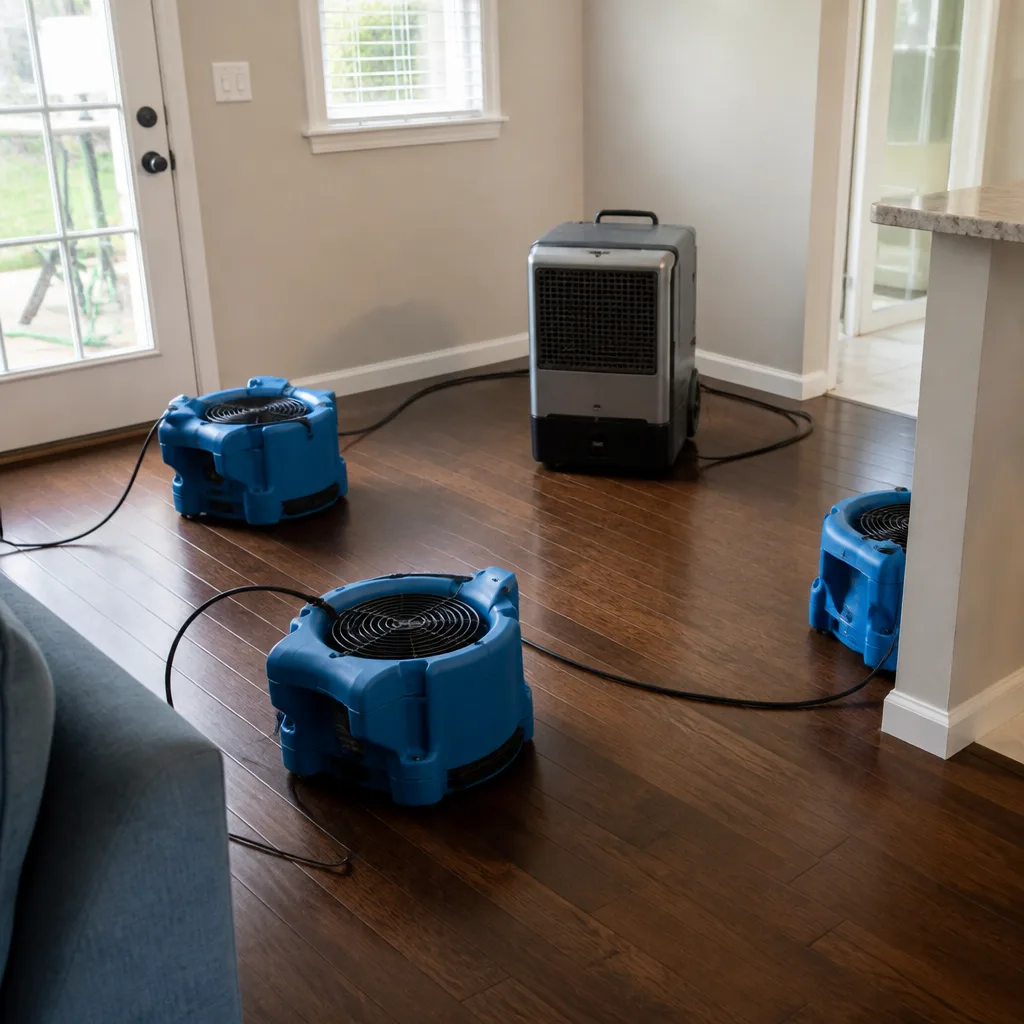
Our crews use Dri-Eaz and Phoenix equipment on every water job. These are professional-grade dehumidifiers and air movers, not the rental-unit fans from a hardware store. Dry-out on a typical Englewood basement takes 3 to 5 days, during which we’re back daily to log moisture readings and adjust equipment placement. That log becomes part of your insurance documentation. The goal is to reach the dry standard before demo and rebuild begin, because the dry standard is the line between a job that holds up and a job you’re calling about again in October.
How the water source changes the price
Clean water from a burst supply line is the cheapest scenario because there’s no contamination concern. You’ll pay for extraction, drying, and likely some drywall and baseboard replacement. Sewage backup, on the other hand, means removal of porous materials, disposal fees for contaminated debris, full antimicrobial treatment, and often post-remediation testing. That’s why sewage jobs in Englewood routinely run 40 to 70 percent higher than clean water jobs of the same size.
No matter the category, the pricing should be in writing before equipment goes in. Not an estimate that doubles after the walls come down. A written scope with line items, agreed to before work starts. That’s how we work, and it’s how any contractor worth hiring in this trade works.
Mold Remediation: What It Really Costs
Mold remediation in Englewood runs anywhere from $1,800 for a contained bathroom issue to $12,000 for a full basement with hidden spread behind walls. The per-square-foot quote you’ll hear most often is $12 to $30 per square foot, but that’s misleading without context. Contaminated square footage is not the same as room square footage. A 200-square-foot basement with mold behind one wall may have only 60 square feet of actual contaminated material, but the containment, negative air pressure, and clearance testing still apply to the whole space.
Here’s the breakdown by typical Englewood scenarios:
- Bathroom ceiling or closet, visible mold under 10 square feet: $1,800 to $3,000
- Single finished room with mold on drywall and carpet: $3,500 to $6,500
- Basement with mold in wall cavities and on framing: $7,000 to $14,000
- Whole-house mold event driven by a long-term humidity problem: figures climb quickly and need on-site assessment
Englewood’s humidity matters here. Summer dew points sit in the upper 60s and low 70s for weeks. Basements without dehumidifiers in older Englewood homes routinely hit 65 to 75 percent relative humidity, which is the range where mold grows on drywall, wood, and stored items. We’ve pulled mold from basement walls on East Palisade Avenue homes that had never flooded, simply because the foundation walls were cool enough to condense moisture all summer.
Our mold jobs follow the IICRC S520 standard. That means full containment with negative air pressure, HEPA-filtered air scrubbers, removal of contaminated materials, antimicrobial application to the structure, and a clearance test before the containment comes down. The clearance test is non-negotiable. A company that skips it is leaving you with a mold-free-looking wall and no proof. We send samples to an independent lab, and the report is part of your file.
One note for Englewood homeowners specifically: if you’re in one of the older homes near downtown, be aware that the original framing lumber is often true dimensional lumber, old-growth and dense. It dries differently than modern SPF studs, and it can need longer drying or different techniques. This is a Bergen County reality that a crew from outside the area may not account for on the first day.
Fire and Smoke Damage: The Numbers
Fire restoration is a different animal than water. You’re not drying the structure. You’re cleaning what survived, removing what didn’t, and dealing with smoke odor that has crept into every porous surface. Englewood homeowners should plan on $15,000 to $40,000 for a kitchen fire with moderate damage, and more if the fire reached the attic or required structural repairs. The per-square-foot range for fire damage restoration in our market is $20 to $45 for the affected area, but contents cleaning and smoke sealing frequently add $8,000 to $15,000 on top.
- Structural stabilization and board-up: $1,500 to $4,000
- Demolition and debris removal: $3,000 to $9,000 depending on scale
- Soot and smoke cleaning of surfaces: $2,500 to $7,000
- Contents cleaning, including off-site where needed: $4,000 to $15,000
- Odor sealing and deodorization: $2,000 to $6,000
- Reconstruction of affected rooms: priced as a remodel, per square foot and finish level
The part homeowners least expect is contents cleaning. A fire in the kitchen doesn’t just damage the kitchen. Smoke penetrates clothing, upholstery, books, and bedding in the whole house. We inventory, pack out, and clean salvageable items, then store them until the structure is ready. Or we clean them on site if the damage is contained. Either way, the contents portion of a fire job is often a third to half the total bill.
Englewood fire stations respond fast. The city has good coverage, and that matters for cost. Faster knockdown means less water from fire suppression, less structural loss, and less smoke saturation. But structure fires in older Englewood homes with balloon framing present a specific problem: fire travels up the wall cavities quickly, and smoke odor gets into the framing itself. Sealing that requires specialty primers and sometimes wall cavity fogging.
We handle fire jobs from the first board-up to the final paint, which means the family isn’t trying to coordinate a mitigation crew, a contents company, and a general contractor while also negotiating with an adjuster. That matters for cost control, because every handoff creates paperwork and delay.
Sewage Cleanup: Paying for What You Can’t See
Sewage cleanup is the most dangerous common restoration job in Englewood, and it’s priced accordingly. You’re dealing with category 3 water, which means bacteria, viruses, and parasites. The cost runs $4,000 to $12,000 for a typical basement backup event, including full removal of contaminated porous materials, disposal, antimicrobial treatment, and drying. A small contained event under 50 square feet might run $2,500 to $4,000. A finished basement with carpet, drywall, and stored possessions affected can exceed $15,000.
Here’s what that money covers, in order:
- Extraction and initial removal: hazardous water and solids removed with professional-grade equipment
- Demo of contaminated materials: carpet, pad, drywall, insulation, anything porous that absorbed sewage
- Disposal fees: contaminated debris requires specific handling and documented disposal
- Antimicrobial application: EPA-registered products applied to all affected framing and floors
- Drying: structural drying to the dry standard, with daily moisture readings
- Rebuild: new framing insulation, drywall, paint, flooring as needed
Englewood’s sewer system is aging. Many streets are on combined storm and sanitary lines, and heavy rain events routinely cause backups in older basements that don’t have backflow prevention. The flat streets near the center of town drain slowly, and basements below grade collect what the streets can’t carry. We’ve seen sewage backups on Humphrey Street and West Hudson Avenue after summer thunderstorms, and the homeowners are not always aware their insurance excludes it.
That’s the conversation we have with every Englewood sewage customer: what your policy covers, what it excludes, and what the written scope looks like before we start. We bill the carrier directly where there’s coverage, and we document everything. The moisture log, the photo record, the disposal manifests. All of it goes to the adjuster. The homeowner is not the messenger.
A safety note: sewage contains pathogens that can make you seriously ill. Do not enter a sewage-affected area without proper protective equipment. Even after the water is gone, the contamination on surfaces is real. This is not a job where a wet vac and some bleach are adequate. A trained professional with full PPE and proper containment protocols is the only safe way to handle a category 3 event.
How Insurance Changes the Math
Insurance is the difference between a $9,000 restoration being an emergency expense and a $1,000 deductible. Most Englewood homeowners’ policies cover sudden and accidental water damage, fire damage, and storm-related events, but the details decide everything. Gradual leaks, seepage, and maintenance issues are typically excluded. Sewer backup often requires a specific endorsement. Mold remediation is covered only when it stems from a covered water event.
Here’s how we work with carriers, which is the part most homeowners haven’t experienced before:
- Direct billing: we send the bill to the carrier, not to you
- Photo documentation from the first visit: before, during, and after, so the adjuster sees what we saw
- Daily moisture logs: the data that proves we dried to standard
- Written scope before work starts: so there’s no argument about what was authorized
- Coordinate with the adjuster: we talk to them so you don’t have to manage the claim
For Englewood homeowners in the older housing stock near the Tenafly border, one specific issue comes up often: replacement cost versus actual cash value on a 1920s or 1930s home. If your policy is written at replacement cost for the structure but actual cash value for contents, your contents payout is depreciated. That means a 15-year-old couch damaged by a pipe burst is worth far less than you paid for it. We can’t change your policy, but we can document the damage so your claim is as strong as possible.
The most important advice we give Englewood homeowners: call your carrier first, but don’t wait to call us. The mitigation work can start immediately, and the claim gets filed with a photo record already in motion. Waiting for an adjuster to visit before starting mitigation is how a $4,000 dry job becomes a $12,000 rebuild.
Line-Item Cost Breakdown: Where the Money Goes
Restoration invoices look opaque if you’ve never seen one, so let’s walk through a typical Englewood water job line by line. This is a finished basement, approximate 400 square feet, category 2 water from a sump pump failure. The numbers are real ranges from jobs we’ve completed in Englewood in 2025.
| Line Item | Typical Range | What It Includes |
|---|---|---|
| Emergency extraction | $500 to $1,200 | Water removal, truck-mounted extraction, initial assessment |
| Equipment setup and monitoring | $1,200 to $2,500 | Dehumidifiers, air movers, daily readings, moisture log |
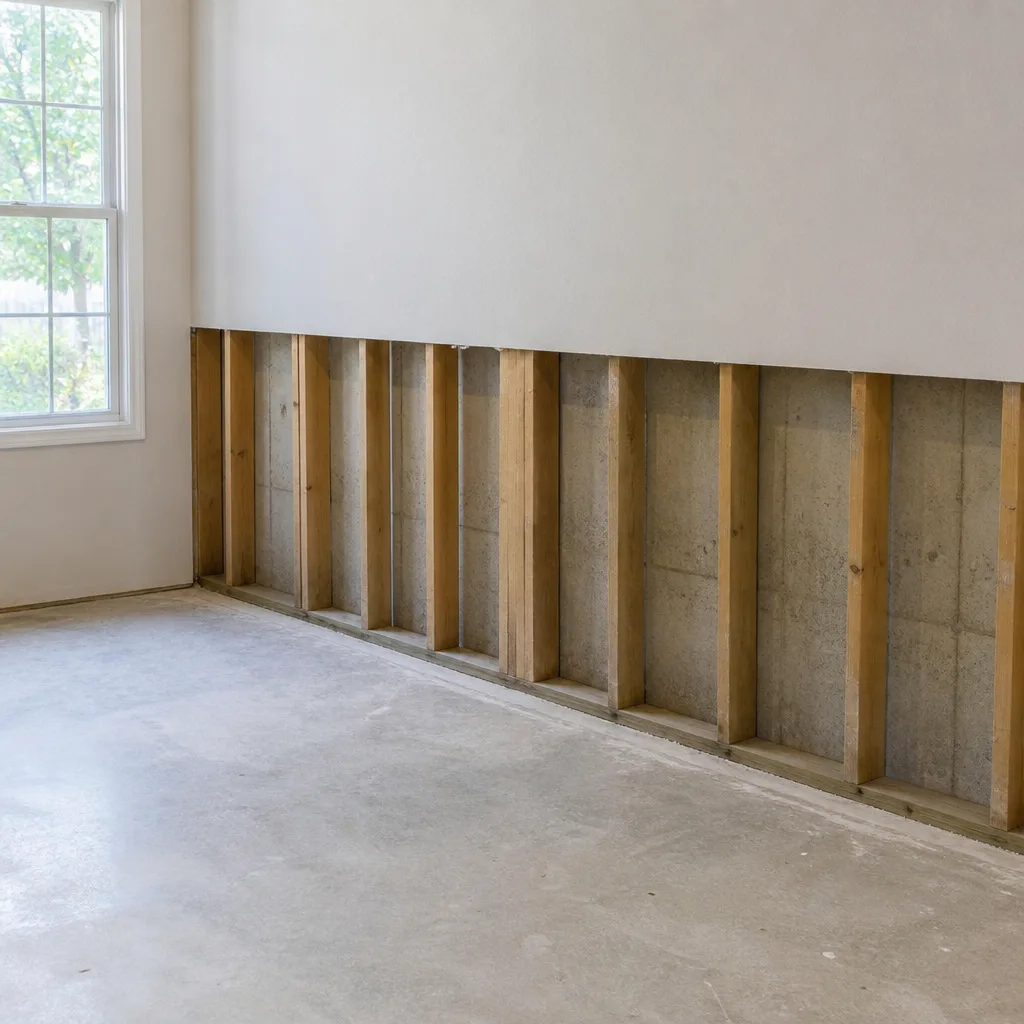
| Demolition of wet materials | $800 to $2,000 | Cutting drywall to the flood line, carpet and pad removal, disposal |
| Antimicrobial application | $300 to $700 | Treatment of affected framing and floor areas |
| Structural drying from our crew | $1,000 to $2,200 | Professional-grade Dri-Eaz and Phoenix equipment, logged daily |
| Rebuild: drywall, tape, paint | $2,500 to $5,000 | Materials and labor, finish level matched to existing |
| Flooring replacement | $1,500 to $4,000 | Depending on laminate, carpet, or engineered hardwood |
| Baseboard and trim | $400 to $900 | Removal, replacement, paint |
| Final cleaning and clearance | $300 to $600 | HEPA vacuum, debris removal, final walkthrough |
That totals roughly $8,500 to $19,100, which is why we quote a range until we’re standing in the basement. The variance comes from finish level, ceiling height, access difficulty, and how far the damage advanced before we arrived. A Englewood basement with eight-foot ceilings and a simple layout lands lower. A finished basement with custom trim, built-ins, and high-end flooring lands higher.
One thing that should be fixed in any reputable Englewood restoration estimate: the dry standard. If a contractor won’t put in writing that they’ll dry the structure to a specific standard, with daily readings and a final log, keep looking. The dry standard is what separates a restoration from a cover-up.
Englewood Seasonal Factors and Local Codes
Englewood sits in a climate band with four genuine seasons, and each one drives different restoration calls. March and April bring Nor’easters and the first thaw, meaning sump pump failures and groundwater intrusion. July and August mean humidity-driven mold in basements and crawlspaces. October and November are leaf season, and clogged gutters send water into foundations. January’s deep freeze bursts pipes in unheated areas, usually the garage wall or a bathroom on an exterior wall.
Local permitting matters for rebuild work. Englewood requires permits for structural repairs, including replacement of load-bearing framing, and the buildings department enforces current code. If a 1950s basement wall comes out due to water damage, the replacement framing and insulation must meet current New Jersey energy code. That’s a cost some homeowners don’t see coming. The mitigation part is immediate. The rebuild part, if it changes structure, goes through the same process as a remodel.
Here’s the seasonal planning framework we walk Englewood homeowners through:
- Spring: inspect sump pump, test backup battery, clear gutters, check foundation cracks
- Summer: run a dehumidifier in the basement, keep humidity under 50 percent, inspect attic ventilation
- Fall: clear gutters again before leaf drop peaks, disconnect outdoor hoses, inspect window wells
- Winter: keep interior temperature above 55 degrees in all areas, insulate exposed pipes, know where your main water shutoff is
One Englewood-specific note: the city has a combined sewer system in older neighborhoods, and heavy rain events are increasing in frequency. If your home is in one of the lower-lying areas near Overpeck Creek or in the flats east of Route 93, a backflow prevention valve is worth discussing with a plumber. We replace a lot of basements in those neighborhoods after storm events. It’s work we’re glad to do, but a valve is cheaper than a rebuild.
Hidden Costs and Common Mistakes to Avoid
The restoration bill is never just the restoration bill. Englewood homeowners routinely run into a set of hidden costs and self-inflicted wounds that push a manageable job into a painful one. Here are the ones we see most.
- Waiting too long to call. Water damage costs compound hourly. What’s a $2,500 extraction and dry on day one becomes a $9,000 demo and rebuild on day three. Call when you first see water, not when the smell follows you upstairs.
- Letting a handyman do mitigation. A general contractor or handyman with a shop vac and a box fan is not a restoration. The moisture stays in the framing, the mold blooms later, and the handyman is gone. Use a company with certified technicians and a written dry standard.
- Not checking the sewage endorsement. Standard homeowners policies in New Jersey usually exclude sewer backup. If you don’t have the endorsement, a basement full of category 3 water is entirely on you. Check your policy before you need it.
- Accepting a verbal estimate. Any restoration company that won’t put a written scope in front of you before work starts is not ready to work in your home. The scope protects you, it protects the contractor, and it’s what the adjuster needs.
- Skipping the rebuild phase with the mitigation crew. Hiring a mitigation company to dry the basement, then a different contractor to rebuild it, creates a gap where nobody owns the whole job. The rebuild contractor doesn’t know what was done, and you’re the one coordinating. One crew from start to finish means one standard, one log, one name responsible.
- Forgetting about contents. A pipe burst in the laundry room can destroy what’s stored in the adjacent storage room. Document everything before you move it. Photos of damage before cleanup are essential for contents claims.
When to Call a Professional
Some jobs are DIY-appropriate. Replacing a faucet washer. Caulking a tub. Patching a small piece of drywall. Restoration is not that category, and waiting to make that distinction is how small problems become structural ones. Call a professional when water has spread beyond a puddle you can manage with a towel, when you can smell mold but can’t see it, when fire or smoke has touched any part of the structure, when sewage has entered the home, or when you’re not sure and the water is still rising. The bookkeeping on hesitation in Englewood is unforgiving: more demolition, higher cost, longer displacement, and a house that never quite smells the same. Floodline Restoration Co. offers free estimates in Englewood, and answers the phone with a live person at (201) 729-3780, day or night. No recording, no callback the next morning. We’ll tell you what you’re looking at and whether it can wait. Usually, it can’t.
Frequently Asked Questions
Water damage restoration in Englewood typically costs between $2,800 and $11,500 for a complete job, with small clean-water leaks starting around $2,300 and finished basement floods with contaminated water reaching $15,000 or more. The final number depends on water category, square footage, and how long the water sat before extraction started. Call (201) 729-3780 for a written scope on your specific situation.
Most Englewood homeowners’ policies cover sudden and accidental water damage and fire damage, but sewage backup, gradual leaks, and maintenance failures are frequently excluded or require specific endorsements. We bill carriers directly and provide the photo documentation, moisture logs, and written scopes that adjusters need to process claims quickly.
A Floodline Restoration Co. dispatcher answers the phone live 24/7 and can have a certified crew in Englewood within hours, often the same visit where extraction begins. The equipment goes in the same day in most cases, which is the single biggest factor in controlling the final cost.
If visible mold covers more than 10 square feet or you can smell mold without seeing it, you need professional remediation with containment and clearance testing, not a surface cleaning. Bleach on drywall does not reach mold in the wall cavity. A professional assessment in Englewood will tell you which situation you’re in.
We do. Floodline Restoration Co. documents every phase of the job with photos and moisture readings, sends the claim documentation directly to your carrier, and bills the carrier directly. You’re not the messenger between the restoration crew and the insurance company.
It’s our written guarantee: if the restoration isn’t done right, we make it right, no arguing and no paperwork battles. We call it the Keystone Standard internally, and it applies to every job we complete in Englewood. Done right, and backed in writing. Call (201) 729-3780 for a free estimate and see the full terms before work begins.
The Bottom Line
Restoration costs in Englewood in 2026 are predictable if you know what you’re dealing with: water source, square footage, time elapsed, and the finish level of the space. The range for water is $2,800 to $11,500. Mold runs $1,800 to $12,000. Fire lands between $15,000 and $40,000. Sewage sits in the middle, $4,000 to $12,000, but carries the highest health stakes. The clearest way to control all of it is speed, documentation, and a restoration company willing to put both the scope and the guarantee in writing before a single tool comes off the truck. That’s how we work at Floodline Restoration Co. home, and how we’ve worked in Englewood since Curt Bowman founded the company in 2010. If you’re looking at water, fire, mold, or sewage right now, call us at (201) 729-3780. A live person will answer, and a certified crew will follow. We’ll be there when we say.
Written by Curt Bowman, Owner at Floodline Restoration Co., serving Englewood since 2010.