
Last updated August 25, 2026
Free visual inspection and a written scope of work before any mitigation begins - photos, moisture readings, and drying logs go in your claim file
The scope we write is the scope we bill. Anything new gets shown to you, in writing, before we touch it.



 Before
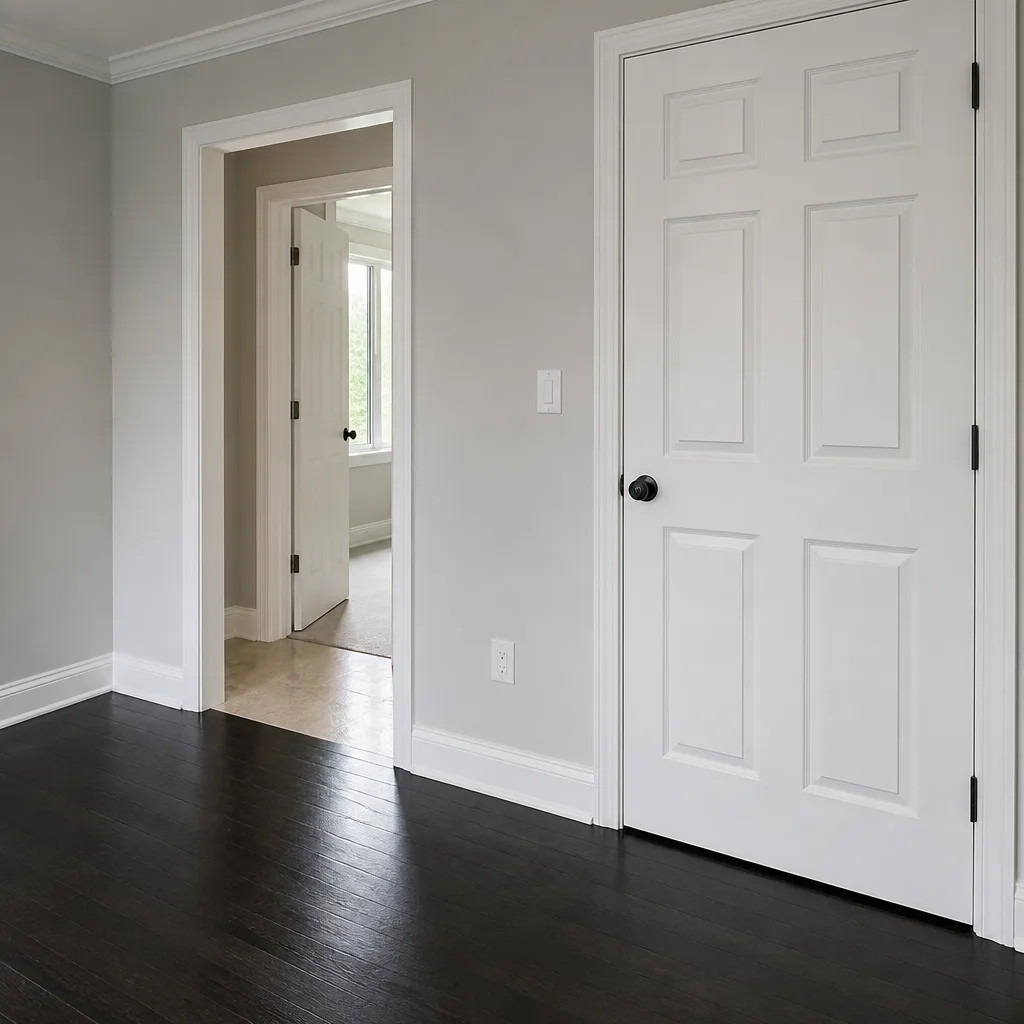 After
After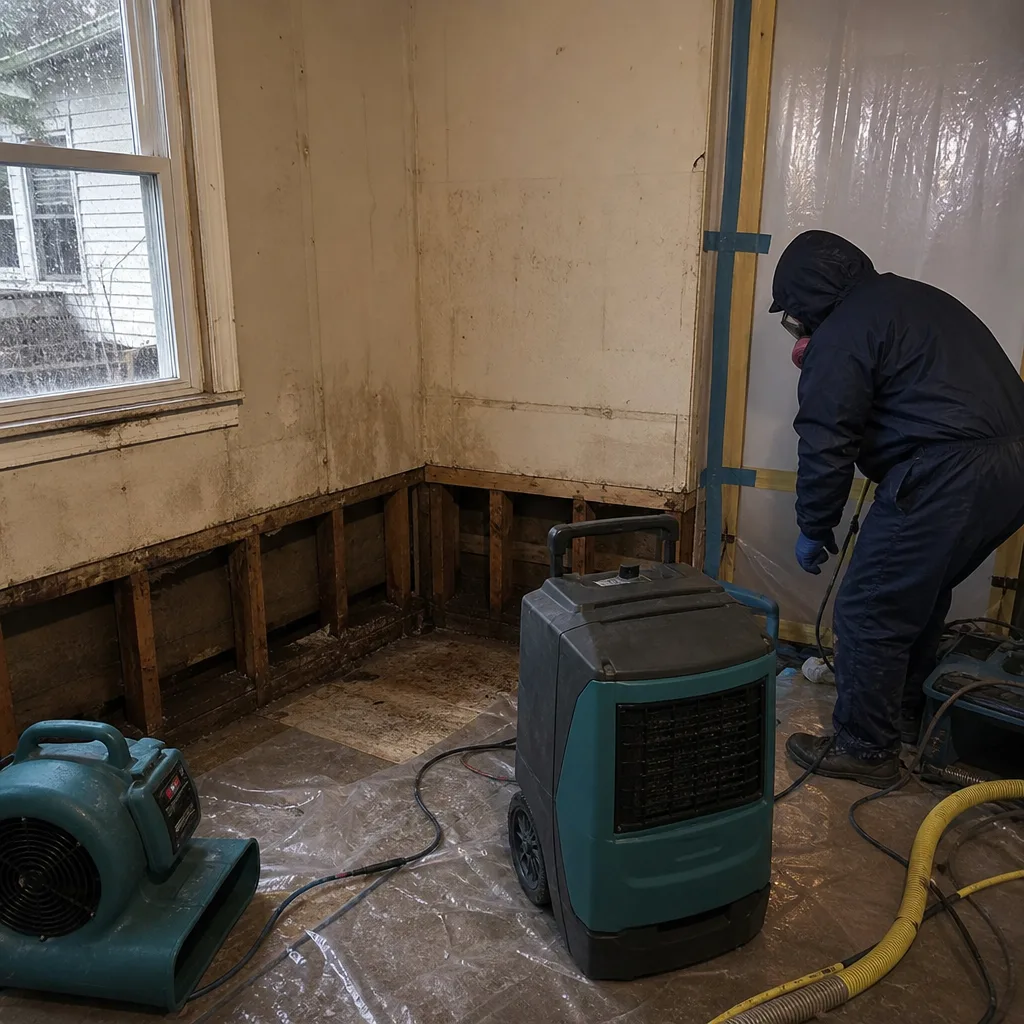 Before
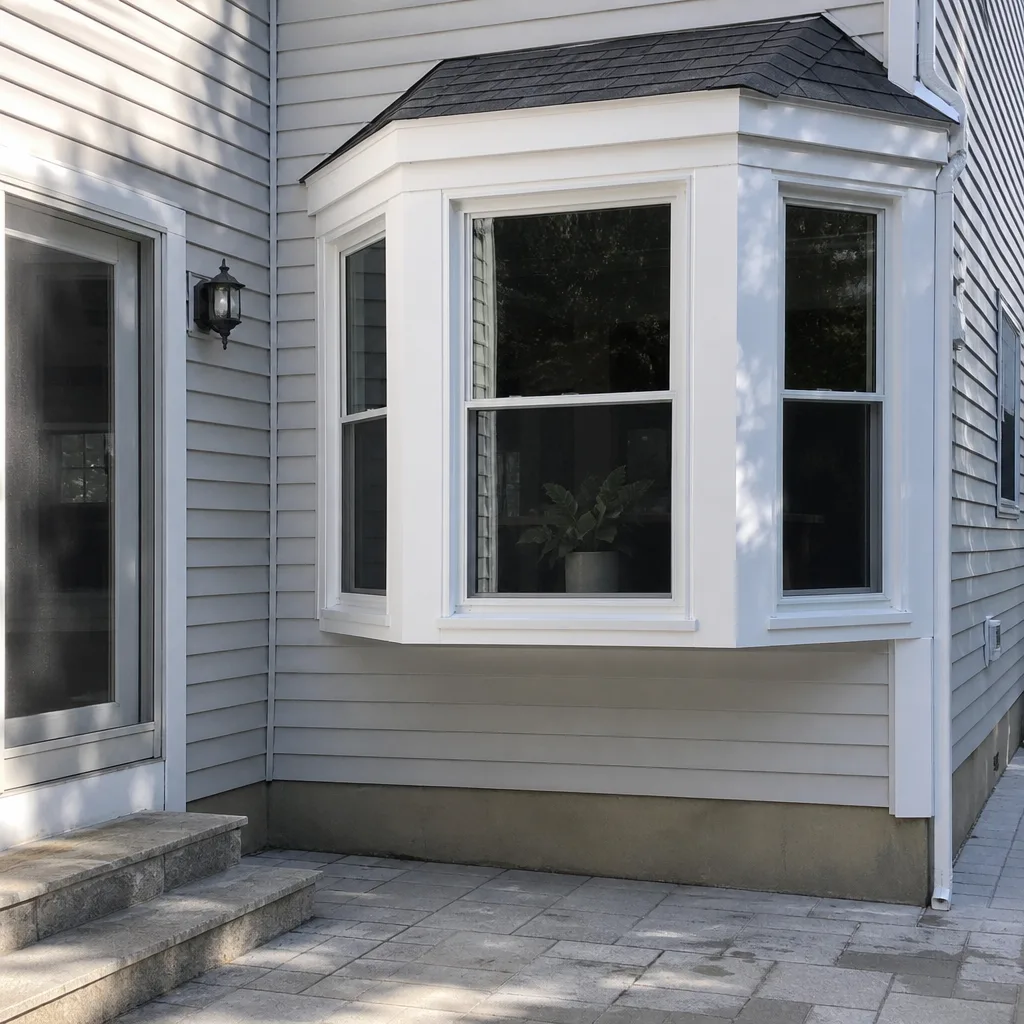 After
After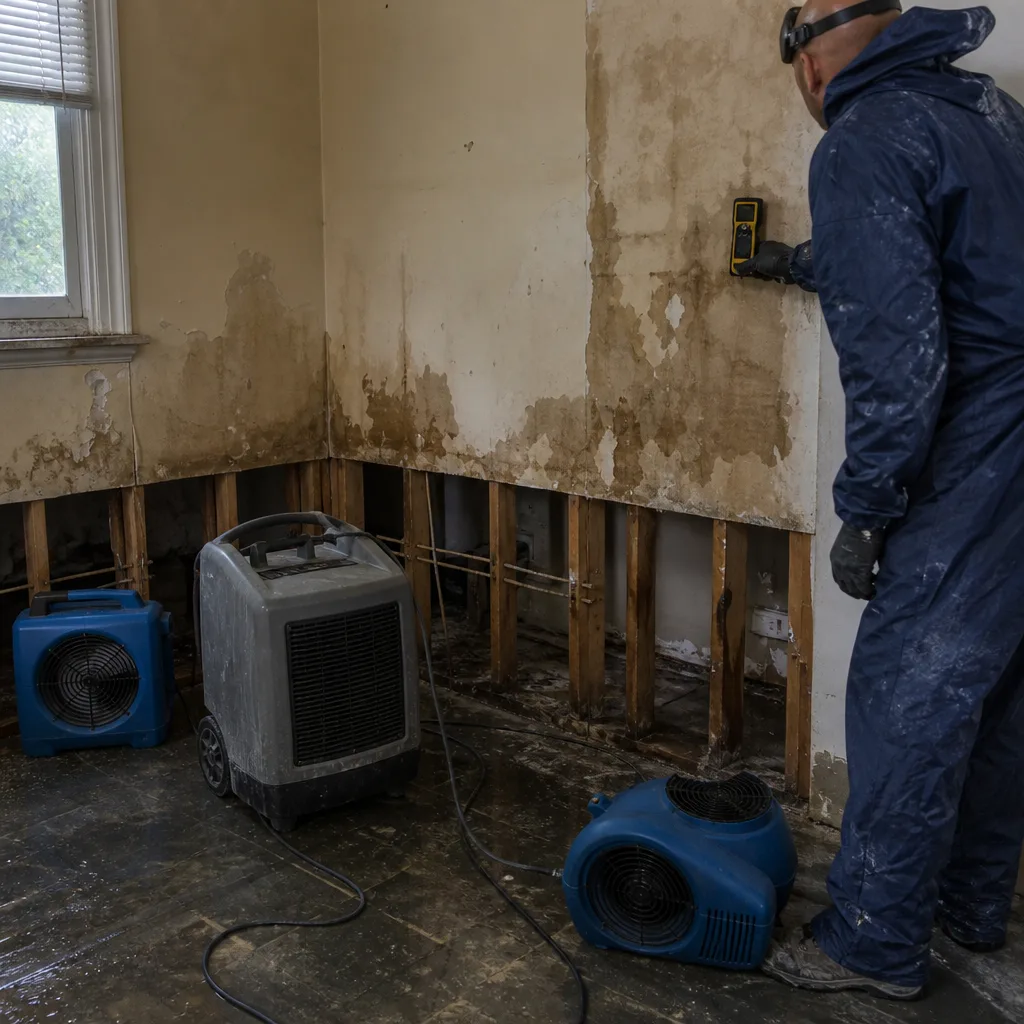 Before
 After
AfterSeasonal Damage Restoration Care for Englewood: Year-Round Homeowner’s Guide
Most Englewood homeowners don’t think about water damage until a hose bursts or a nor’easter pushes the Hackensack River over its banks. But the truth our crews have learned over the years is that most damage isn’t sudden at all. It builds quietly: a slow drip under a bathroom sink, a gutter pitched wrong, a basement wall weeping after every hard rain. This guide walks you through what each season throws at a house in Bergen County, what to watch for, and when to act before a $300 fix becomes a $30,000 rebuild.
Quick Answer
Seasonal damage restoration in Englewood means checking your home at four key points each year: fall gutters and downspouts before leaf drop, winter pipes and ice dams, spring basement seepage after snowmelt, and summer humidity and storm season. A one-hour seasonal tune-up catches most problems while they’re still cheap to fix, and the $89 Seasonal Tune-Up from Floodline Restoration Co. is built for exactly that.
Table of Contents
- Winter: Frozen Pipes, Ice Dams, and Condensation That Never Dries
- Spring: Snowmelt, Basement Seepage, and the Mold Window
- Summer: Humidity, Storm Season, and AC Condensate Lines
- Fall: Gutter Prep, Leaf Drop, and Pre-Winter Inspections
- Reading Your Home’s Moisture Map: A Homeowner’s 20-Minute Check
- How Insurance Handles Seasonal Damage in Englewood
- What a Seasonal Tune-Up Actually Covers
- Common Mistakes to Avoid
- When to Call a Professional
- Frequently Asked Questions
- The Bottom Line
Winter: Frozen Pipes, Ice Dams, and Condensation That Never Dries
Englewood winters hover right at the freezing line. January and February push overnight temperatures into the low 20s for weeks at a time. That sustained cold is what separates a mild New Jersey winter from the kind that splits copper pipes.
Pipes freeze most often in three places: exterior-wall kitchens, unheated attics with supply lines for a second-floor bath, and basement rooms against the foundation. In Englewood’s older housing stock, much of it built between 1900 and 1950 on streets like Booth Avenue and James Street, original plumbing was run before modern insulation standards existed. When a pipe freezes, the split often runs lengthwise and hidden behind a wall. You don’t see it until thaw. Then the water runs.
Ice dams tell the same storyline on the roofline. Heat escapes an under-insulated attic, melts snow from below, and the meltwater refreezes at the cold eave. Water backs up under shingles, into the soffit, and down inside walls. Flat-roofed additions, common on Englewood colonials that were expanded decades ago, are especially vulnerable because they drain slowly and carry more snow weight.
What to do before a hard freeze:
- Shut off and drain outdoor spigots. Disconnect hoses at the bib, not just the nozzle end.
- Open kitchen and bath cabinet doors on exterior walls during cold snaps so house air reaches the pipes.
- Keep the thermostat at 65°F or above, even when you travel. A two-day trip in January is when many frozen-pipe floods begin.
- Know where your main water shutoff is and make sure it turns freely. A stuck valve turns a minor leak into hours of running water.
If a pipe does freeze, do not use an open flame to thaw it. That’s how walls catch fire. Shut off the main, open the cold side of faucets to relieve pressure, and call a plumber or restoration crew. In our experience, when water is involved, Floodline Restoration Co. home dispatch gets the call and sends a certified crew the same visit. Extraction runs that same day, because water that sits overnight soaks into subfloor and framing.
Spring: Snowmelt, Basement Seepage, and the Mold Window
March and April are when Englewood basements show their weaknesses. Snowmelt from Palisades-adjacent properties runs downhill. Older homes on the east side of town, built near the slope, are the first to feel hydrostatic pressure. Water pushes through cove joints, hairline foundation cracks, and floor slab seams.
The mold window is real. Mold spores need three things: organic material, warmth, and moisture. Spring provides all three in a damp basement. Once sheetrock or carpet stays wet for 48 to 72 hours, mold growth begins. By day five it’s established. By day ten you can smell it.
The smell is usually the first sign homeowners in Englewood report. It’s musty and it doesn’t leave when you air the room. It means the moisture has been there longer than you think. We’ve walked into basements in the Fourth Ward where the homeowner said, “The smell just started last week,” but the moisture reader showed a concrete slab still holding 90 percent relative humidity from snowmelt that happened a month earlier.
Your spring checklist:
- Walk the basement perimeter after the first big thaw. Look for efflorescence, the white chalky residue water leaves on concrete.
- Tap along baseboards on finished basement walls. A hollow sound means the wallboard behind is deteriorating.
- Check the sump pump before heavy rains. Pour a bucket of water in the pit and confirm it cycles. The pumps we use professionally, from brands like Phoenix and Dri-Eaz, handle thousands of cycles, but a $150 big-box pump from 2009 may not start at all.
- Clean debris from window wells and check that the well drain is clear. A clogged window well is a spring flood waiting for the next hard rain.
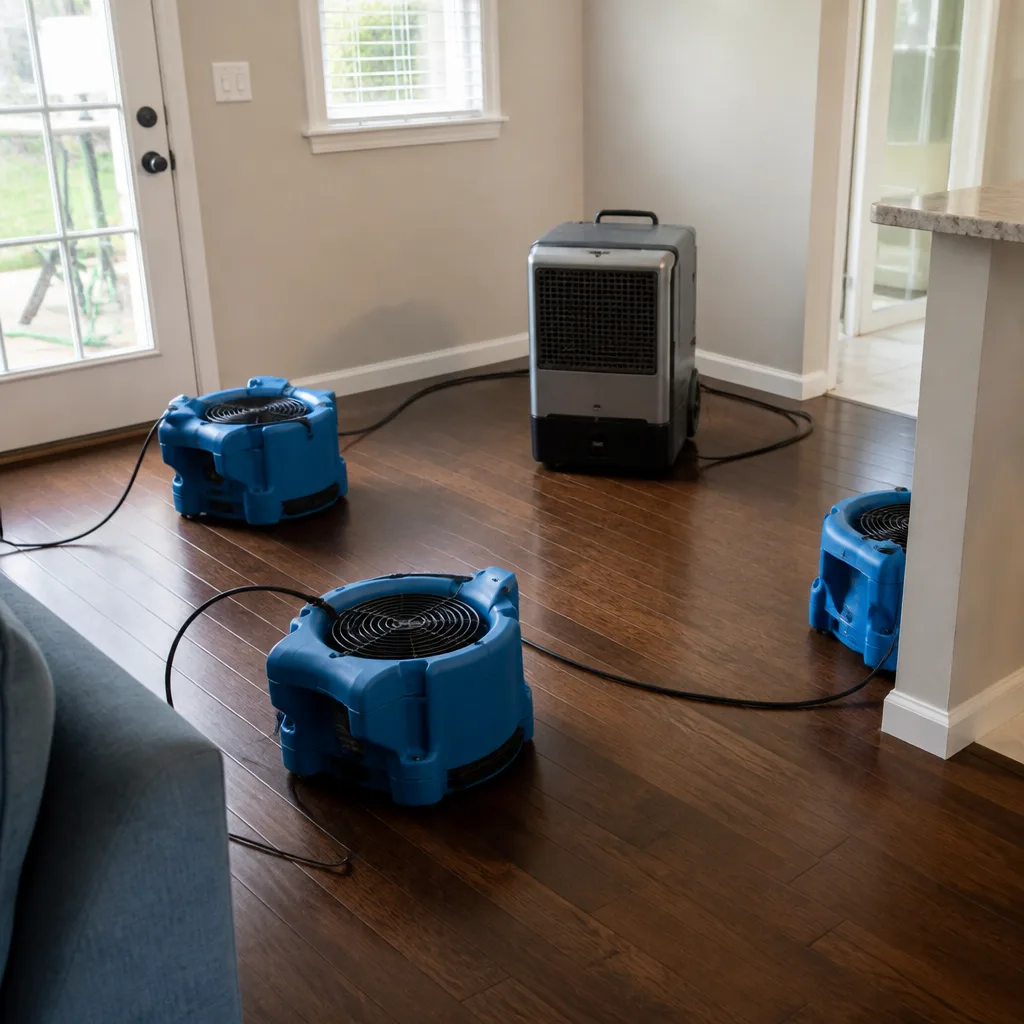
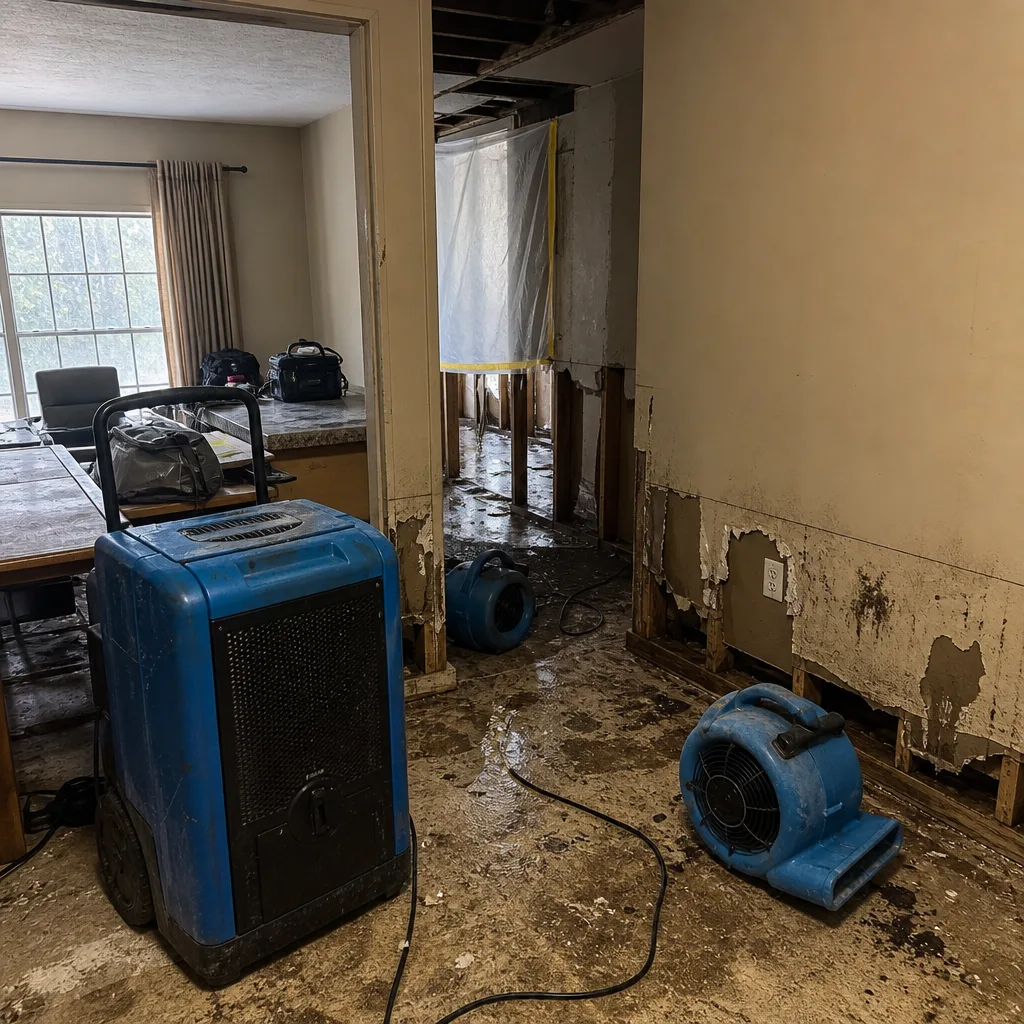
Standing water in a basement is never a “wait and see” situation. Every day of sitting water adds a day of drying time and a layer of repair cost. A restoration crew with professional water extractors pulls that water the same visit. No fan-and-hope. No three weeks of dehumidifier. Moisture-mapped drying with daily readings until the dry standard is met.
Summer: Humidity, Storm Season, and AC Condensate Lines
Bergen County summers are wet. July and August average over four inches of rain per month, and afternoon thunderstorms build fast off the Watchungs. Englewood gets its share of those pop-up downpours, especially in August when the air is heavy and the ground is already saturated.
The most common summer damage call we handle is not a storm at all. It’s an AC condensate line that clogged or overflowed. A central air system pulling humidity from the house produces gallons of condensate a day. That water drains through a small PVC line. Algae and dust clog it. Water backs up, overflows the pan, and soaks through the ceiling below. On the second floor of a multi-level Englewood home, that means attic water damage and a ruined ceiling in a bedroom below.
The second most common is a window-well overflow during a sudden heavy storm. The ground can’t absorb 2 inches of rain in 40 minutes, so water finds the path of least resistance: window wells, exterior stairwells, and driveways that slope toward the foundation.
Summer humidity also reactivates dormant mold. If your basement dried out after spring seepage but never got professionally remediated, the spores are still in the wall cavities. An 80 percent humidity August is enough to bring them back. This is why proper remediation with drying logs matters. You’re not just addressing what you can see. You’re clearing what’s growing behind it.
Quick summer checks:
- Locate your AC condensate drain line (usually a small PVC pipe near the air handler or outside by the condenser). Check for visible blockages weekly in July and August.
- After a heavy storm, walk the basement floor with bare feet or sock feet. A cool spot only in one area often means moisture moving under the slab.
- Keep gutters clean even in summer. A sudden August storm overflows a leaf-clogged gutter and pours water right at the foundation line.
Fall: Gutter Prep, Leaf Drop, and Pre-Winter Inspections
Fall in Englewood is the easiest season to do restoration right, because you’re working ahead of trouble instead of chasing it. Maple and oak leaves drop from October through late November. Englewood’s tree-lined streets are why the town feels the way it does, and they’re also why gutter maintenance matters more here than in newer developments with no mature canopy.
A single downspout clogged with wet leaves sends water over the gutter edge. That water falls straight down to the foundation line. Over the course of a fall and winter, hundreds of gallons saturate the soil right where it shouldn’t. The damage shows up in spring as a wet basement, a cracking foundation, or a settling stoop.
A real pre-winter inspection should cover these things:
- Clean gutters and downspouts, including elbows and underground drain runs. A visual check from the ground misses a clog halfway down the downspout.
- Check downspout extensions. They should carry water at least six feet from the foundation. We see extensions kicked aside by lawn equipment or children’s bikes all the time.
- Inspect the roof for lifted or cracked shingles, especially at valleys and around chimneys. A small gap lets water in slow enough that you won’t see a stain until the damage is well underway.
- Check window and door seals. Caulk that’s cracked lets water run inside the wall during wind-driven rain.
- Test the sump pump one more time before the ground freezes. A pump that dies in January gets replaced in a flooded basement.
- Review your grading. Soil should slope away from the foundation. In Englewood’s older neighborhoods, decades of landscaping often changed the grade. We’ve seen flower beds built up against the foundation so high that they act as a bowl, holding water against the wall.
The $89 Seasonal Tune-Up from Floodline Restoration Co. covers exactly this sort of once-over, performed by a technician who knows what water damage looks like before it becomes a claim. It’s a fraction of the cost of one emergency extraction call.
Reading Your Home’s Moisture Map: A Homeowner’s 20-Minute Check
Every house has a moisture map: the places water gathers, lingers, and moves through when it gets the chance. You don’t need professional equipment to read the basic version. You need 20 minutes, a flashlight, and the willingness to look at things you usually ignore.
The basic principle is simple. Water always moves down and out, following gravity and the path of least resistance. It enters at the roofline, at the ground line, or from inside the house (plumbing, appliances, HVAC). It shows itself at the lowest point of wherever it traveled.
Start at the top:
- In the attic, look for dark staining on roof sheathing. That tells you water has gotten in and dried, repeatedly. Active leaks look wet; old leaks leave stains and sometimes mold.
- Check bathroom ceilings and walls directly below the attic. Most pipe leaks from upstairs bathrooms show here first as a faint yellow or brown spot.
- On the main floor, check around windows for softened drywall or bubbling paint. Water entering the wall cavity from a window leak often collects at the sill and spreads sideways.
- In the basement, run your hand along the joint where the wall meets the floor. That cove joint is the most common entry point for groundwater. Check for moisture, white residue, or a damp smell.
- Check the water heater area. A water heater that’s 10 to 15 years old is living on borrowed time, and when it lets go it releases 40 to 75 gallons inside your house. Look for rust at the base, corrosion at the fittings, or moisture on the floor.
This whole walk-through takes less time than brewing a pot of coffee. Do it at every season change. You’ll catch small issues before they become the kind of job that keeps a restoration crew in your house for three weeks. When we do moisture-mapping with professional equipment (tools to IICRC standards and meters from Dri-Eaz and Phoenix), we’re doing the same walk-through but with numbers behind it. You can do the visual version. The difference is that we can read moisture you can’t see yet.
How Insurance Handles Seasonal Damage in Englewood
The insurance question comes up in nearly every conversation we have with Englewood homeowners, usually right after they realize how much water is involved. Here’s the straight answer: most seasonal water damage is covered, but the details depend entirely on what caused it and how it’s documented.
What homeowners policies generally cover:
- Sudden and accidental water damage: a burst pipe, a water heater failure, a storm-driven roof leak. Covered in most cases.
- Storm damage from wind and rain: covered, minus your deductible, for the structure and often for contents.
- Ice dam damage: typically covered, since it’s sudden and accidental, though the repairs to the underlying cause (attic insulation) usually are not.
What gets denied:
- Gradual damage from long-term seepage. If a basement has been seeping for two years and the homeowner finally files a claim, the adjuster will often call it a maintenance issue rather than a covered loss.
- Damage from a sump pump failure, unless you carry a specific endorsement for sump pump or sewer backup coverage. Many Englewood homeowners don’t have it and don’t know it until the pump fails.
- Mold remediation beyond what’s directly tied to a covered water event. Mold that grows because humidity was high for years, with no covered loss, is usually excluded.
The biggest advice we give: document what you see, when you see it, before cleaning anything yourself. Our crews use photo-documented assessments and keep daily moisture readings. Those logs go to the carrier directly. We bill the carrier directly too. The homeowner doesn’t sit in the middle playing messenger, which is exactly what makes a restoration process feel endless and adversarial.
What a Seasonal Tune-Up Actually Covers
An $89 Seasonal Tune-Up shouldn’t be a marketing gimmick, and ours isn’t. It’s a walk-through done by a trained restoration technician, not a salesperson. Here’s what it includes, and why each item matters.
The tune-up looks at the five places water enters a house:
- The roofline. Lifted shingles, missing flashing, clogged valleys, cracked vent boots. We’ll spot the things that let wind-driven rain inside and flag them before a storm does.
- The gutter system. Flow, pitch, connection points, downspout discharge. A gutter that drains against the foundation is a basement leak waiting to happen.
- The plumbing spine. Visible supply lines, shutoff valves, water heater connections, under-sink fittings. We’re looking for corrosion, slow drips, and valves that don’t turn.
- The basement and crawlspace. Moisture readings on slab and walls, sump pump cycling, any visible staining or efflorescence from previous water entry.
- HVAC condensate lines. Blockage check, pan condition, drain flow. A clogged condensate line is the most preventable water damage event in any house.
The tune-up comes with a written list of what we found and what we recommend, in priority order. We’re not there to create work. We’re there to tell you what’s actually wrong and what’s worth fixing now versus what can wait. That’s the square deal. No pressure, no manufactured emergencies.
Common Mistakes to Avoid
- Ignoring a small leak because it’s small. A drip under a kitchen sink that loses a cup of water a day is 45 gallons a month, inside a cabinet, soaking into the subfloor. By the time you see the water stain on the ceiling below, the joist is already compromised.
- Using a household fan to dry standing water. Homeowner-grade fans move air across the surface but don’t pull moisture out of drywall, insulation, or framing. Water sits inside the cavity, where it grows mold. Professional drying uses equipment built for extraction and evaporative drying at the material level.
- Cleaning mold with bleach and calling it done. Bleach kills surface mold but not the root structure in porous material, and it doesn’t remove dead spores that still trigger allergies. Mold in drywall or carpet pad needs removal or professional remediation, not surface treatment.
- Filing an insurance claim too late. Many policies require prompt reporting. Homeowners who “wait to see how bad it gets” can have claims reduced or denied for late notice while the adjuster argues the damage is worse because of the delay.
- Never testing the sump pump until the storm hits. A sump pump that sits idle for months can seize. The first time it cycles is April. That’s not the time to discover it’s dead.
- Assuming the builder’s original waterproofing is still working. Homeowners in Englewood living in houses from the 1940s through the 1970s are often surprised to learn their foundation waterproofing, if it was ever installed, has long since deteriorated. Foundation coatings have a lifespan. Time doesn’t extend it.
When to Call a Professional
You should call a restoration professional anytime water has touched building materials and you can’t dry it out completely within 48 hours. That’s the practical line between a maintenance issue and damage that compounds daily. If standing water is deeper than a half inch, if water has soaked into drywall or carpet, if you smell a persistent musty odor you can’t locate, or if water has run behind cabinets or into wall cavities, call the same day. Waiting means mold, warped framing, and delaminating finishes. Floodline Restoration Co. offers free estimates in Englewood. Call (201) 729-3780 and a live person answers, at any hour. A certified crew reaches the job the same visit, and if extraction can start that day, it does. Done right, backed in writing, with a log of daily readings so you and your carrier both know the dry standard was met.
Frequently Asked Questions
Water damage restoration in Englewood typically runs $1,800 to $4,500 for a moderate clean-water event like a burst supply line or water heater leak in one room, with larger multi-room jobs ranging from $6,000 to $25,000 depending on the affected area and whether reconstruction is needed. Floodline Restoration Co. gives a no-hassle written quote before work starts and bills your insurance carrier directly. Call (201) 729-3780 for a specific number on your situation.
A Floodline Restoration Co. crew can reach most Englewood addresses within 60 to 90 minutes of your call, any hour, any day. We answer the phone with a live person, not a recording, and dispatch runs on the same visit. In water mitigation, the first hours matter more than anything else. Water that sits eight hours does more damage than water extracted in the first two.
Most sudden and accidental water damage from burst pipes, appliance failures, or storm-driven roof leaks is covered by standard homeowners policies in New Jersey, while gradual seepage and some mold situations may not be. We handle direct billing with your carrier and provide the photo documentation and moisture logs adjusters need, so you don’t have to manage the claim yourself.
If water soaked into drywall, insulation, carpet pad, or wood framing, you need professional extraction and drying, not surface cleaning. Surface cleaning leaves moisture inside the materials where mold grows. A quick moisture reading tells us what’s wet and how deep. If it’s just surface water on tile or concrete with no absorption, a cleaning may be enough. We’ll tell you honestly which situation you have.
The $89 Seasonal Tune-Up is a proactive walk-through covering your roofline, gutters, plumbing, basement, and HVAC condensate lines, and it usually finds at least one issue worth correcting before it becomes a damage event. A single water heater leak or condensate overflow can cost thousands. The tune-up costs less than a tank of heating oil.
Spring basement dampness in Englewood comes from snowmelt and a rising water table saturating the soil around your foundation; hydrostatic pressure forces water through the cove joint and small foundation cracks even when there’s no rainfall at all. This is a regional condition in Bergen County, especially on the east side of Englewood near the slope. Proper grading, extended downspouts, and interior drainage are the standard fixes, and we can assess which applies to your house.
The Bottom Line
Englewood’s four seasons each bring a different way for water to enter your house: frozen pipes and ice dams in winter, seepage and snowmelt in spring, humidity and storms in summer, clogged gutters and grading issues in fall. The pattern is the same in every season: small problems ignored become large problems billed. A 20-minute walk-through every quarter catches most of them. A professional tune-up catches the rest. When water is already inside, the speed of the response dictates the size of the repair. One call, a live person, a crew that arrives the same visit and stays until the rebuild is done. That’s the whole job, under one roof, backed in writing with the 90-Day Done Right Promise. If you’re in Englewood and you want to know where you stand, call (201) 729-3780 for a free estimate. We’ll be there when we say.
Written by Curt Bowman, Owner at Floodline Restoration Co., serving Englewood since 2010.