
Free visual inspection and a written scope of work before any mitigation begins - photos, moisture readings, and drying logs go in your claim file
The scope we write is the scope we bill. Anything new gets shown to you, in writing, before we touch it.
 Before
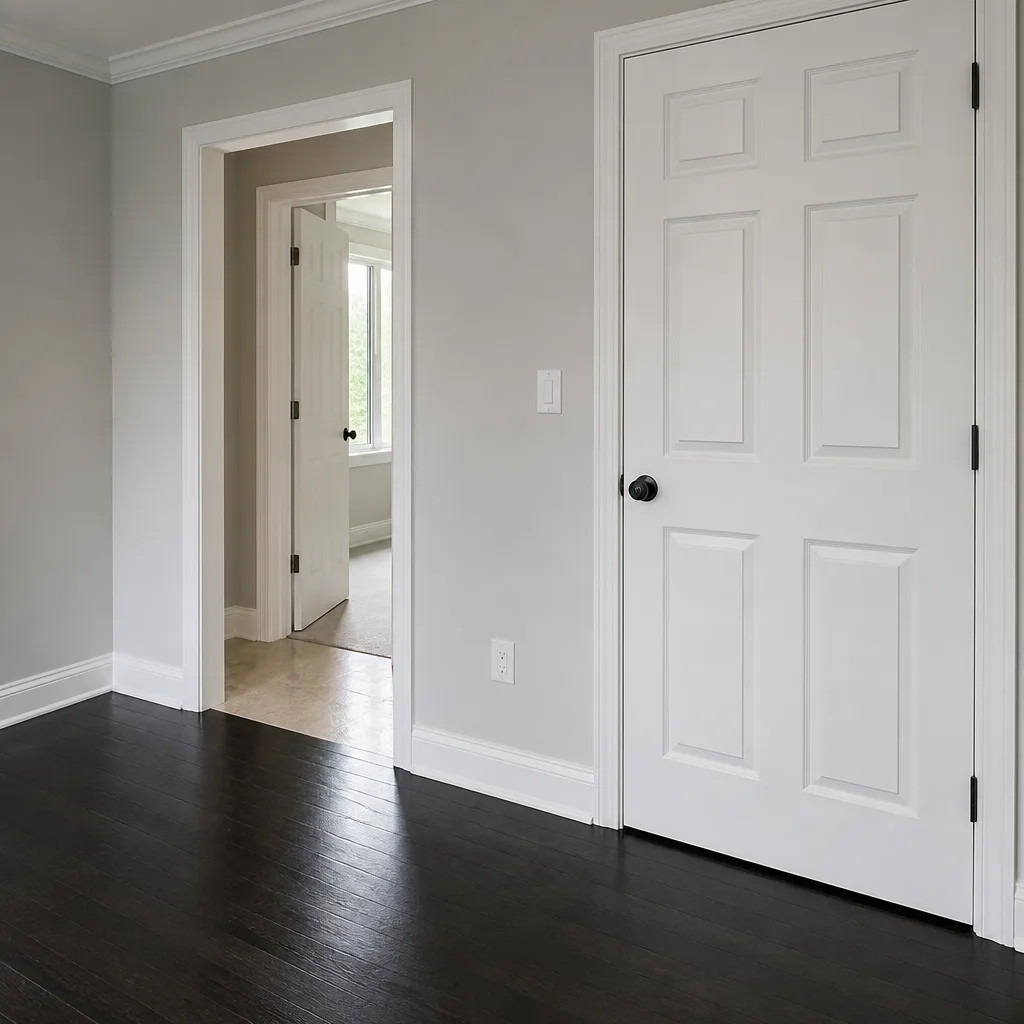 After
After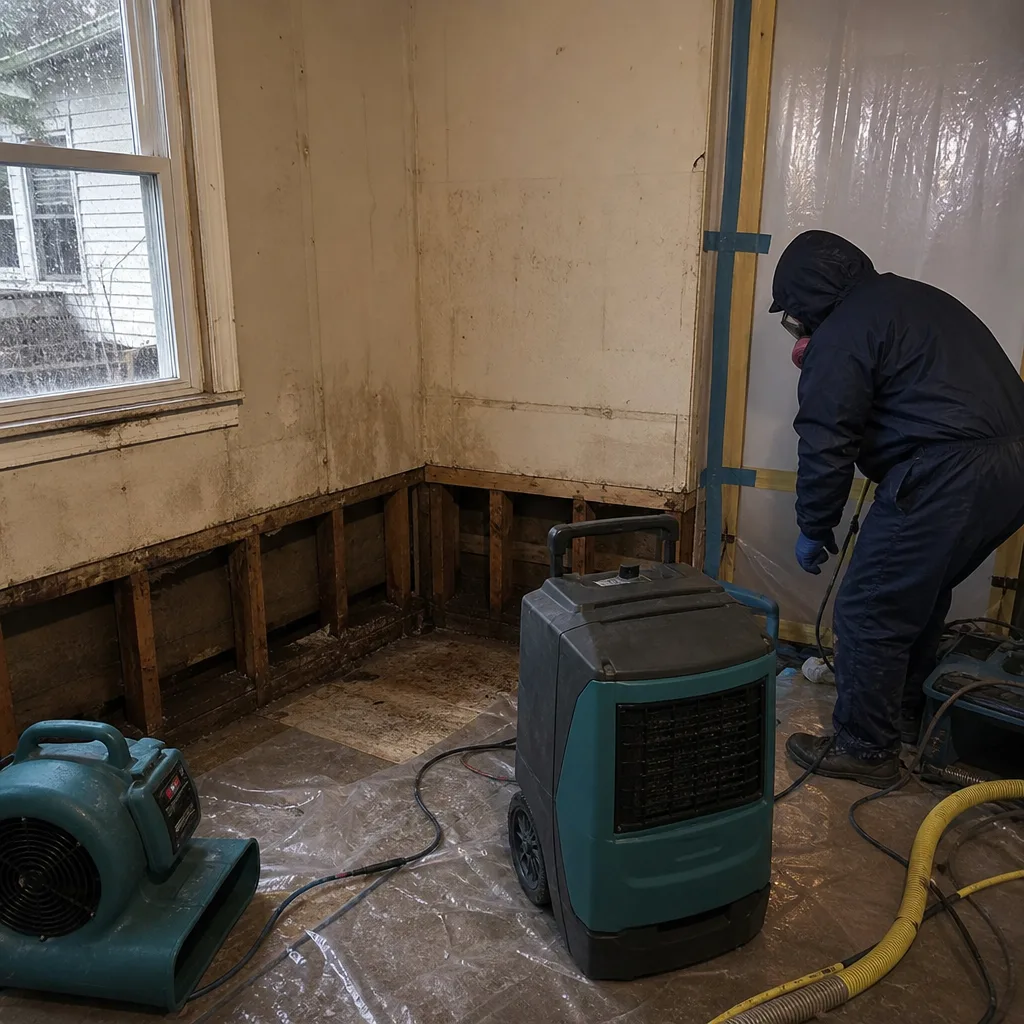 Before
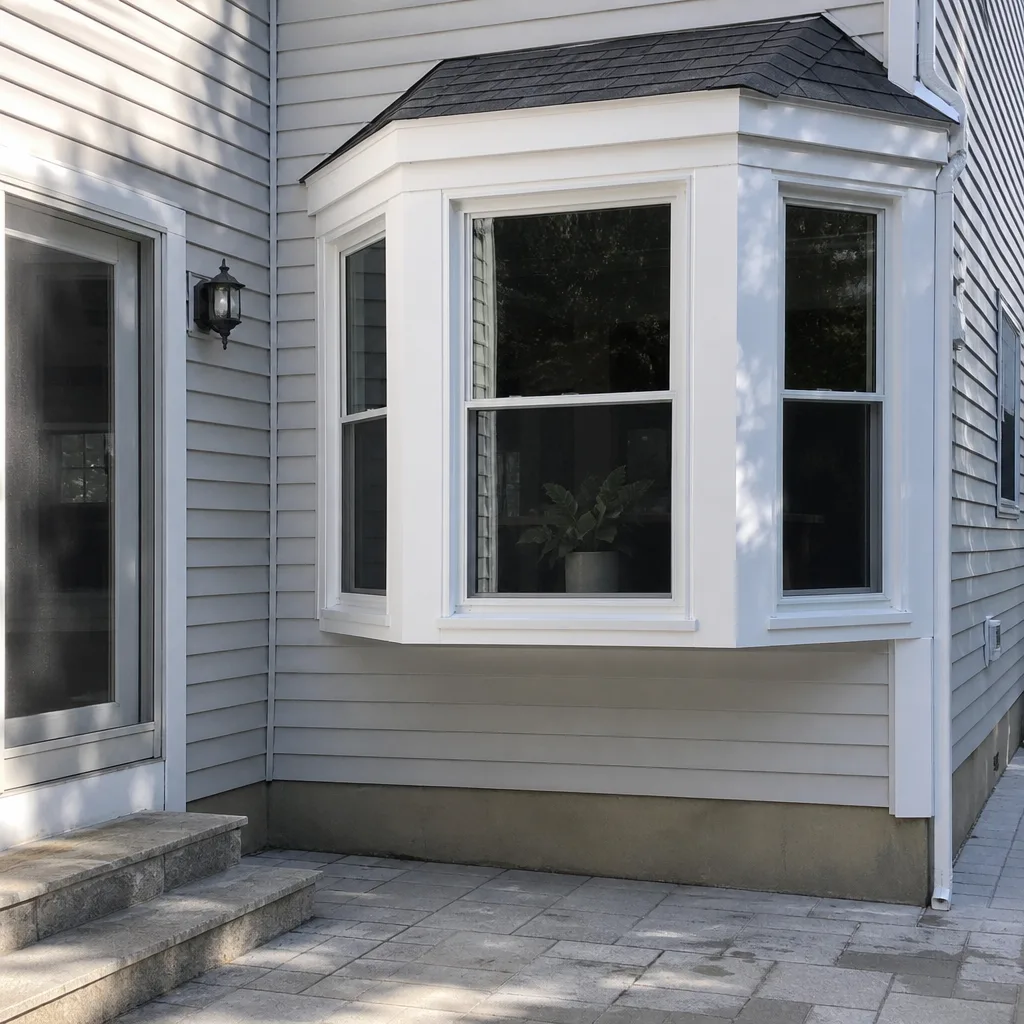 After
After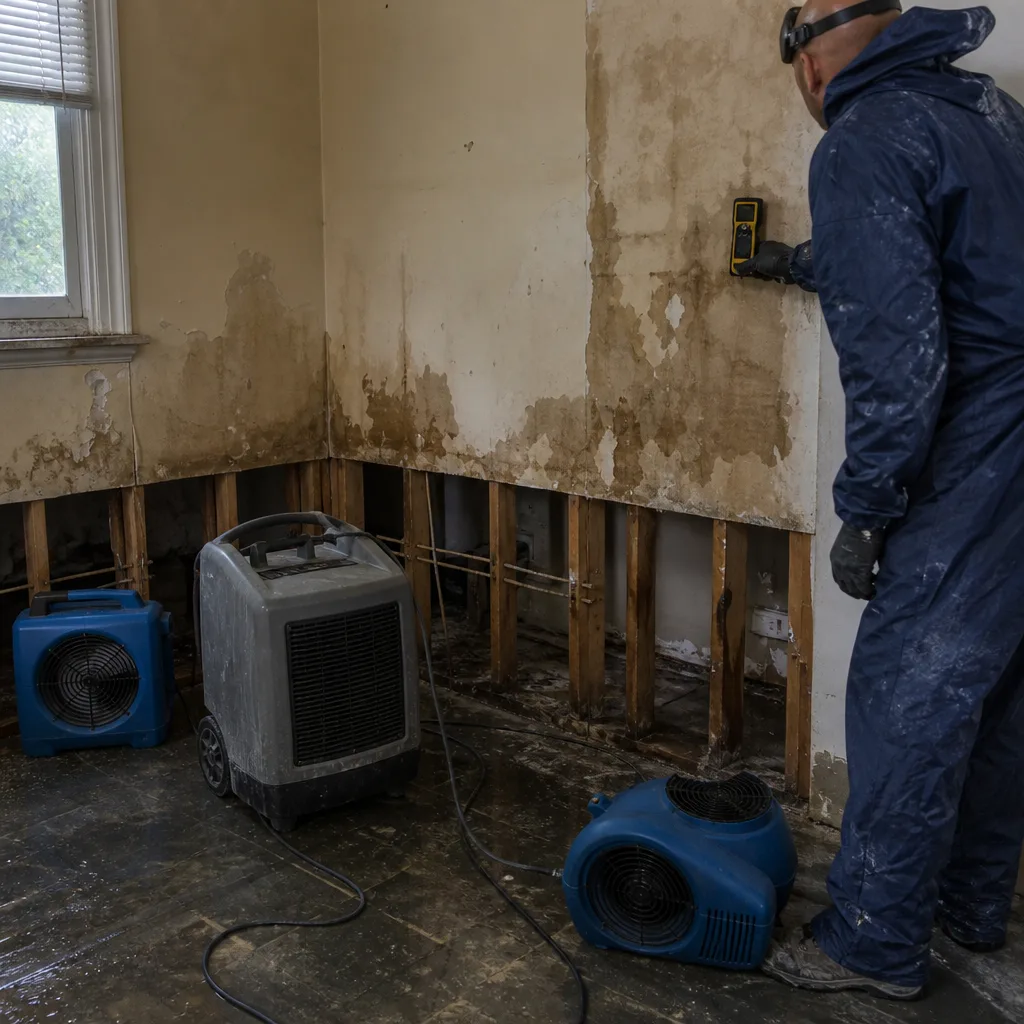 Before
 After
After24/7 Emergency Storm & Disaster Restoration in Palisades Park
When a nor’easter tears flashing off a Broad Avenue roof or a January thaw sends snowmelt into a basement on Homestead Avenue, waiting until morning is the most expensive decision you’ll make. Water moves through wood framing and drywall within minutes, and in Palisades Park’s tightly packed two-family homes, it doesn’t respect property lines. A broken pipe upstairs in your unit becomes a ceiling collapse in the neighbor’s kitchen before the hour is out. Call us at (201) 729-3780 and a live dispatcher answers, day or night. We dispatch crews from right here in northern Bergen County, and our first truck typically reaches Palisades Park within 45 minutes.
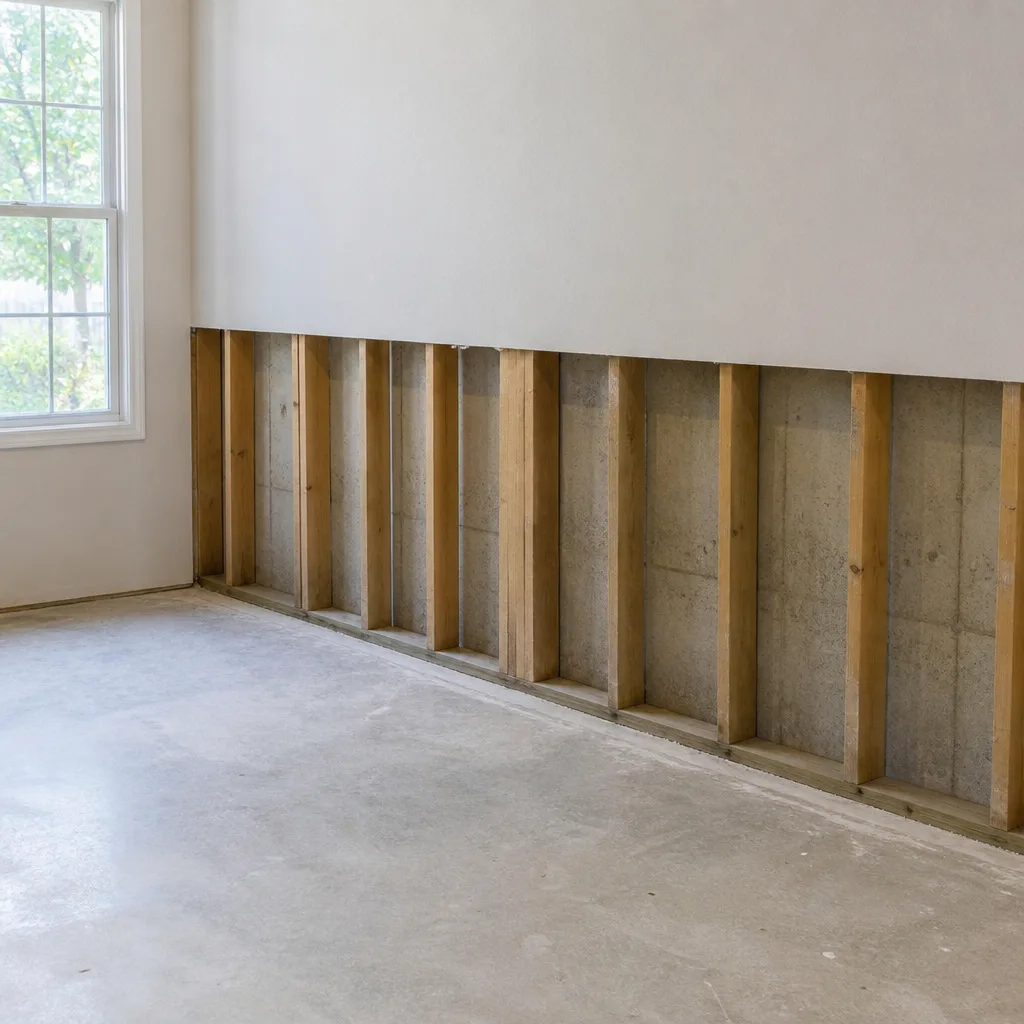
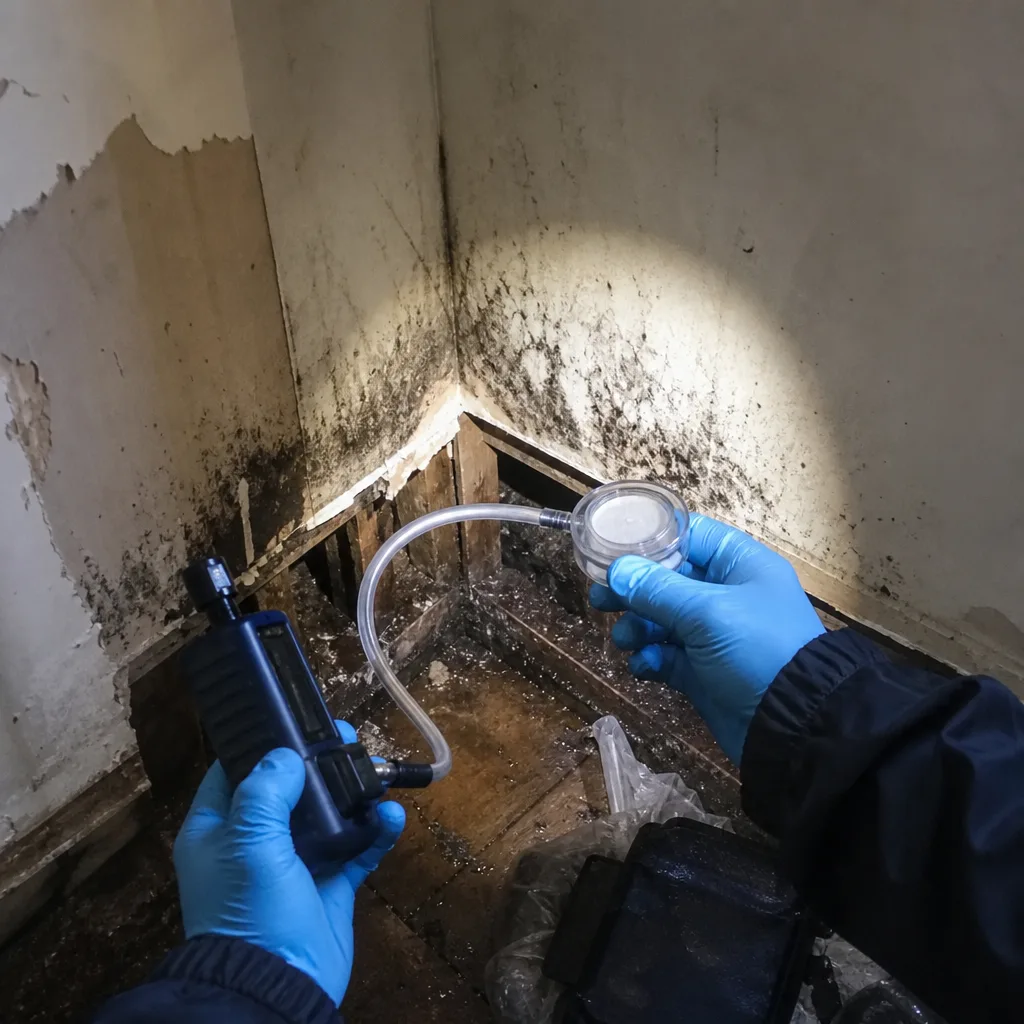
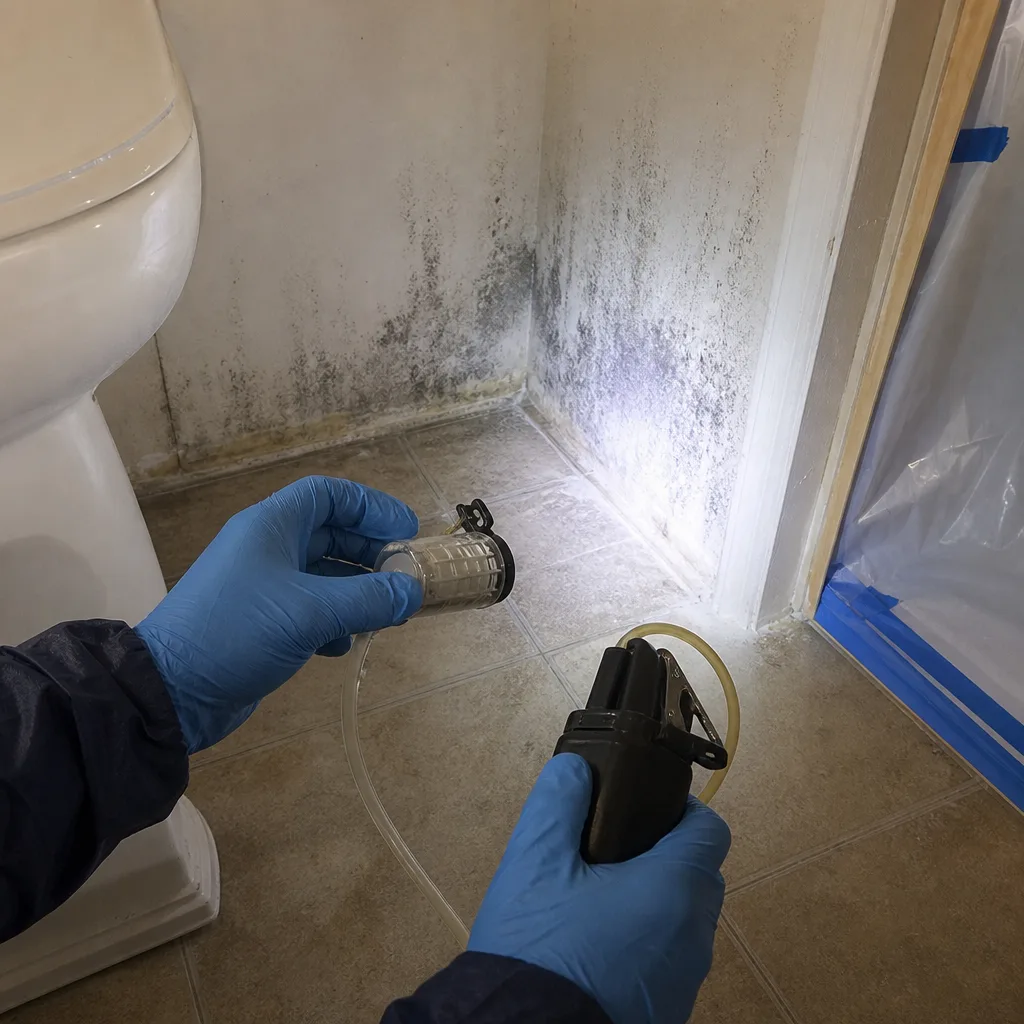
The first hour determines whether you’re dealing with drying and paint or full gut-and-replace. Our Storm & Disaster Restoration team arrives with thermal imaging, moisture meters, and extraction equipment already running the moment we pull up. We photograph everything for your carrier, mark the water line on the wall so we all know where we started, and get moving. That’s the whole point: act fast, document honestly, and don’t hand the homeowner a guessing game.
Understanding Storm & Disaster Restoration Severity in Palisades Park Properties
Not all floodwater is the same, and in Palisades Park the difference matters more than in most towns. Clean water from a burst supply line is Category 1: unpleasant but manageable if extracted within hours. Category 2 is gray water, the kind you get when a failed roof flashing lets stormwater wash through attic insulation or a washing machine overflows across a tile floor. Category 3 is the dangerous one: water that has picked up sewage, lawn chemicals, or street runoff from a flooded crawlspace at the bottom of the ridge. That level of contamination is why Biohazard & Crime Scene Cleanup - Palisades Park protocols matter even in residential storm losses. We classify every loss before we start, because treating Category 3 with mops instead of containment and antimicrobial application leaves contaminants in the stud cavities where they’ll cause mold within 48 hours.
Palisades Park’s housing stock raises the stakes on every classification. These post-war two- and three-family houses share foundation walls, floor joists, and roof framing. Water from one unit follows those shared cavities into the next. Moisture mapping across party walls isn’t optional here; it’s the only way to find the full perimeter of a loss before you start drying. Our techs log readings daily with Dri-Eaz and Phoenix equipment until the structure hits its established dry standard, then hand that log to you and your carrier without being asked.
Why Palisades Park Property Owners Choose Floodline Restoration Co.
- 45-minute response commitment. When you call about standing water or a wind-torn roof, we give you a real arrival window and hit it. Our dispatch board shows every truck in the area, and Palisades Park is always on the map.
- 24/7 live answer, no phone trees. At 3 a.m. during a nor’easter, someone picks up and starts coordinating. Not a recording, not a sales lead form. A person who knows what a tarp and a wet vac are.
- IICRC-certified crews trained to WRT and FSRT standards. Water damage and fire/smoke restoration require different protocols, different equipment, different chemistry. Our techs carry the certifications that match your loss, and they recertify on schedule.
- Free visual inspection with a written scope. Before any work begins, you get a line-item scope in plain English. No open-ended time-and-materials games. You see the plan, the equipment list, and the dry standard we’re aiming for.
- Direct insurance billing and adjuster coordination. We bill your carrier directly, handle the paperwork, and speak with your adjuster so you don’t have to. You get copies of everything, but you’re not the messenger.
- One team from extraction to reconstruction. The crew that pulls the water out is the crew that hangs the new drywall. No mid-job handoff to a sub you’ve never met. Floodline starts and finishes it.
Our Storm & Disaster Restoration Process
Inspection & Assessment
We map every affected surface with thermal imaging and penetrating moisture meters. For storm losses in Palisades Park, that includes the party walls, the crawlspace if the lot slopes toward the ridge, and any ceiling cavity below a roof penetration. You get a written finding and a firm scope before tools come off the truck.
Extraction & Stabilization
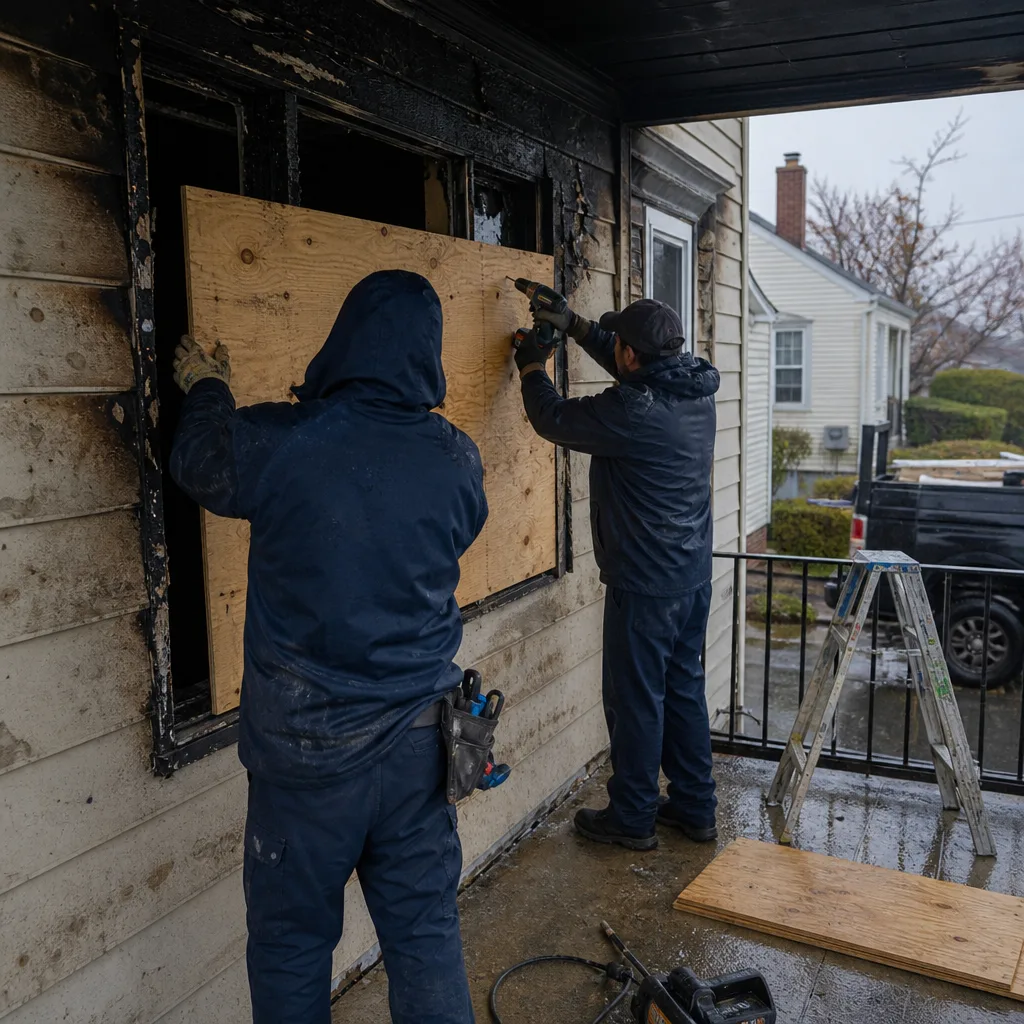
Standing water is removed with truck-mounted and portable extraction units. For roof damage, stabilization means emergency board-up and roof tarping before more water gets in. Broken windows get plywood, exposed framing gets wrapped, and yards get taped off if there’s debris.
Drying & Dehumidification
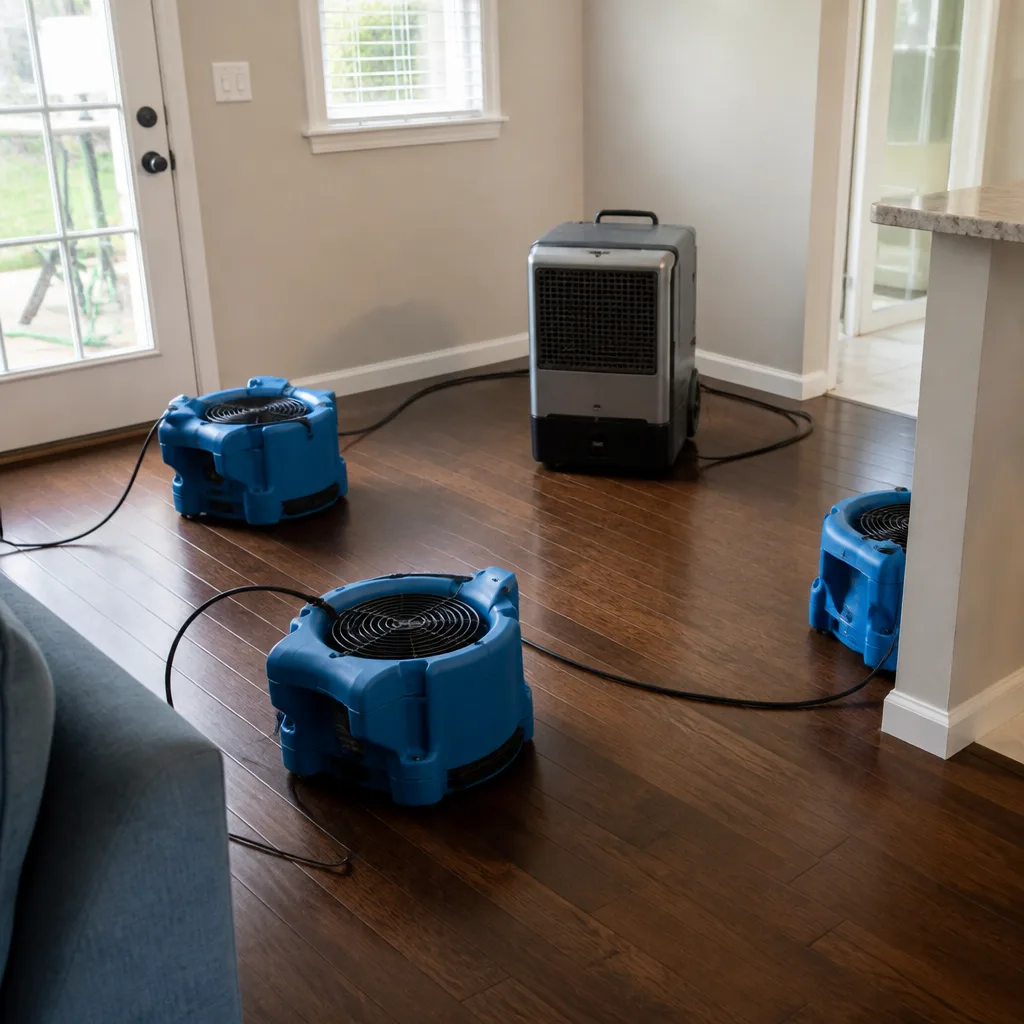
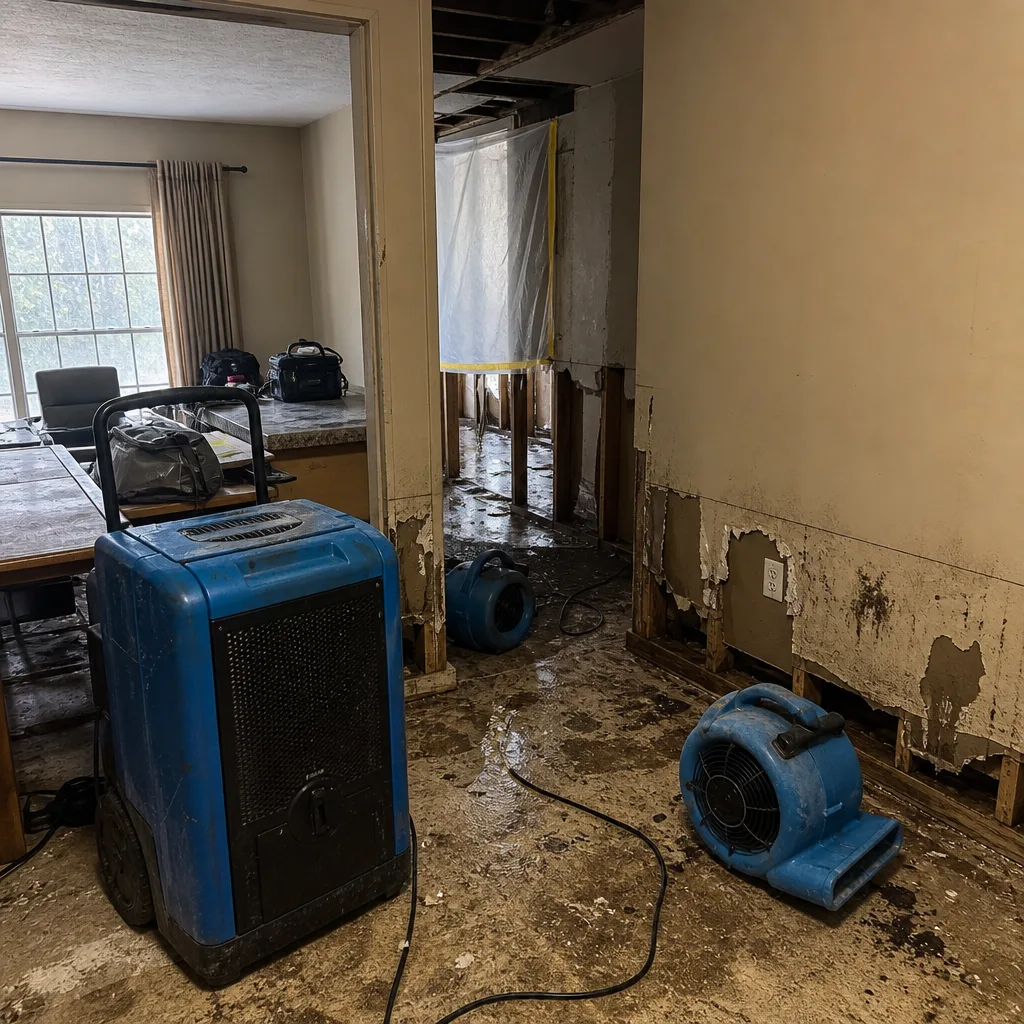
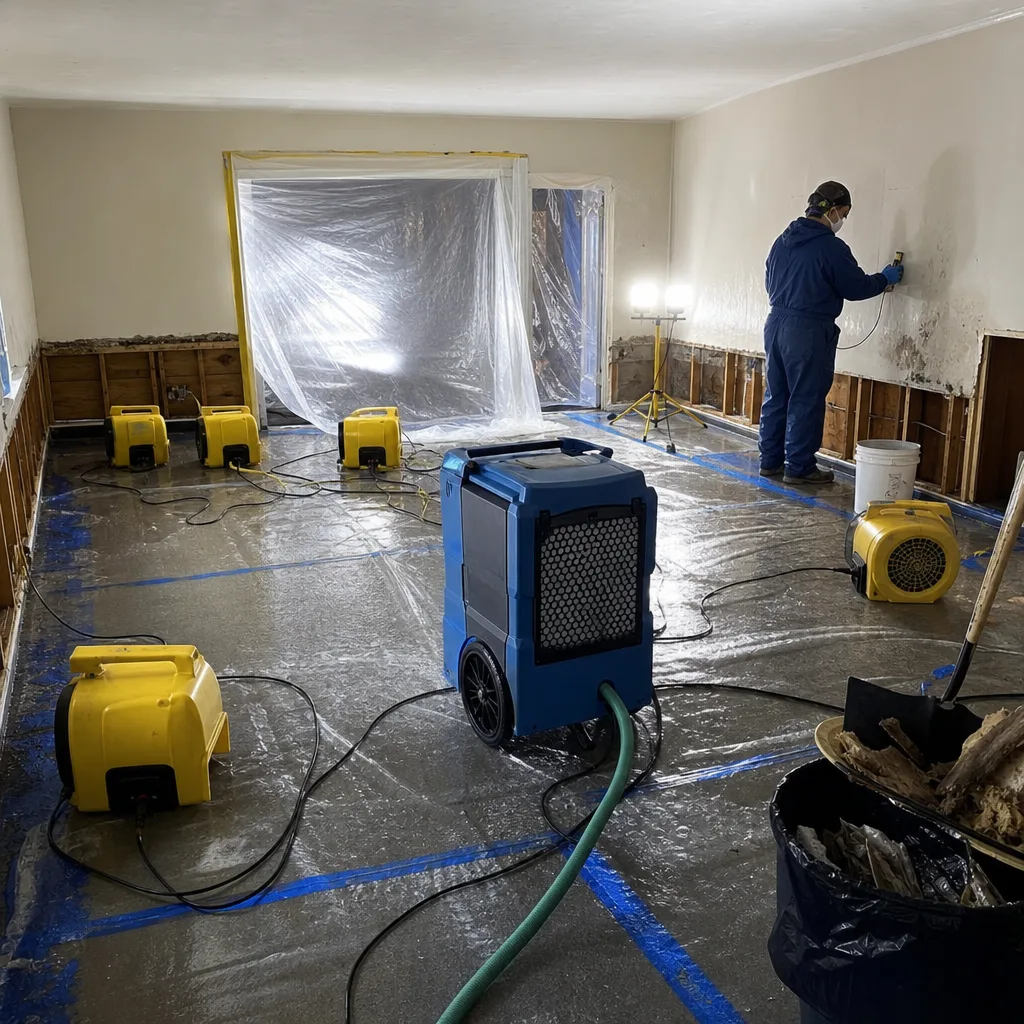
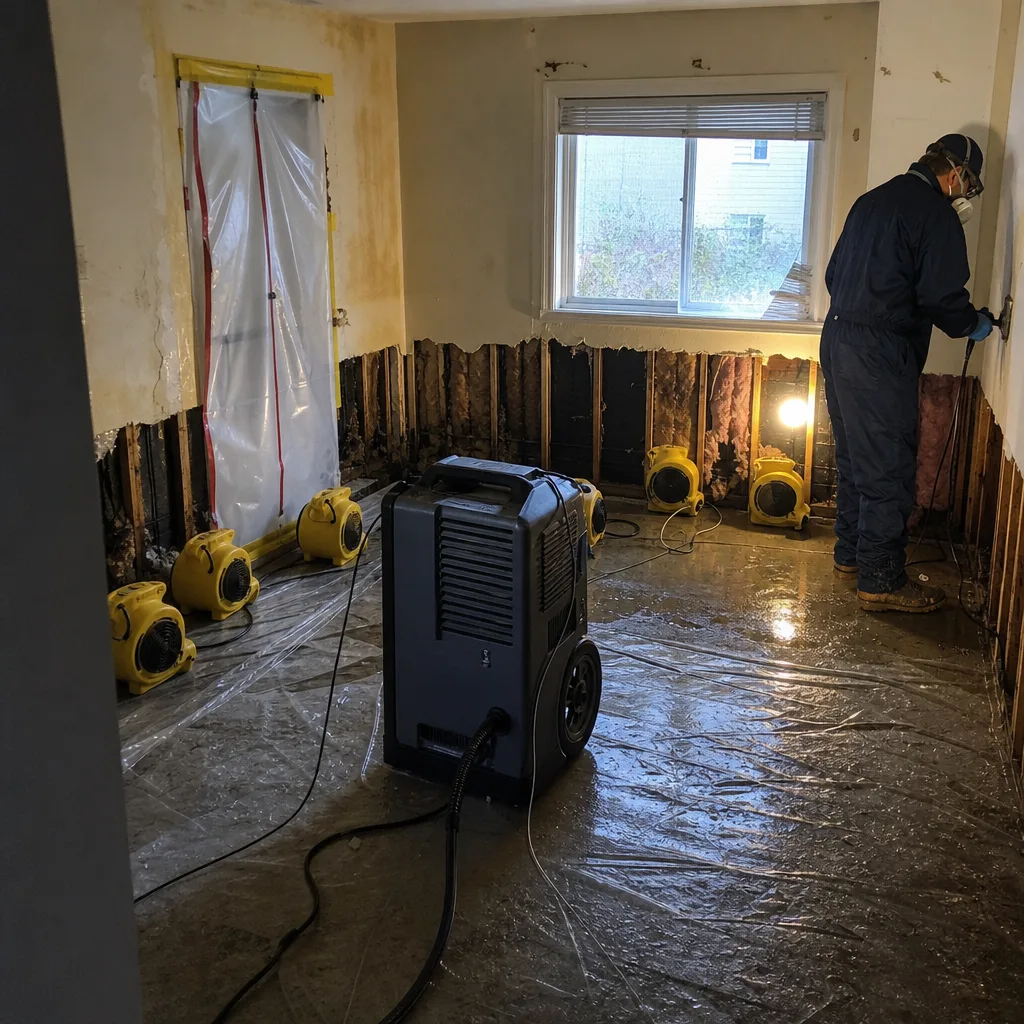
We place XPOWER air movers and Phoenix or Dri-Eaz dehumidifiers exactly where the moisture map says they’ll work. Not shotgun placement; grid placement. Daily readings go in a log that tells everyone the structure is drying on schedule or needs adjustment.
Cleaning & Sanitization
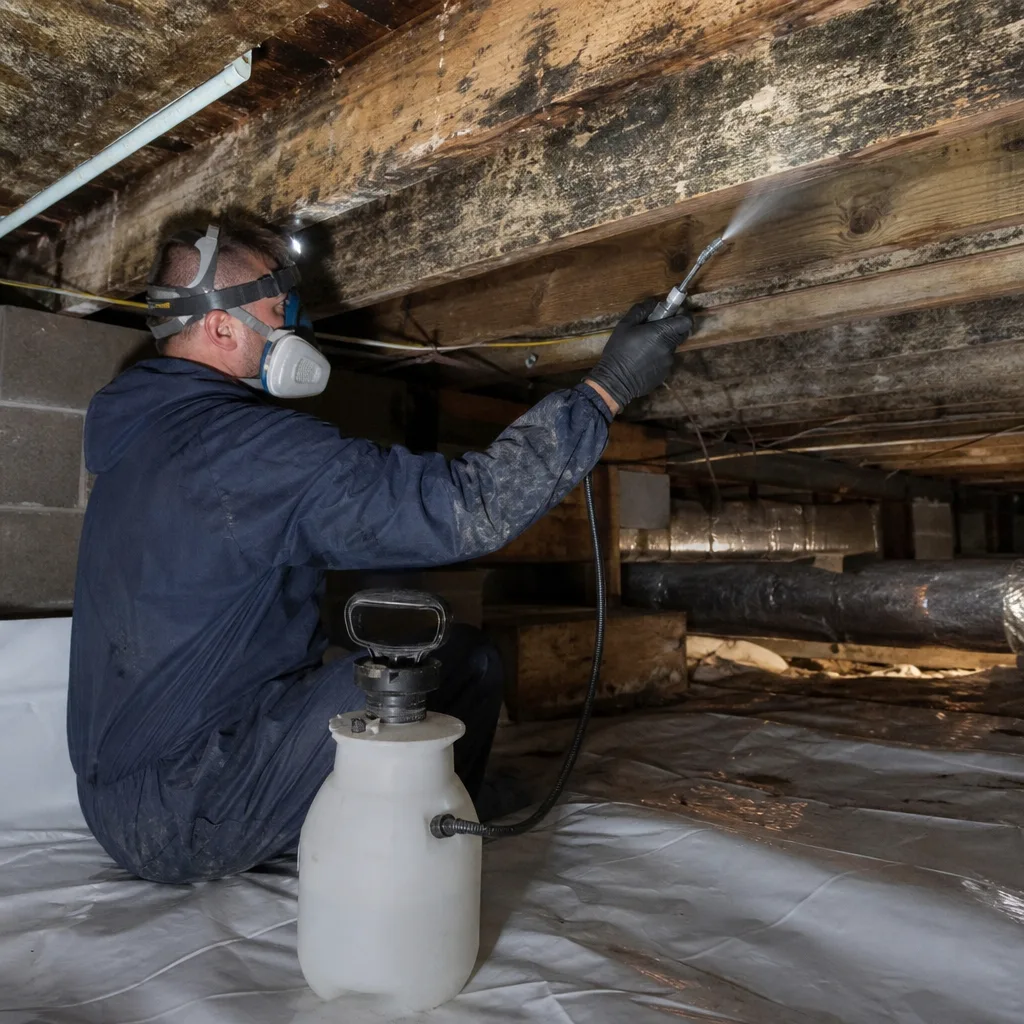
Stormwater brings in whatever the ridge washed down: soil, lawn chemicals, gutter sludge. We clean affected surfaces, apply EPA-registered antimicrobials where the water category requires it, and run HEPA air scrubbers to pull particulates out of the air before we start rebuilding. For properties that need deeper decontamination, we also offer our Sanitization Services in Palisades Park as part of the scope.
Specialty Treatment for Storm Losses
This is where drainage correction happens: downspout extensions, grading fixes at the foundation, or crawlspace encapsulation if lower-lot flooding keeps recurring. If the issue is the roofline, we scope flashing repairs and sealant replacement so the same corner doesn’t leak next winter.
Repairs & Restoration
Drywall, paint, flooring, cabinetry, trim. Our carpenters handle Reconstruction & Cleanup - Palisades Park homeowners need, rebuilding what the water took on the same work order, with the same project manager. Your home goes back together the way it was, but drier inside the walls than it was before.
Need Emergency Storm & Disaster Restoration in Palisades Park Now?
Crews minutes away, answering live 24 hours a day. The sooner we start, the less it costs.
Working With Your Insurance Company
Storm and flood claims in Palisades Park go smoother when the documentation starts in hour one. We know what your carrier needs to see: a photo of the water line before extraction, moisture readings from day one, a drying log with daily numbers, and a line-item scope that matches industry estimating software. We generate all of it and send it directly. Our office has coordinated more Bergen County storm claims than most adjusters see in a year, and we’ve walked hundreds of Palisades Park homeowners through the process without them ever having to argue with a claims department. If your adjuster wants a conference call, we’re on it. If they question a line item, we answer it. You stay out of the middle.
What We Provide Your Insurer
- Thorough documentation of the loss
- Photos of all damage, room by room
- Moisture readings and drying logs
- A detailed, line-item scope of work
- Direct coordination with your carrier
Built for Palisades Park’s Loss Calendar
The storms that hit Palisades Park follow a pattern, and after 42 years in northern New Jersey we know the months by their damage type. January brings deep freezes that split copper supply lines in uninsulated crawlspaces, especially on the lower lots below the ridge where cold air pools. February and March are ice dam season: heavy wet snow on those low-pitched post-war roofs refreezes at the eaves, then meltwater backs up under the shingles and pours into attic cavities above shared walls. April thaws saturate the ground, and basements along Homestead and Central start seeping through original fieldstone foundations. Summer brings fast-moving thunderstorm cells that dump two inches in an hour, overwhelming the borough’s drainage and flooding the garages and lower-level units on the downslope side of Broad Avenue. Nor’easters are the wildcard: wind-driven rain against aging flashing and original windows, every fall and early winter. Knowing the calendar means we know where to position equipment, and which calls are likely coming before you even pick up the phone.
Storm & Disaster Restoration Across Palisades Park’s Neighborhoods
The ridge that gives Palisades Park its name shapes every neighborhood below it differently. The homes along the western edge near Henry Hudson Drive sit on the downslope side of the Palisades diabase ridge, and after any heavy storm, surface water sheets off the exposed rock and pools against their foundations. Those crawlspaces flood faster and stay wet longer, which is why we see repeated category 2 and 3 intrusion on Brinkerhoff Avenue and the streets that run downhill toward the river. Up on the plateau around Central Boulevard and the commercial stretch of Broad Avenue, the dominant failure mode shifts to wind: exposed rooflines with 60-year-old flashing and original window seals that let rain ride the gusts into wall cavities and ceiling plenums. The two-family rows near Palisades Park High School and east toward the Fort Lee line have their own logic, where tight side yards and shared downspout runs concentrate runoff against party-wall foundations. None of this is hard to read once you’ve mapped moisture across two hundred houses on the same hill. We have.
Specialized Storm & Disaster Restoration Services We Offer in Palisades Park
Flood Damage Restoration
We classify the water, extract it, dry the structure, and rebuild. In stacked two-family units, that means containing any Category 2 or 3 water before it migrates through floor cavities into the downstairs apartment. Our Korean-speaking estimator can walk the landlord through what’s soaking, what’s salvageable, and what the carrier needs documented before any tenant’s claim goes sideways.
Roof Tarping
A nor’easter can tear a 60-year-old flashing off in a single gust. We tarp the damaged section same-day using heavy-duty reinforced membrane, not flapping blue plastic. The tarp goes on regardless of what language the property owner speaks. Our crew chief knows how to secure it to Palisades Park’s low-pitched roofs where standard tie-down techniques won’t hold.
Emergency Board-Up
Broken windows, blown-out doors, a tree limb through a dormer. We board up within hours to keep rain, wildlife, and thieves out. The boarding is neat, measured, and photographed for your insurer. If your property manager or realtor needs to coordinate in Korean, we have a staff member on the line for exactly that conversation.
Storm Damage Cleanup
Debris in the yard, mud through the first floor, downed limbs across the driveway. We clear what’s dangerous, document what the storm did, and haul the mess away. In Palisades Park, where lot sizes are small and the next house is six feet away, cleanup has to be fast and contained so the neighbors don’t inherit your tree.
Debris Removal
Nor’easter aftermath brings branches, shingle fragments, and whatever the wind picked up off the street. We remove storm debris on the same visit as the mitigation work, so you don’t have a second crew and a second quote two days later.
Wind Damage Repair
Wind pressure and wind-driven rain cause more subtle damage than you’d think: loosened siding, lifted ridge caps, pulled-away flashing around chimneys and vent stacks. We inspect the whole windward face after every major storm event and put a scope in writing before anything gets worse.
What happens when you call
- 1
A real person answersNo phone trees - you reach a local pro.
- 2
You get an upfront price rangeHonest numbers before anyone is dispatched.
- 3
A background-checked tech heads outLicensed & insured, dispatched right away.
- 4
You approve before work beginsNothing starts until you say go.
Storm & Disaster Restoration Costs in Palisades Park, NJ
For a typical storm water loss in a Palisades Park two-family home, the numbers fall into a consistent range. Extraction and drying for a single flooded basement or utility room runs $3,500 to $6,800, depending on category classification and how far water tracked into wall cavities. A full floor of category 3 flooding, with containment, antimicrobial application, and drying of walls and subfloor, typically lands between $11,000 and $26,000 before reconstruction. Roof tarping runs $450 to $900 for most Palisades Park rooflines; a full emergency board-up on a blown-out window or door face adds $600 to $1,400 per opening. Debris removal usually ranges from $800 to $2,500 depending on volume and access. If floodwater comes through a finished lower unit with drywall, flooring, and trim to replace, full restoration including rebuild commonly falls between $28,000 and $75,000. The free visual inspection is how you get a firm number instead of a wide guess: we look at the actual loss, write the scope, and hand it to you before anyone signs anything.
We Also Serve Cities Near Palisades Park
Our crews roll out to Palisades Park first, but we cover the whole edge of the Palisades ridge and the flatlands below it. Fort Lee, Leonia, Ridgefield Park, and Teaneck all get the same live answer, the same scopes, and the same guarantee in writing. If you live one town over and the water is rising, call anyway. We’ll send someone.
Palisades Park Storm & Disaster Restoration Questions, Answered
How quickly can you get a Korean-speaking estimator to a flooded two-family house in Palisades Park?
We dispatch a Korean-speaking estimator on the first truck whenever the call notes request one, and that usually means arrival within 45 to 60 minutes anywhere in Palisades Park. The estimator handles classification, containment decisions, and the written scope on-site, and can walk the landlord or property manager through the plan in Korean while our techs start extraction. If the owner is in Seoul and the tenants are home with a realtor on the phone, we coordinate all of it. Call (201) 729-3780 and tell the dispatcher you need Korean-speaking service; the crew is rolling before the call ends.
My 1950s Palisades Park house has original downspouts that dump water right at the foundation. Can storm restoration fix that, or do I need a landscaper?
We fix it as part of the restoration scope, not a separate trade. Most post-war houses in Palisades Park were piped with downspouts that terminate six inches from the foundation wall, and on downslope lots below the ridge that turns every rainstorm into an under-slab irrigation event. Our crew extends downspouts, regrades the first three feet of soil away from the foundation, and installs scupper drains where the lot pitch demands it. This is storm restoration work: we’re not mowing grass or planting shrubs, we’re making sure the water never reaches the foundation again.
Can you board up and tarp a Palisades Park roof after a storm if the owner only speaks Korean and the tenants are upstairs?
Yes. The board-up crew is dispatched by our live office while an estimator who speaks Korean is looped in simultaneously, either by phone or on-site. The tarping and boarding happen regardless of paperwork status, because the goal is to stop further water intrusion by nightfall. Documentation goes out to the carrier that evening, with a scope the property manager or realtor can forward to the owner in writing. Call (201) 729-3780 and ask for the Korean-speaking estimator if you need one.
What’s the rule for whether my flood-damaged Korean-American property management client needs pack-out or just drying in place?
If category 2 or 3 water has wicked into stored contents, furniture, or boxed papers in a Palisades Park unit, those items can’t be effectively dried and sanitized while sitting in a wet room. Pack-out means we inventory, photograph, and move contents to a clean, dry space or our content restoration facility, where they’re dried, cleaned, and stored until the unit is ready. Drying in place works for furniture with legs and open shelving that didn’t touch the water. The rule isn’t about time; it’s about water category and material type. Your estimator will make that call on-site and put it in the written scope.
Why do basement floods in the lower part of Palisades Park keep coming back after the drying is done?
Because the drying crew treated the symptom and not the source. Homes on the downslope side of the Palisades ridge receive surface water sheeting off the escarpment during heavy storms, and unless the scope includes downspout extension, regrading, or crawlspace drainage correction, the next storm refills the same cavity from the same direction. Our restoration scopes in Palisades Park always include a drainage assessment: if water is coming from outside, we fix the outside. That’s the only way the drying counts.
How long does storm water drying take in a Palisades Park two-family house?
Most moderate storm losses in Palisades Park’s wood-frame two-family homes dry in three to five days with professional air movers and dehumidifiers running continuously, assuming the water was Category 1 or 2 and the source was controlled on day one. Category 3 losses or water trapped in party-wall cavities can stretch to seven or eight days. We provide daily moisture readings, and the log shows you and your carrier exactly when the structure hit its dry standard. No one guesses. The dry standard is a number.
Do I need to leave my Palisades Park home during storm restoration?
For a single-room loss with Category 1 or 2 water, most homeowners stay through drying if they can tolerate equipment noise. We contain the affected area, run air movers in that zone, and seal doorways with plastic where needed. For category 3 flooding, we generally recommend vacating the affected unit during containment and antimicrobial work, usually one to three days. Your estimator will give you an honest answer after we see the loss, not before, because staying or going depends on the water category, not your preference.
What should I do in the first 30 minutes after a storm floods my Palisades Park house?
Call (201) 729-3780 before you start moving furniture or pulling up carpet. Turn off the electrical breaker to the affected area if you can do it without standing in water. If the water is coming from above, put a bucket under the active leak if it’s safe to reach. Then take photos of everything with your phone, including the water line on the walls. That’s the documented baseline your carrier will want. Don’t use a shop vac on category 3 water, and don’t touch wiring in a wet ceiling. Then wait for our crew; extraction should be running within the hour.
Serving Palisades Park, NJ - Our Local Coverage Area
We’re based in the Palisades Park area and know this community well. Use the map below to see our service coverage - if you’re nearby, we can almost certainly help.
Frequently Asked Questions
In Palisades Park, storm damage restoration costs depend on the damage type. Emergency board-up and tarping typically run $450 to $1,400 per roof or window opening. Full water extraction and drying for a single flooded room averages $3,500 to $6,800. A whole-floor flood with contaminated water usually falls between $11,000 and $26,000 before reconstruction. Roof repairs from wind damage vary widely by size of the damaged section and roofline type; expect $1,200 to $8,500 for post-storm flashing and shingle restoration, $600 to $2,900 for custom flashing rebuilds, and $2,200 to $13,000 when full decking and underlayment replacement is required. Our free visual inspection is how we give you a fixed number instead of a broad range.
Most homeowner policies in Bergen County cover sudden storm-related roof, window, and wind damage, which covers emergency board-up and tarping. Flood coverage is separate, and many Palisades Park homes below the ridge carry a flood policy through the NFIP or a private carrier. We bill your carrier directly and provide the documentation they request, from the initial call to the final rebuild. If your adjuster wants a call, we’re on it.
We dispatch from our northern Bergen County service area, and our first truck typically reaches Palisades Park within 45 to 60 minutes of the call, including Korean-speaking estimator requests when noted. Our dispatch board tracks every truck in real time, and Palisades Park is a running route we cover daily. In the middle of a nor’easter, we’re already staged in the area.
No. That’s not our trade. We repair storm damage to your building: roof, walls, windows, framing, foundation. If a storm blowout damaged your car or truck, take it to a tire shop. If the storm also took out your garage door or flooded the garage where the car was parked, we handle that building work.
Yes. We respond to storm and flood calls anywhere in the 07650 ZIP and across the wider Palisades Park borough, including the neighborhoods near Elm Street and Cadwallader Drive. Our dispatch covers the whole map, not just certain zones.
We recommend downspout extensions on every home on the downslope side of the ridge, emergency tarp kits stored in an accessible place, and a labeled breaker panel map if a future flood requires quick electrical shutoff. For older homes with original flashing, an off-season inspection can identify failing sealant before the next nor’easter does it for you. We’ll inspect during any job, free of charge.
Yes. We answer live at any hour and dispatch board-up crews the same hour you call, not the next morning. If a window is blown out or a roof deck is exposed, we secure it before more water and animals move in. Call (201) 729-3780 and a real person answers.
Our technicians are background-checked, uniformed, and certified through the IICRC to WRT and FSRT standards, among others. We carry full general liability and workers’ compensation coverage. Our work is backed by the 90-Day Done Right Promise, in writing, with no arguing. We’ve served Bergen County for over 42 years, and we plan to be here in thirty more.
For immediate storm or disaster restoration in Palisades Park, call our 24/7 emergency line at (201) 729-3780. A live dispatcher answers, a certified crew arrives within the hour, and we stand behind every scope of work in writing. The line the water left is where we start.
Written by Curt Bowman, Owner at Floodline Restoration Co., serving Palisades Park and Bergen County since 2010.