

Free visual inspection and a written scope of work before any mitigation begins - photos, moisture readings, and drying logs go in your claim file
The scope we write is the scope we bill. Anything new gets shown to you, in writing, before we touch it.
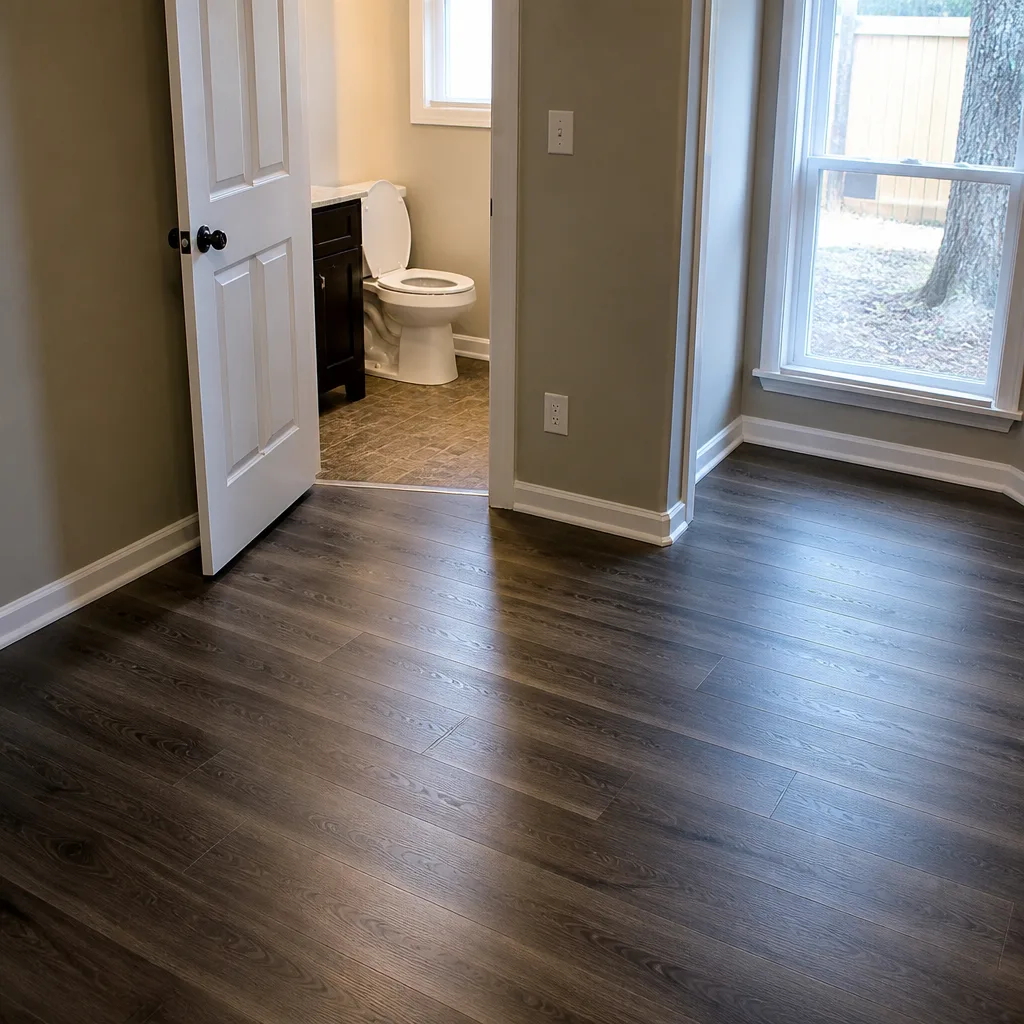
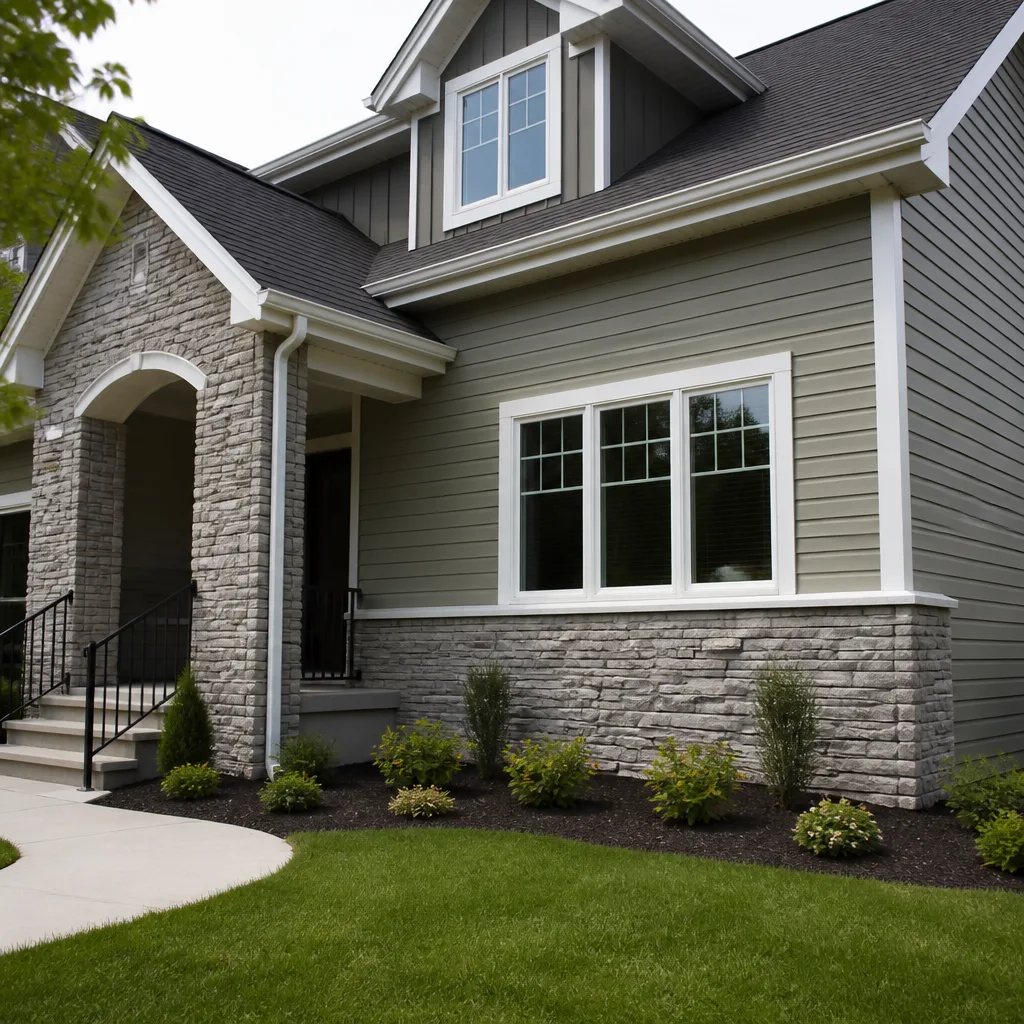
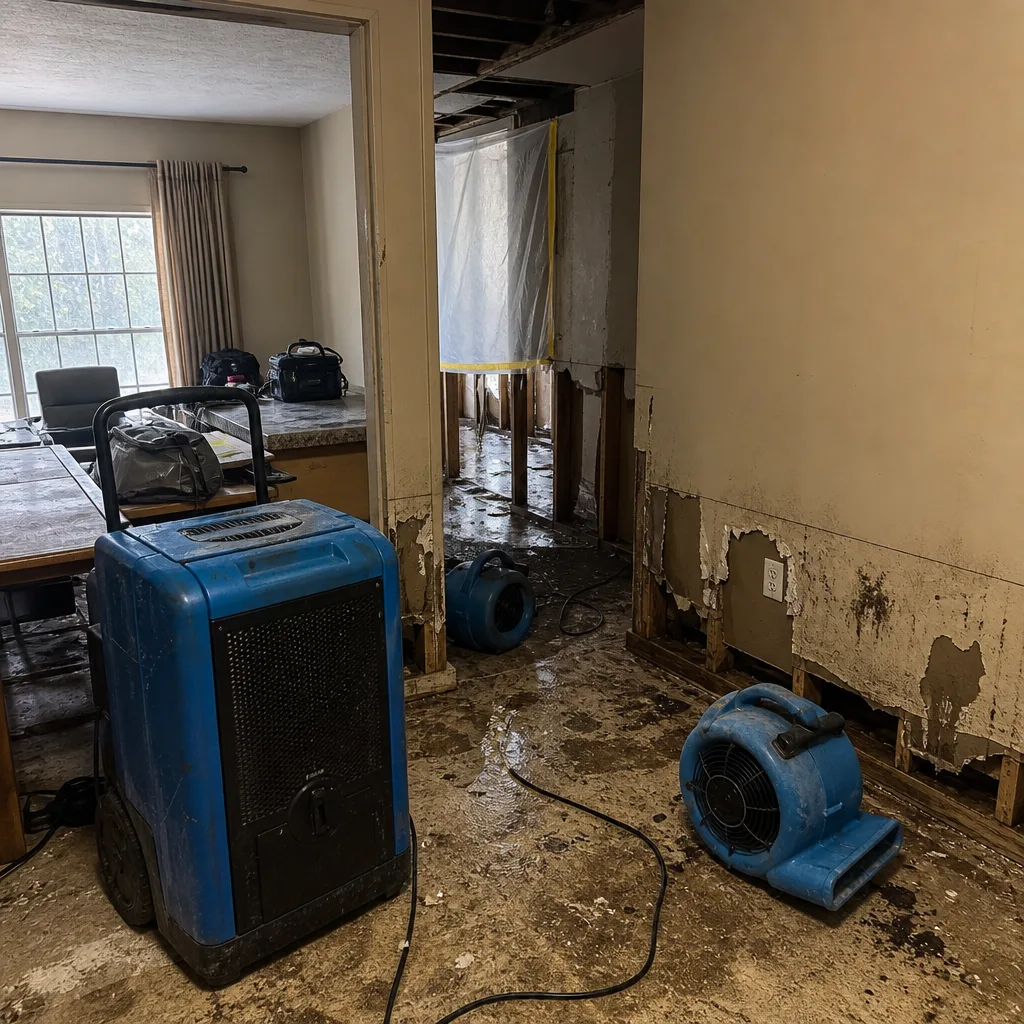 Before
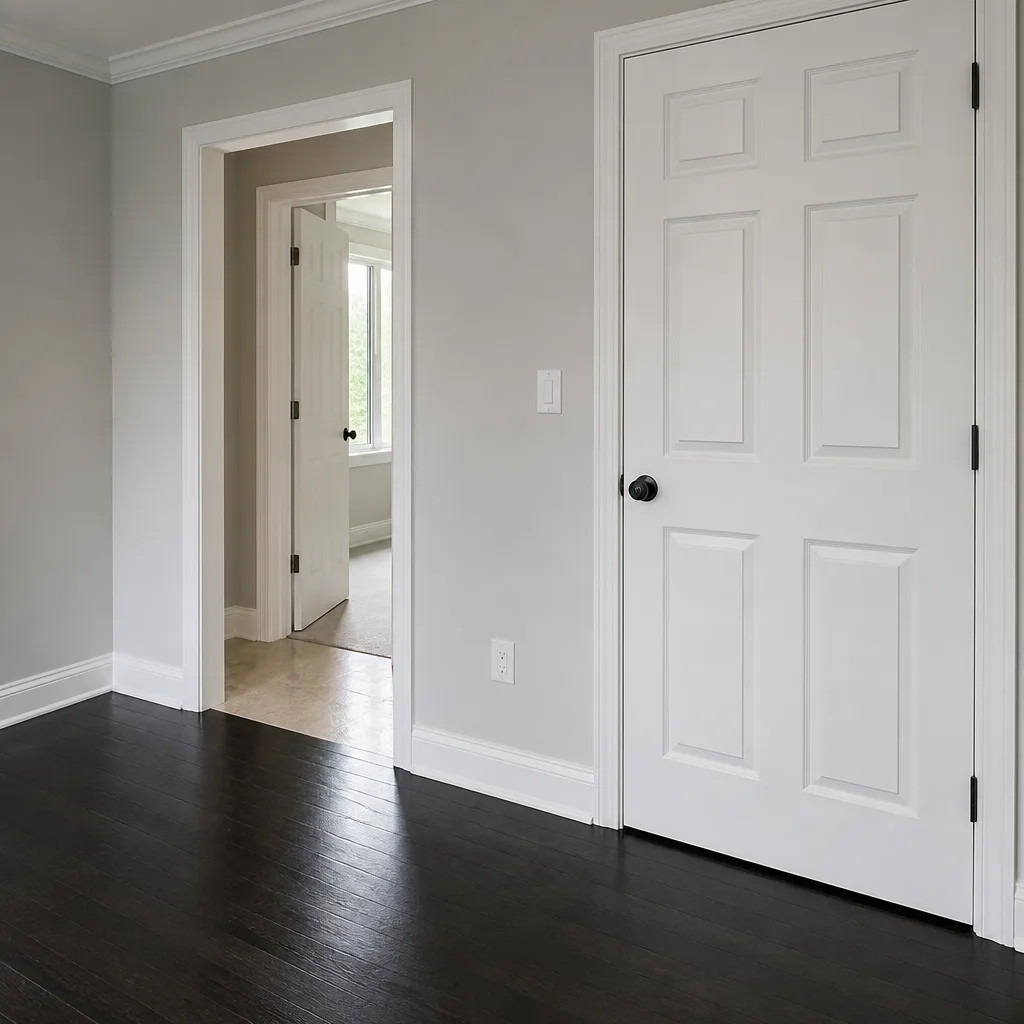 After
After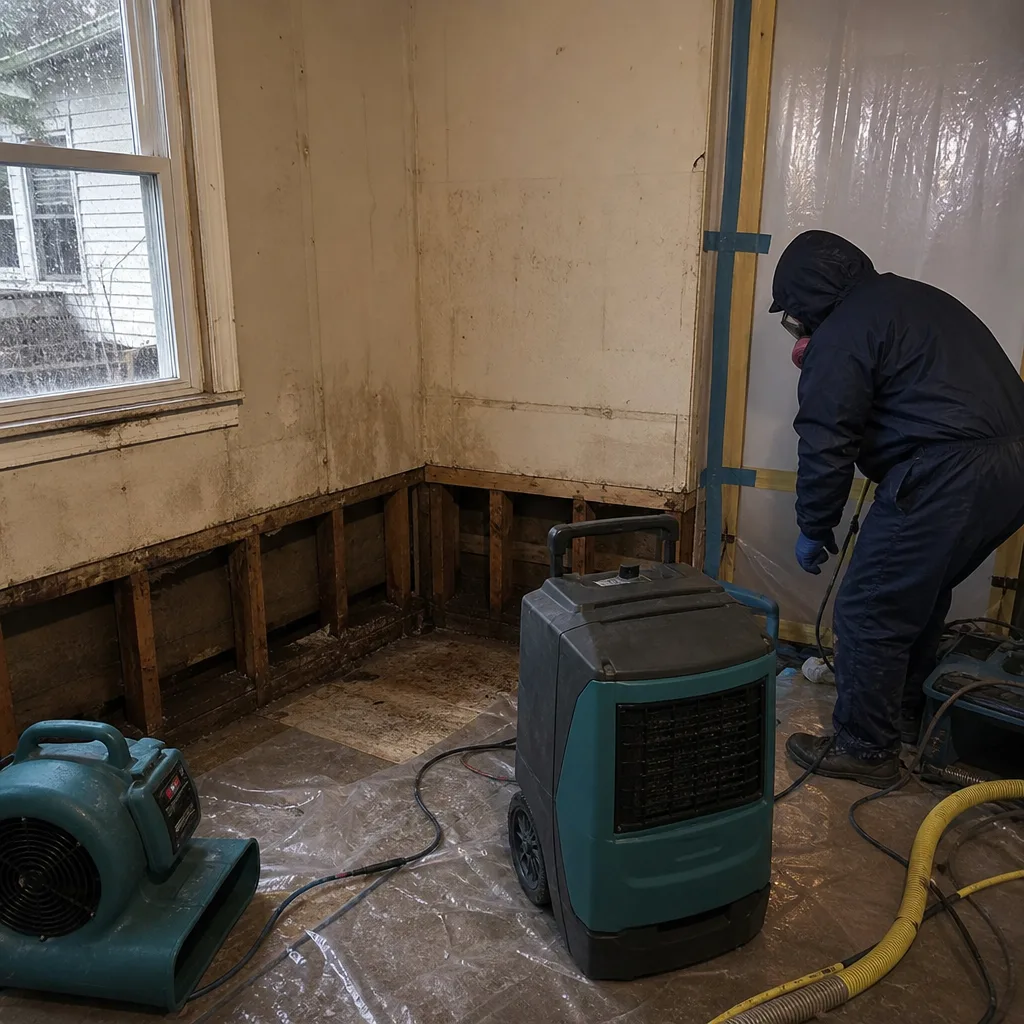 Before
 After
After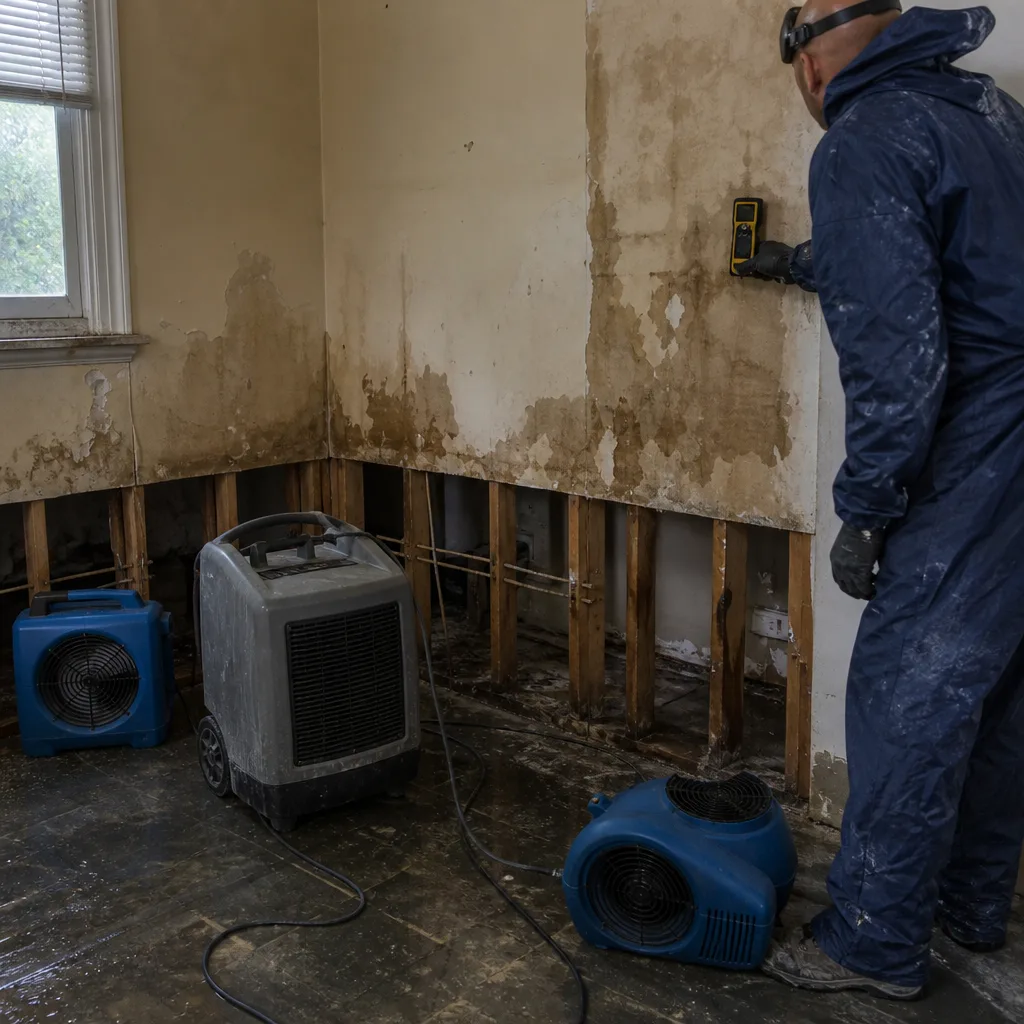 Before
 After
After24/7 Emergency Fire & Smoke Damage Restoration in Riverdale
Fire & smoke damage restoration in Riverdale typically runs $2,400-$9,800 depending on smoke migration through prewar co-op riser chases and whether board approval delays drying of sprinkler water. That price point is wildly different from the single-family market two miles north because a top-floor kitchen fire in a 1920s co-op rarely stays in one unit. Smoke follows the shared chase, and soot settles into original plaster two floors down. If you’re staring at a fire-damaged unit right now, call (201) 729-3780. A live person answers. A crew heads toward Riverdale immediately. We walk the loss with you, photograph everything, and give you a written scope before any work starts, so your co-op board sees exactly what they’re approving.
Understanding Fire & Smoke Damage Restoration Severity in Riverdale Properties
Fire damage in Riverdale is rarely a one-unit problem. That’s the first thing to understand. In a 1920s brick co-op on Independence Avenue or Palisade Avenue, smoke doesn’t respect demising walls. It moves through two pathways: the shared riser chase that carries plumbing and electrical from basement to parapet, and the gap between original lath-and-plaster and the masonry structure behind it. We classify smoke residue by type. Dry soot from a high-oxygen paper or wood fire brushes off relatively easily. Oily, sticky soot from a kitchen grease fire or melted synthetics bonds to plaster and requires chemical sponge treatment before any primer goes on. And protein residue from a kitchen fire, nearly invisible, lingers for weeks if not enzyme-treated. Then there’s the sprinkler water. A fire-damaged 8th-floor unit often has hundreds of gallons of water in the floors, walls, and the ceiling assembly below. Wet plaster in a prewar co-op grows mold within 24 to 48 hours, and until the board signs off on access to the unit below and the chase above, our drying equipment sits where the water isn’t. That delay is the single biggest variable in both cost and long-term odor outcomes in Riverdale.
Why Riverdale Property Owners Choose Floodline Restoration Co.
- 45-minute response commitment from a live dispatcher: When you call (201) 729-3780, a person picks up. Not a recording. Our dispatch board tracks the nearest certified crew and we commit to a 45-minute response for fire and smoke calls inside Riverdale.
- Live answers around the clock, every day: Two in the morning after a kitchen fire, you’ll talk to a dispatcher who can actually get a truck moving. No answering service script, no “we’ll call you back Monday.”
- IICRC-certified technicians on every job: Our crews hold current IICRC FSRT (Fire & Smoke Restoration Technician) and WRT (Water Damage Restoration Technician) certifications. They’re background-checked, uniformed, and trained to RIA and IFA standards.
- Free visual inspection with a written scope: Before any work starts, we walk the loss with you, photograph every room, and hand you a line-item scope in writing. Your co-op board gets a clear, defensible document.
- Direct insurance billing with adjuster coordination: We bill your carrier directly. We handle the adjuster calls, the supplements, and the paperwork. You don’t play messenger between Floodline and the insurance company.
- One crew from emergency board-up to final paint: The same team that sets up HEPA containment on day one handles daily readings, rebuilds the damaged walls, and hands you the finished unit. No mid-job handoff, no inherited crew.
Our Fire & Smoke Damage Restoration Process
Inspection & Assessment
We arrive with thermal imaging to track smoke migration through the chase, hygrometers to map moisture from sprinkler discharge, and a chemical-sponge test to identify soot type on every surface. The assessment includes adjacent units, because smoke follows the shared riser. You get a written scope and an honest timeline.
Emergency Board-Up & Stabilization
Fire-damaged windows on a west-facing Riverdale bluff unit get board-up and tarping the same visit. The Hudson wind doesn’t wait for the board to meet. We secure the opening, shut off compromised utilities where safe, and document everything for the claim.
Water Extraction & Structural Drying
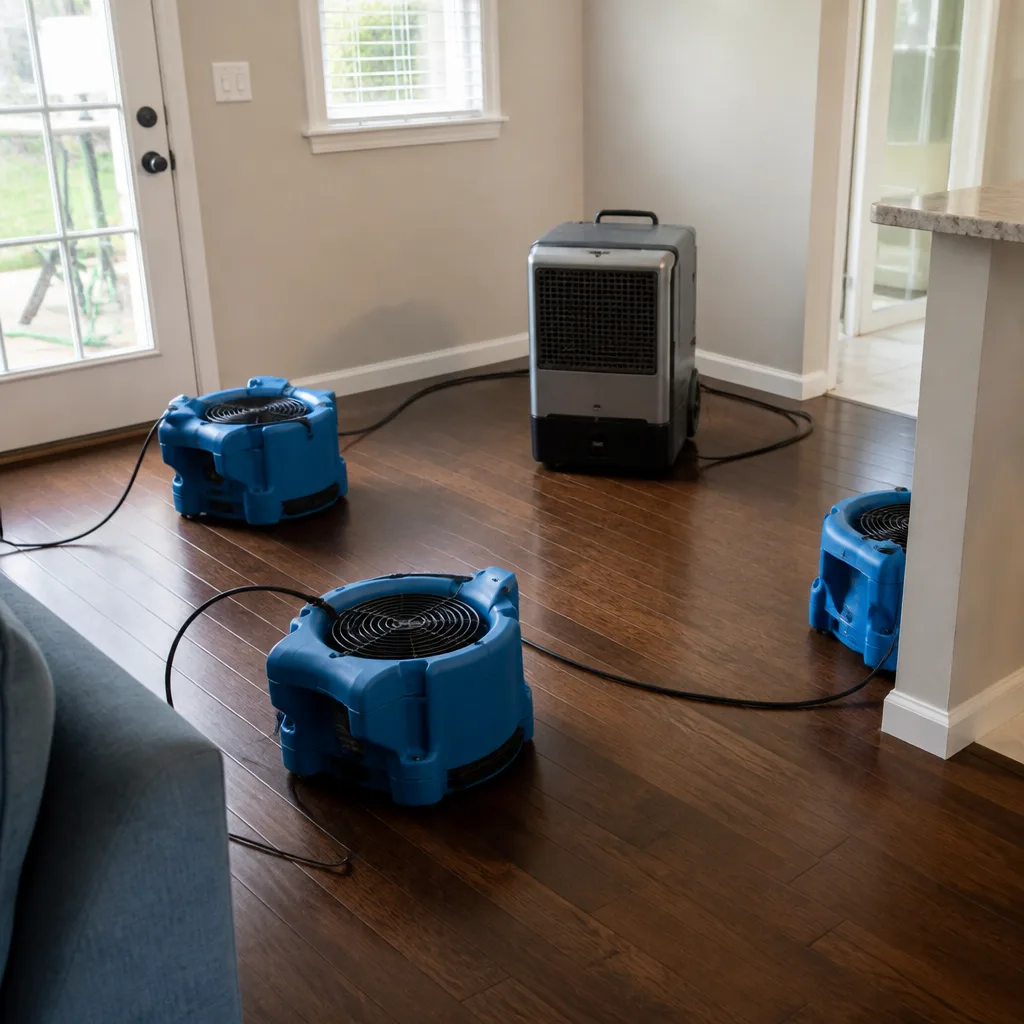
Sprinkler water comes out first. We place Dri-Eaz air movers and Phoenix dehumidifiers on affected plaster and flooring, with daily moisture readings logged until the dry standard is met. In a prewar masonry building, we chase moisture into the wall cavities, not just the visible surface.
Smoke & Soot Removal
Dry soot gets HEPA-vacuumed and dry-sponged. Oily soot needs chemical action. We contain each room with negative air and scrub the air continuously so soot doesn’t re-settle on cleaned surfaces an hour later.
Odor Removal & Deodorization
HEPA air scrubbers run throughout, and we treat the source, not just the smell. That means opening the chase where smoke traveled, treating the plaster behind demising walls where accessible, and using XPOWER thermal fogging where appropriate. Odor that isn’t source-treated comes back in weeks.
Repairs & Restoration
Stain-blocking primer on original plaster, matching prewar trim profiles, repainting, and rebuilding what can’t be saved. We’re a full reconstruction shop offering our Reconstruction & Cleanup in Riverdale, so the crew that dried the wall is the crew that rebuilds it. Done right, and backed in writing.
Need Emergency Fire & Smoke Damage Restoration in Riverdale Now?
Crews minutes away, answering live 24 hours a day. The sooner we start, the less it costs.
Working With Your Insurance Company
Fire claims in Riverdale co-ops come with a twist most homeowners never see coming: the building’s master policy and your individual unit-owner policy have to work together, and the co-op board often has its own reporting requirements. We’ve handled hundreds of these. From the first hour, we document everything in the format carriers and boards expect. Photo logs, room by room. Moisture readings from day one through the dry standard. A line-item scope with prices the adjuster can read without a translator. We talk to the adjuster directly. When the board needs a presentation, we provide documentation that gets the access approved. When the carrier needs a supplement, we send it with the photos attached. You get one call to make, and it’s to us.
What We Provide Your Insurer
- Thorough documentation of the loss
- Photos of all damage, room by room
- Moisture readings and drying logs
- A detailed, line-item scope of work
- Direct coordination with your carrier
Built for Riverdale’s Loss Calendar
Riverdale’s fire season isn’t a calendar season, it’s a heating season. From late October through March, space heaters in prewar co-ops with original wiring meet overloaded circuits. Candles and cooking fires spike around the holidays. And the buildings themselves, many from the 1920s and 1930s, don’t have modern fire separation between units. A kitchen fire on Johnson Avenue can move smoke through original plaster and cast-iron stacks into three units before the first engine arrives. Winter adds another layer: west-facing units on the bluff take wind-driven rain and freeze-thaw cycles against aging mortar, and a small fire that burns through a window frame becomes an emergency envelope repair in a nor’easter. Summer brings thunderstorms that knock out power, sending residents to candles and portable stoves. We see it every year. The pattern is consistent: older wiring, older buildings, and smoke that travels farther than anyone expects. When we get the call, we know what we’re walking into before the truck parks.
Fire & Smoke Damage Restoration Across Riverdale’s Neighborhoods
Riverdale isn’t one neighborhood, it’s a collection of distinct pockets stacked along the Hudson bluffs, and they each throw different curves at a restoration crew. Along Independence Avenue near Wave Hill, the co-ops are older and denser, with shared chases that run through multiple units and original plaster that soot bonds to aggressively. Response routes are straightforward but parking for a box truck takes planning. Near Riverdale Avenue and West 236th Street, mixed-use buildings put residential units directly above commercial spaces, which means a restaurant fire below sends smoke into apartments through floor assemblies and electrical penetrations. The Fieldston enclave is a different animal entirely: large 1920s Tudor and Colonial homes on steep private streets, where a basement fire in an unfinished space can move smoke through ductwork and balloon framing before anyone notices. And down near Spuyten Duyvil, the buildings sit right on the bluff edge, where the river wind complicates exterior work and board-up during winter months. A crew that only knows Riverdale from a GPS doesn’t know, for instance, that 239th Street dead-ends at the Henry Hudson Parkway and you route around via Kappock Street during rush hour. We know. It matters when you’re counting minutes.
Specialized Fire & Smoke Damage Restoration Services We Offer in Riverdale
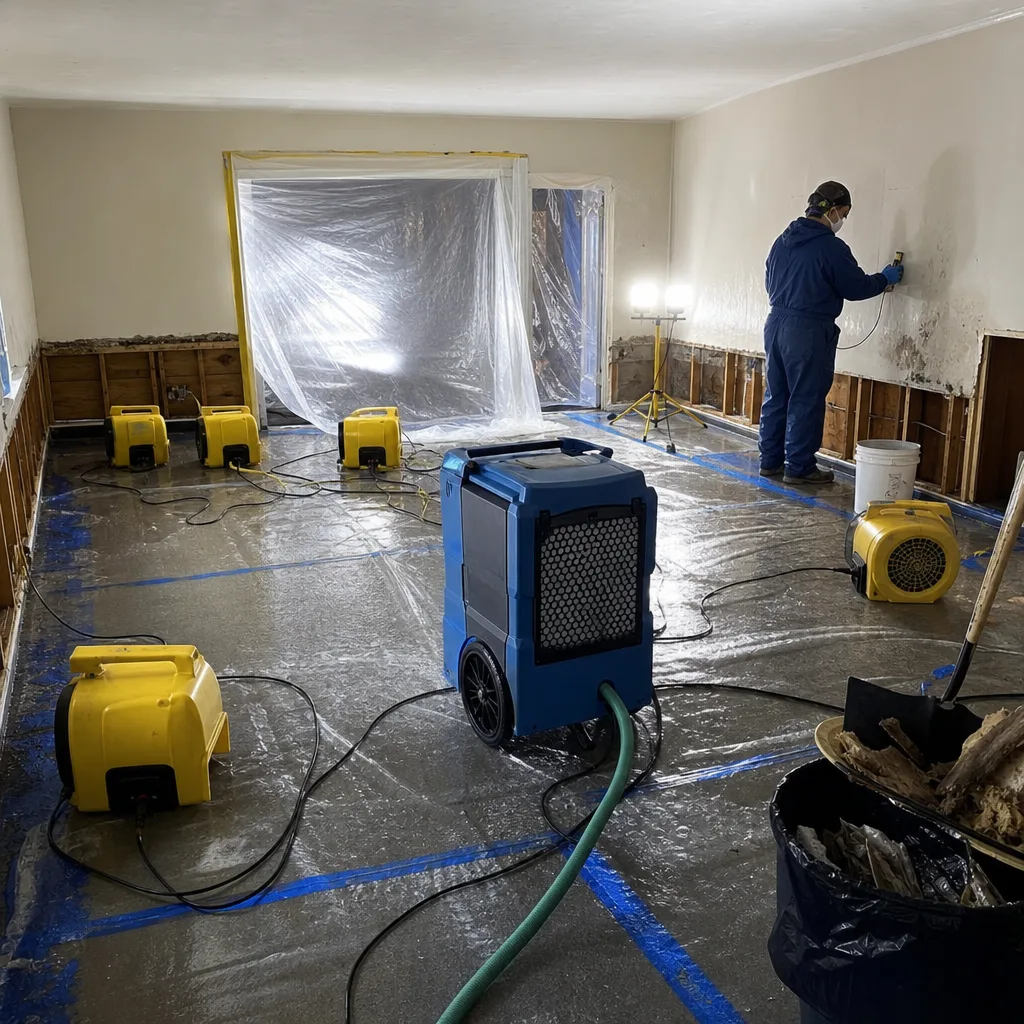
Smoke & Soot Removal
Soot in a prewar Riverdale co-op is not a surface problem. It works into the pores of original plaster, settles inside radiators, and lines the inside of closets you never opened. We remove it room by room, using dry sponges for dry soot and chemical agents for oily residues, with HEPA air scrubbing running continuously so particles don’t re-settle. In masonry buildings, we check behind radiators and inside the chase, because soot follows heat and the chase is a chimney even when there’s no fire.
Odor Removal & Deodorization
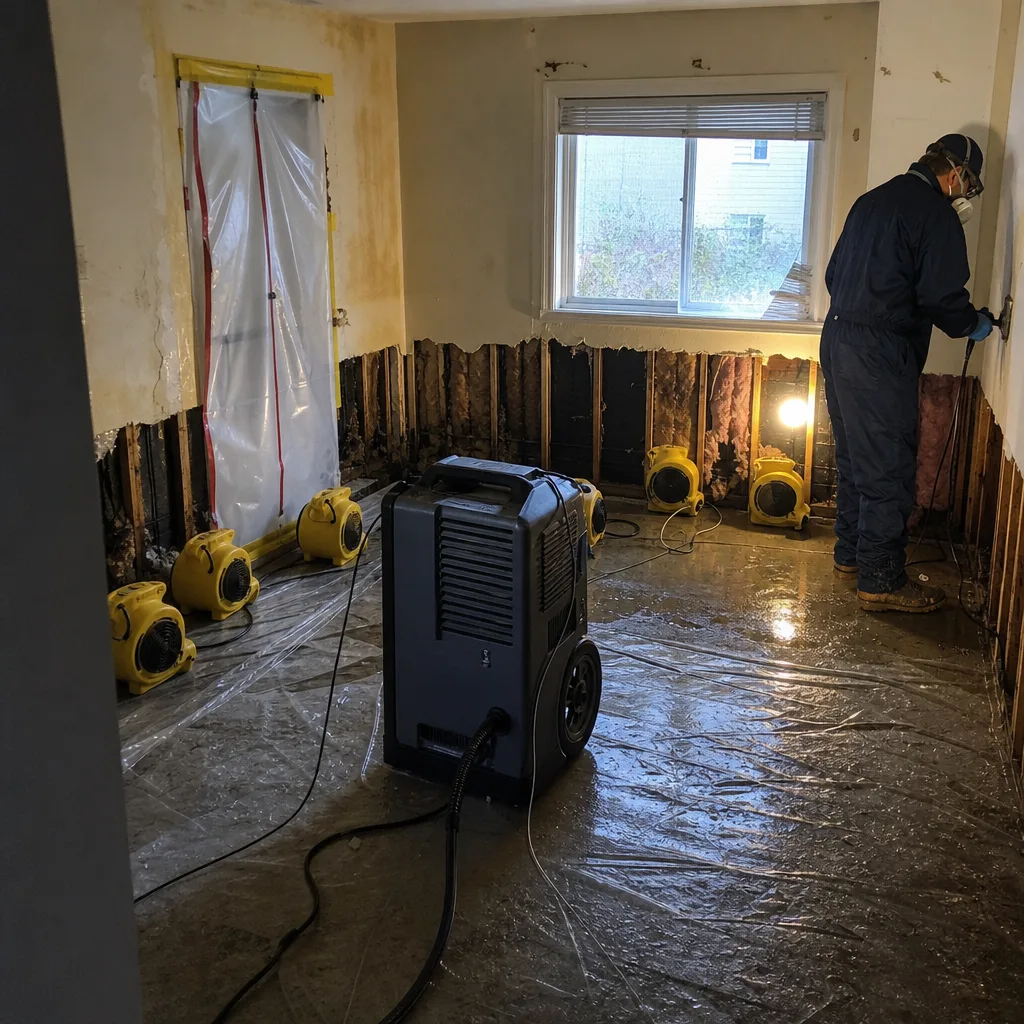
Smoke odor in Riverdale’s co-ops routinely resurfaces weeks after a cleanup because the source was never addressed. If smoke traveled through a shared riser chase and the board declined access, the odor stays. We treat the source. That means sealing off and deodorizing the chase where accessible, fogging affected cavities with XPOWER equipment, and running HEPA scrubbers until the air testing reads clean. We build the containment plan around what the board will authorize, and we document what wasn’t accessible so the odor doesn’t get blamed on our work later.
Emergency Board-Up & Tarping
Fire-damaged windows on west-facing Riverdale units need board-up the same night. The Hudson wind will pull a tarp off a half-measure by morning. We secure openings with proper anchoring against masonry, not just a few nails, and we stage the materials so the board can inspect what’s been done. A secured unit prevents further water intrusion, keeps looters out, and gives the insurance adjuster a defensible mitigation timeline.
Fire Damage Cleanup
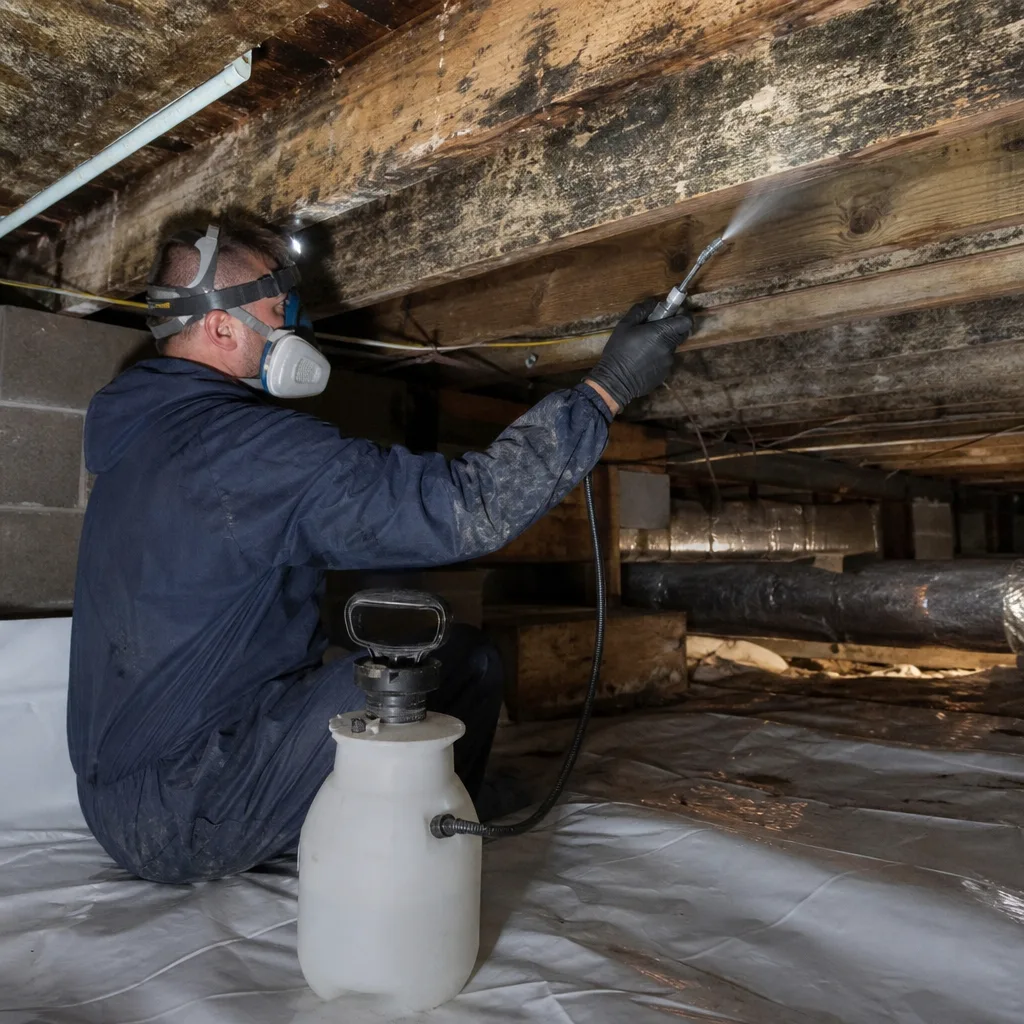
Debris removal, structural cleaning, and content triage. We separate what’s salvageable from what isn’t, photograph every item for the claim, and remove charred material safely. In older co-ops, that often means protecting original wood floors and plaster while the debris goes out through service entrances the board specifies. It’s slow work. It needs to be.
Contents Cleaning & Pack-Out
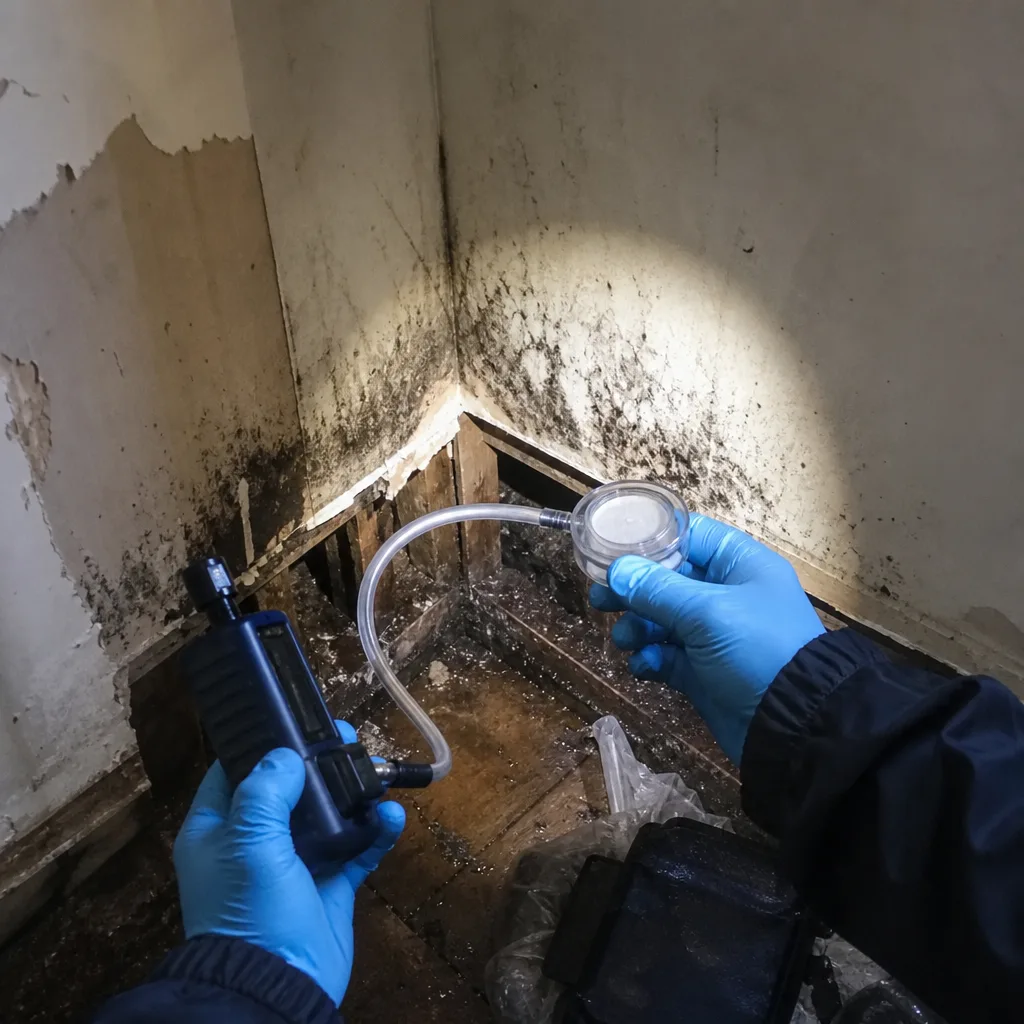
When a Riverdale co-op board restricts elevator use, contents move out through the service stair or a designated freight entrance. We coordinate that with the super and the board before a single box moves. Items get inventoried, packed, cleaned or restored off-site when necessary, and stored until the unit is ready. The inventory goes to your carrier. You know where everything is at all times.
What happens when you call
- 1
A real person answersNo phone trees - you reach a local pro.
- 2
You get an upfront price rangeHonest numbers before anyone is dispatched.
- 3
A background-checked tech heads outLicensed & insured, dispatched right away.
- 4
You approve before work beginsNothing starts until you say go.
Fire & Smoke Damage Restoration Costs in Riverdale, NY
A typical smoke and soot removal job in a single Riverdale unit, with one room fully involved and moderate migration into the chase, runs $2,400-$5,200. When sprinkler water is added to the equation, drying and plaster repair push that to $6,000-$9,800. If the board requires full chase cleaning across multiple floors, the number moves higher, but that’s rare. What moves the price: the soot type (oily kitchen grease costs more to remove than dry wood soot), the square footage of affected plaster, whether original lath-and-plaster can be saved or must be replaced, and the access timeline. Board delays add days of equipment rental. Insurance covers most of it when the cause is a covered peril, which fire almost always is. Out-of-pocket portions usually come from the board’s master-policy deductible or betterment clauses on old plaster. The free visual inspection we offer gives you a firm number, in writing, before you commit to anything. Call (201) 729-3780 and we’ll walk it with you.
We Also Serve Cities Near Riverdale
Our crews work throughout the northwest Bronx. If your building is in Kingsbridge, just south along Broadway, we’re already minutes from your door. Floodline Restoration Co. is the Fire & Smoke Damage Restoration team that this part of the Bronx has called for over four decades, since Curt Bowman founded the company in 2010 and built it around a dispatch board instead of a sales desk.
Serving Riverdale, NY - Our Local Coverage Area
We’re based in the Riverdale area and know this community well. Use the map below to see our service coverage - if you’re nearby, we can almost certainly help.
Riverdale Fire & Smoke Damage Restoration Questions, Answered
How does Riverdale’s prewar co-op ownership structure affect fire and smoke restoration in a single unit?
It affects almost everything: access to the shared riser chase, the timeline for drying, and who pays for what. In a prewar co-op, the walls between units and the vertical chases belong to the building, not the individual shareholder. A fire in one unit that sends smoke through the chase means restoration work in common areas, and that requires board authorization. We’ve had jobs where drying equipment sat in a hallway for three days waiting for a board vote. The practical move is to document everything, present the board a written scope, and start the work you can do inside the unit immediately. Call (201) 729-3780 and we’ll help you build that board package.
Why is smoke odor sometimes worse in adjacent units than in the fire-damaged unit in Riverdale masonry buildings?
Because smoke travels through the chase and the gap between plaster and masonry, and those spaces don’t get cleaned when only the fire unit is treated. The fire unit gets gutted and scrubbed. The adjacent unit keeps its original plaster with soot behind it, and the odor seeps back for months. We see it in co-ops along Independence Avenue and Palisade Avenue regularly. The fix is source treatment in the chase and behind accessible wall cavities, not just air freshening in the affected unit.
Can restoration crews dry out fire-damaged units with sprinkler water in Riverdale’s old brick co-ops without damaging original plaster?
Yes, with the right approach. Original lath-and-plaster can often be saved if drying starts within 24-48 hours and if the moisture is chased properly. That means drilling small access points, injecting air into the wall cavity, and taking daily readings with moisture meters. The risk is waiting too long, which turns wet plaster into moldy plaster that must be removed. In a masonry building, the exterior brick holds moisture differently than drywall over studs, so the drying plan has to account for the masonry mass. Our crews are trained for that specifically.
What needs to be done to protect a fire-damaged west-facing window wall in a Riverdale bluff co-op during winter restoration?
Board-up and tarping, done properly against masonry, the same day. West-facing units on the bluff take wind-driven rain and freeze-thaw cycles that will turn a broken window into a full envelope failure within days. We anchor plywood and weather barriers to the masonry with proper fasteners, not a few nails into trim, and we stage the protection so the board’s engineer can review it. A secured opening stops further water intrusion and buys time for the insurance scope to be written. Call (201) 729-3780 if you’re looking at a broken window tonight.
How do we handle pack-out and contents cleaning when a Riverdale co-op board restricts the use of building elevators or service entrances?
We follow the board’s rules, in writing, before anything moves. That usually means using a designated service entrance, protecting the elevator with pads if it’s approved, and scheduling moves around the building’s quiet hours. We coordinate directly with the super and the managing agent. The inventory goes item by item, with photos and condition notes, and it goes to your carrier. If the board requires off-site storage, we have vetted facilities, and you get the manifest. It’s slower than a single-family pack-out, but it’s the only way to do it without board trouble.
How fast can a crew actually get to Riverdale for a fire and smoke emergency?
Our commitment is 45 minutes from dispatch to arrival anywhere inside Riverdale. We staff live dispatch around the clock, so the clock starts when you call (201) 729-3780, not the next business day. For a fire scene, the first hour matters: soot is easier to remove before it cures, and sprinkler water starts growing mold in 24-48 hours. The sooner we’re on site, the less total work the job needs.
Will my insurance cover fire and smoke restoration in a Riverdale co-op, and who deals with the adjuster?
Fire is a covered peril on virtually every homeowners and co-op unit-owner policy, so yes, in almost all cases. The co-op’s master policy typically covers the building structure and common areas, while your unit-owner policy covers interior finishes, contents, and betterment. The two policies have to work together. We bill your carrier directly and handle adjuster communication ourselves, from the initial scope through supplements. You shouldn’t be on the phone with the insurance company. That’s our job.
What should I do in the first 30 minutes after a fire in my Riverdale unit?
Get everyone out, call 911 if anyone hasn’t already, and then call us at (201) 729-3780. Don’t enter the unit until the fire department clears it. Don’t touch anything, don’t open windows, don’t try to clean the soot yourself. Every step you take makes the soot harder to remove and can push smoke residue deeper into plaster. Turn off HVAC circulation if you can safely reach the control, and don’t use electrical outlets in affected rooms. Document what you can see from outside, and wait for the pros. The first call to us gets the board-up and emergency plan moving.
Written by Curt Bowman, Owner at Floodline Restoration Co., serving Riverdale and the northwest Bronx.